×

Two Together: Save £100!Save £100 when you purchase two funeral plans together. Call us for more details.

Written by Emily Cross.
14 minute read
Understanding the funeral dress code UK mourners are expected to follow is important, given the sensitivity of the occasion. While some families will request bright colours or more casual wear to celebrate the life of their loved one, many still expect mourners to wear black. Things get a little more complicated when you have to contend with the seasons, especially when comparing a cold winter funeral with a hot summer funeral.
We want you to feel comfortable about your choices so that you can pay your respects to the person who has died in the right way. This guide will talk you through how to dress appropriately for funerals in the UK so that you always feel comfortable.
Key takeaways
The British funeral attire dress code can be difficult to navigate, especially at a time when you are grieving and busy planning a funeral. There are so many subtle differences and nuances that it can feel like the last thing you want to work through at a time like this. To make sure you are comfortable with what you wear and feel like you are able to pay a fitting tribute to a loved one, we’re going to discuss all of the finer points of the funeral dress code UK mourners traditionally follow.
Dressing appropriately is a traditional way to pay respect to the person who has died, their family, and other attendees. The funeral outfit mourners choose needs to reflect the occasion, show that they care, and be comfortable all at the same time.
Getting the balance right is all about knowing the wishes of the family. If you are organising the funeral, then you will be heavily involved with all of the key decisions, but if you are attending as a friend or relative, you may be left wondering what the family expects. In many cases, it is tempting to play it safe and opt for traditional funeral attire from head to toe. That said, we also need to consider the wishes of the family, who may well have requested something more modern and colourful.
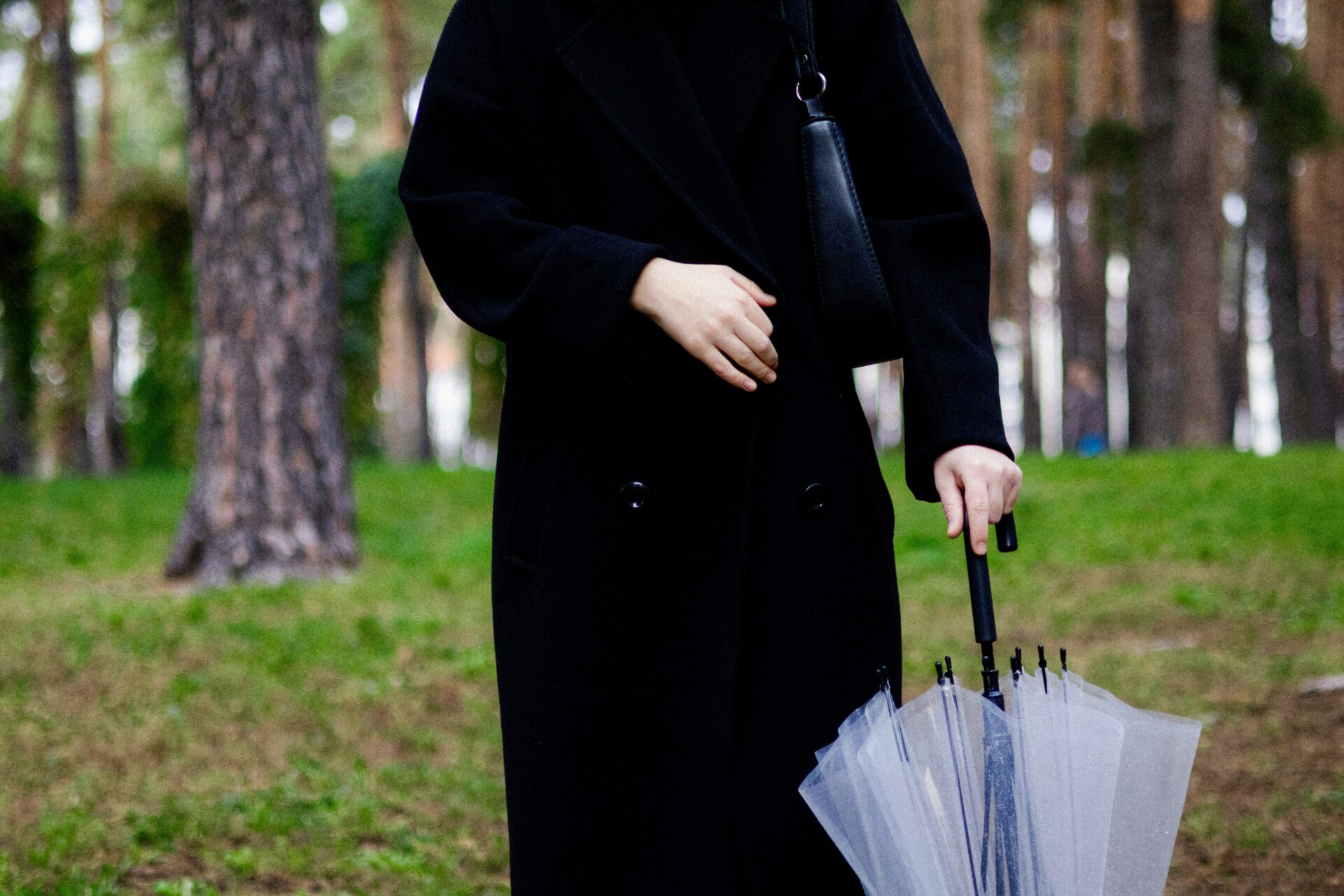
A traditional funeral has typically featured black, conservative clothing. Male mourners may wish to wear a simple suit and tie, and female mourners may opt for a smart dress or suit paired with comfortable shoes.
Modern funerals, non-religious services, and DIY funerals are a little different in this regard and take their direction from the individual wishes of the family. Depending on what the family wishes, mourners may be asked to wear their loved one’s favourite colour, smart casual rather than strictly formal attire, or even a football shirt.
If you are in any doubt about what the family’s wishes are, contacting a member of the family who will know but who is not the closest person to the person who has died will help. Always avoid sending multiple questions to the nearest and dearest at such a difficult time. If you are still unsure about their wishes for an alternative funeral, erring on the side of caution and dressing in traditional British funeral attire may be the best approach to take.
While it is steeped in centuries of tradition, British funeral etiquette does vary somewhat throughout the year. Knowing what to wear for a summer funeral does not necessarily tell you how to put together a funeral outfit that you may feel comfortable in in the winter, for example.
Traditionally, the British funeral dress code is items of black clothing. But if the family has expressed a wish for mourners to wear a particular colour or pattern, your efforts to accommodate their wishes will be appreciated. Here are some key things that you may wish to consider as part of your preparation for the day:
If you have never attended a funeral in winter, it may be that you have to find a compromise. A dark suit or smart dark dress is generally perfectly acceptable. The family will certainly appreciate the effort because it will be clear that you wish to pay your respects to their loved one.
Knowing what to wear to a summer funeral is just as important as it is in winter. Men often prefer to wear a formal black suit that is freshly pressed, and traditional funerals will expect the tie and jacket to remain in place for the duration. Sunglasses that are understated and have black lenses are also acceptable outside but will typically be placed in your pocket (rather than on your head) when not in use.
Female mourners can opt for lightweight, breathable fabrics and shorter knee-length black dresses. A dress that is more suited to a dinner date or party will typically be avoided in favour of something that is both a little more understated and brings a greater air of formality. Skirts and suits also work well.
If the family has kindly requested that mourners remember their loved one by wearing a brighter colour or specific pattern, your efforts to accommodate their wishes will be appreciated.
Knowing what to wear to a summer funeral is something many mourners struggle with at what can be, naturally, already a challenging time. In addition to modest knee-length dresses, skirts, and lightweight suits, we would recommend considering the following:
Knowing where the balance lies is important at any UK funeral because it’s important for you to feel comfortable whilst you pay your respects to the person who has died. Regardless of how well you know someone, there are certain things you may wish to avoid.
British funeral traditions are ingrained in our culture, and yet many of us struggle with the nuances during a time of grief.
Putting aside the variations between summer funeral attire and the funeral outfit winter mourners should wear and focusing on the fundamentals can help.
Here are some simple guidelines that will help you dress in a way that is conservative and respectful to the family:
Men:
Women:
For clarity, there are also certain items you should never wear when attending a funeral unless you are expressly asked to do so by the family.
The funeral dress code in the UK is generally more modest and conservative, but there are times when you may think that the family will prefer you in more casual attire. The problem is that unless they specifically ask you to, you will not know for sure.
As a general rule, here are some clothing and accessory choices that may not be appropriate for the funeral:
It’s also important to note that there is a diverse range of cultural sensitivities in Britain. Religious dress codes, certain culturally significant headwear, and traditional footwear choices should all be respected in line with the wishes of the family.
There are so many different possible variations here that it’s not practical to provide an exhaustive list. Instead, we’ve put together some simple steps that you can follow to make sure you wear attire that is aligned with the culture and traditions observed by the family:
If you are ever in any doubt, a conservative and traditional British funeral outfit will be respected and appreciated by the family. They will see that you have made every effort to pay your respects, and you will not stand out from the other mourners.
An increasing number of families are choosing to put a little distance between themselves and the traditional formality of a British funeral with memorials and celebrations of life. While the idea of the living funeral takes this all the way so that the person being commemorated can outline what they want before they have died, there are many other requests the family may like to make.
One of the most popular requests is for mourners to wear some item of clothing that will have a deep meaning for the family. Football shirts and scarves are common examples that you may come across at some point in your life. Even if this is not something you feel 100% comfortable wearing, the family will certainly appreciate your effort. These requests are usually made to commemorate the life and personality of the person who has died and bring a reflection of their favourite things into the celebration of their life. As such, it will be greatly appreciated if you are able to play your part in the occasion.
Religious funeral services will typically be more modest and conservative than secular services. Those who have lost someone in the Islamic faith will expect women to wear suitable head coverings and will appreciate the efforts of anyone from outside their faith to do so. If you are unsure about what is appropriate, speaking to a member of the family will help you decide on the right course of action.
There are also countries where white is the traditional colour at a funeral. China, Japan, and India traditionally conduct funeral services in white attire because they see it as a sign of rebirth and purity of the soul. If you know that the family would appreciate it, and especially if they expressly request it, wearing a white outfit would be the right thing to do. Even if it can feel unusual to a person from outside that culture, being respectful to the family is the most important thing.
There are so many possible alternatives to traditional black attire, given the rise of more modern funerals, that it is easy to make a mistake. Here are the three most common mistakes you can consider thinking about avoiding.
Like many British funeral traditions, funeral dress code is not set in stone if the family doesn’t want it to be. If they are grieving for a loved one, they have the right to do so in any way they see fit. Let’s continue with the example of being asked to wear a football shirt for a particular team. If you don’t have one, or if you find they are too expensive, a scarf in the team colours is a great compromise. Doing something that shows you have made an effort may be appreciated much more than ignoring their wishes and sticking to tradition if they don’t want you to.
Jeans, t-shirts, and trainers are all examples of casual clothing that may not be seen as appropriate for a funeral, and there is always the risk of causing offence amongst the family. Formal attire is always the safest choice because it will look neutral and understated.
Making sure that your attire is suitable for the occasion also extends to practical matters. Graveside services may require low heels or flats to prevent the heel from sinking into the ground. Winter services may require a coat and scarf, and unseasonably hot funerals may require lighter fabrics and materials to ensure you remain as comfortable as possible.
Aura is the top-rated national ‘Direct Cremation’ provider on Trustpilot with a rating of 4.9/5 stars.
We are a family-run business that can help you and your family grieve for your loved one in a manner of your choosing. To learn more about how we can help, download our free funeral planning brochure today.
If you’d like to know more about how to plan a cremation with Aura, our brochure is a helpful place to begin.
Our funeral plans are a helpful way to put everything in place for you or someone else.
When the time comes, our experienced team will be here to guide you through each step, offering support and advice whenever you need it.
To find out more about how our plans work, what’s included, and our story, you can request a brochure by clicking the link below. We will then send you a copy by email or First Class post—whichever you prefer.
Whilst it is not mandatory, black is very traditional and is often expected at a UK funeral. The only exceptions are families from different cultures and religions who may request something else or families who don’t feel that black is the right colour for their loved one and request items of a specific colour, such as blue, red, or purple.
The British funeral dress code is based on black clothing as a mark of respect. If you do not own a black suit and are unable to borrow or hire one, dark colours such as navy are also appropriate.
Casual clothing such as jeans and t-shirts, uncomfortable shoes, and overly-revealing outfits may all be considered inappropriate. You may also wish to avoid patterns and bright colours if they have not been requested by the family.