×

Plan Now, Pay LaterSecure your plan today, don't pay until 9 January 2026. T&Cs apply, click here for details.

Two Together: Save £100!Save £100 when you purchase two funeral plans together. Call us for more details.


Written by Mitch Tapner.
8 minute read
When someone dies unexpectedly, a post mortem, sometimes called an autopsy, may be carried out. This is a medical examination that takes place after death. For many families, the thought of it can raise questions: How long will it take? Will it delay the funeral? When will we know the results?
This guide explains the process in a calm, straightforward way. We’ll cover what happens during a post mortem, who is involved, and how it may affect your funeral arrangements, including things like funeral plans and direct cremation. Our aim is to help you understand each step so you can make decisions with confidence, even in a difficult time.
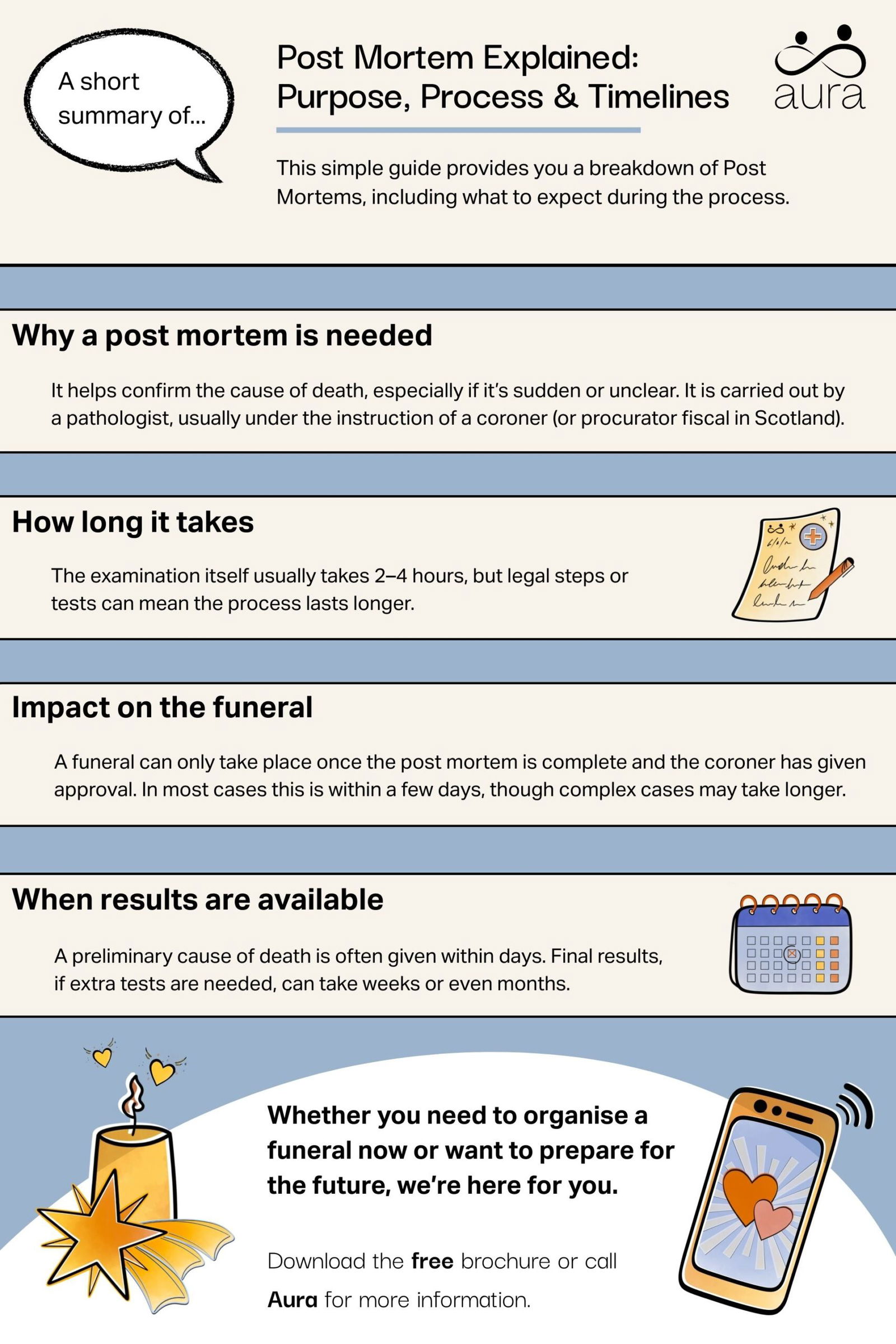
A post mortem is a careful medical examination of a person after death. It is carried out by a specialist doctor called a pathologist, usually under the instruction of a coroner (in England and Wales) or a procurator fiscal (in Scotland).
Its main purposes are:
In England and Wales, a coroner may order a post mortem if the cause of death cannot be confirmed from medical records alone. In Scotland, this role is fulfilled by a procurator fiscal. In some situations, families themselves may request a post mortem for personal, medical, or cultural reasons.
If someone dies in hospital, the medical team will explain if a post mortem might be needed, and why.
The physical examination itself often takes two to four hours. However, the post mortem process can take a little more time to ensure the examiner has all the information they need to complete their investigation accurately and efficiently.
A typical post mortem involves:
The preparation before, and the steps after, can add to the total timeframe, however the office of the coroner or procurator fiscal will usually keep the next of kin informed throughout the process.
Some situations can make a post mortem take longer:
If a post mortem is required, the funeral cannot take place until it has been completed and the examiner is satisfied with the outcome of their investigation. If an examiner draws a conclusion on the cause of death, they will complete the necessary paperwork and the funeral can take place.
If the examiner feels an inquest is necessary, they will authorise an interim death certificate to enable the family to make the funeral arrangements without further delay
The examiner’s office will always aim to keep the next of kin informed as much as possible
Once the examination is complete and the body is released, a funeral can take place as soon as the family is ready.
The timing will depend on:
If you’re wondering how long it takes to arrange a funeral, the answer can vary, but your funeral director will guide you through each step. At Aura, we liaise directly with coroners and pathologists to keep plans moving as smoothly as possible.

A preliminary report, which gives the basic cause of death, is often available within a few days. This can help families start making arrangements with more clarity and certainty.
The final report, especially if laboratory tests are needed, can take several weeks or months. This extra time ensures:
Delays can happen due to:
We understand that waiting for answers at such a difficult time can be very difficult. At Aura, we always aim to give regular updates and realistic timeframes, so you always know what to expect.
The process may involve:
Good communication between those involved can help to reduce delays and provide better care for the family.
Public health issues (such as suspected infectious disease) or criminal cases – whilst these are rare – can extend the timeline considerably.
There are some practical steps you can take:
If you’re wondering how the body is prepared for cremation, your funeral director can explain this in a gentle, clear way, so you know what’s involved.
If a post mortem is needed, it can feel like one more worry at an already difficult time. At Aura, we’ll guide you through each step with care, giving clear updates and speaking to coroners, hospitals, and pathologists on your behalf.
Whether you have a funeral plan in place or are arranging something new, we’ll help you choose the right time for the service and explain what to expect, including the cremation process.
For advice on what to do when someone dies or how long it might take to arrange a funeral, our team is here to help at any time.


A post mortem is carried out to understand the cause of death, particularly if it’s unclear or unexpected. It may be ordered by a coroner or procurator fiscal, or sometimes requested by families for personal or cultural reasons.
Yes. A funeral can only take place once the coroner or relevant authority has released the person’s body. This is usually within a few days, but more complex cases can take longer.
A preliminary cause of death is often available within a few days, but the final report can take weeks or sometimes months.