×

Two Together: Save £100!Save £100 when you purchase two funeral plans together. Call us for more details.


Written by Mitch Tapner.
9 minute read

Losing someone is never easy, and finding the right words to say in the face of grief can feel even harder. But a condolence letter, however simple, can offer quiet comfort. It’s a way of letting someone know they’re not alone – especially in the days leading up to or after a funeral.
This guide gently explores when to write a condolence letter, what to include, and how to shape your message with warmth, sincerity, and care – so your words can offer some light in a difficult moment.
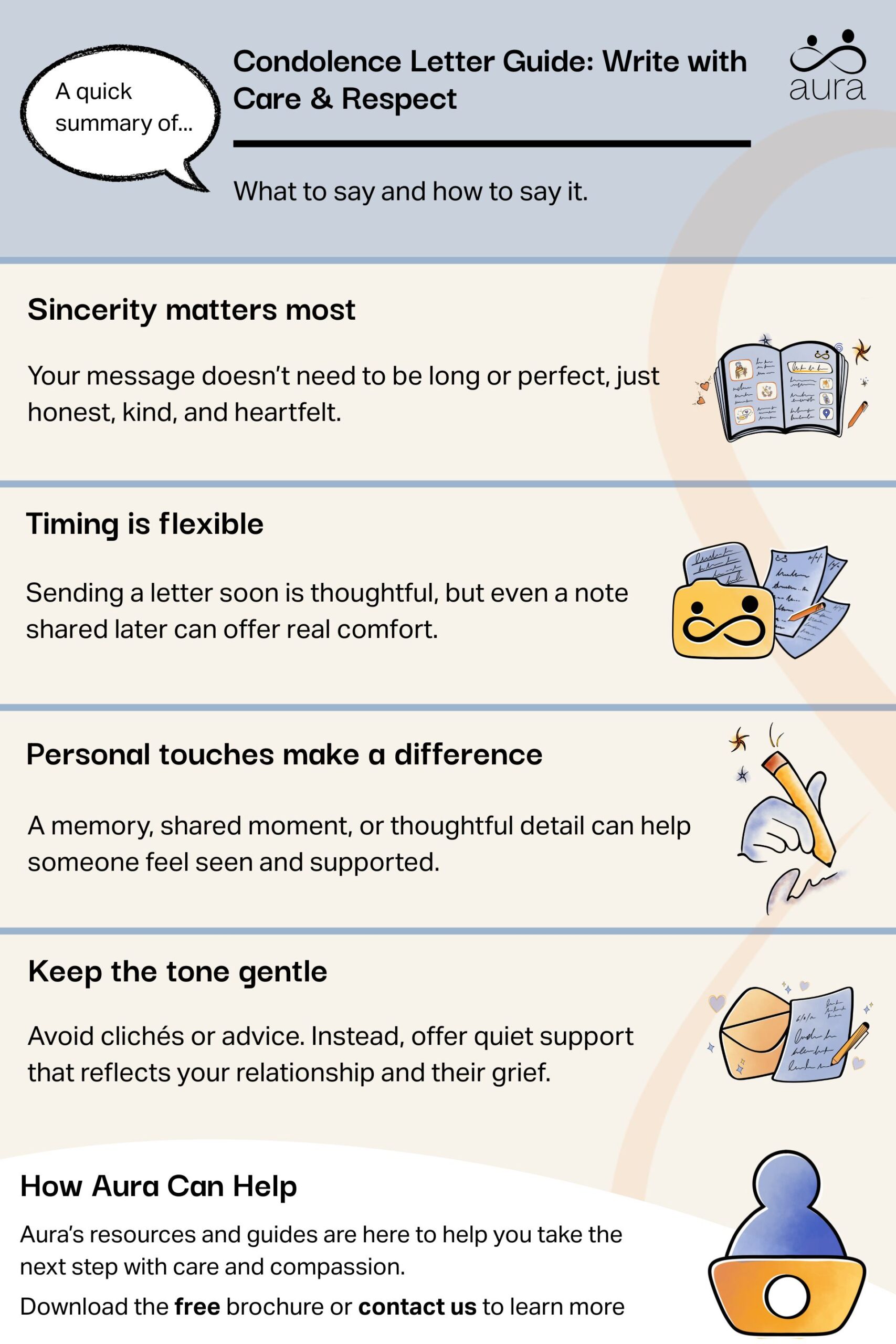
A condolence letter doesn’t need to be long – sincerity matters most.
Sending it soon is thoughtful, but writing later can still be meaningful.
A personal memory can bring real comfort.
Match the tone to your relationship – warm for close ones, kind and respectful for others.
Avoid clichés or advice; simply acknowledge the loss with gentle support.
When someone we care about is dealing with grief, words can feel too small. But a short condolence message can gently offer comfort, sharing kindness, support, and a moment of connection.
For the person writing, it’s a way to acknowledge loss and express heartfelt sympathy when little else feels possible. For the person receiving it, it can become something to hold onto – quiet, private, and lasting, even after the funeral has passed.
What matters most is sincerity, not eloquence. A condolence letter doesn’t need to be long. It just helps show that you see their pain, and that you care.
There’s no fixed rule for timing. It may be best to send your message within a week or two of hearing the news. But even if more time has passed, a note shared at a life celebration or on a meaningful date can still offer comfort.
Unlike a quick message on social media, a letter allows space – for memory, thought, and a gentler pace.
You can write to a friend, a colleague’s family, a long-time neighbour – or someone you didn’t know well, but whose loss has stayed with you. Whether it’s the unexpected death of a loved one or someone from your past, if you feel the urge to reach out, that’s reason enough.
Buying or creating gifts for grieving friends is another way of showing you care in difficult moments.
The most meaningful letters are honest, personal, and simple. You don’t need the perfect words – just your own.
Talking about death and dying can be difficult so here’s a helpful way to structure your letter.
Opening: Acknowledge their loss.
Memory: Share something warm, kind, or personal about the person who has died.
Sympathy: Gently express your condolences.
Closing: End with care, using soft and respectful language.
If you’re also preparing a speech for the service, Aura’s eulogy template may help you gather your thoughts in a meaningful way.
It’s often the smallest details that mean the most. A shared moment, a kind gesture, or the way someone made others feel – these touches help bring warmth and truth to your words.
Let your message reflect your relationship. A letter to a close friend might be more open and emotional. For a neighbour, perhaps warm and respectful. For a colleague, measured but still heartfelt.
Too much formality in a close relationship can create distance. Write as you would speak, with kindness and care.
Working out what to say when someone dies may not come easy, but Aura is here to help you along the journey.
The tone and content of a condolence letter can shift depending on who you’re writing to, but honesty and compassion should help guide you.
Think about your relationship, any cultural or religious customs, and how the person might prefer to be spoken to.
Some may find comfort in spiritual references. Others may not. Let your words reflect what feels thoughtful and appropriate for them.
When writing to a friend or their loved ones, your words can help carry part of their sorrow. A shared memory, a simple reminder of who the person was, it all helps them feel seen.
Don’t worry about being poetic. A quiet, heartfelt sentence is often more powerful than anything polished.
If you are wondering what to say when someone loses a parent, Aura can help point you in the right direction.
Grief in the workplace can feel uncertain, but a thoughtful letter from a colleague or manager can offer dignity and support.
Using clear, respectful language often works best.. Keep the tone warm, but avoid becoming too personal unless it feels appropriate. Be mindful of the person’s beliefs and privacy.
If writing on behalf of a team or organisation, include a message of shared sympathy and support – while avoiding general phrases that may feel impersonal.
Endings can be delicate. Try to close your message gently, without rushing to ease the grief or explain it away.
You may want to avoid phrases like “everything happens for a reason” or “stay strong.” Grief doesn’t need to be fixed – it just needs space to be felt.
Simple phrases such as “thinking of you” or “sending strength and care” often say enough.
The way you end your letter can help reflect the tone of your message and your relationship with the person.
Sympathy messages for funeral flowers will likely be shorter, but you may want to keep the same tone and warmth in your writing.
If you’re unsure, Aura’s article on how to sign a sympathy card may be able to give you some ideas.
Try to avoid phrases that could feel dismissive or out of step with the person’s beliefs. For example:
Be careful not to offer advice or compare experiences. Instead, try to focus on listening, honouring, and gently acknowledging the loss.
Not every message needs to be long to be meaningful.
Cards: A short, kind, and personal message can stay with someone for a long time.
Email: Allows for a slightly longer message, but still try and keep it thoughtful and direct. Use a warm subject line.
Text or message: A simple note like “I’m so sorry to hear about your mum. Thinking of you.” can mean a great deal.
Even a short message, when written with care, can offer lasting comfort.
Finding the right words after someone dies can feel impossibly hard. But even a simple message, written with warmth and care, can offer quiet comfort. At Aura, we believe in the power of small kindnesses, especially in the moments when nothing feels enough.
If you’re writing a condolence letter and feel unsure where to begin, you’re not alone. Many of us worry about saying the wrong thing. But sincerity matters more than perfect phrasing. And if you’re facing loss yourself, or trying to help someone who is, we’re here to support you.
Aura was created to offer a different kind of funeral care: simpler, more personal, and shaped by compassion – not tradition. Whether you’re arranging a direct cremation today or thinking ahead with a funeral plan*, we’ll talk to you with honesty, not scripts. No jargon. No fuss.
If you’d like to speak to someone who understands – just call us on 0808 258 2561. There’s no pressure. Just help, when you’re ready.
*Terms and conditions apply. You will receive a funeral plan summary before purchase.


If you’d like to know more about how to plan a cremation with Aura, our brochure is a helpful place to begin.
Our funeral plans are a helpful way to put everything in place for you or someone else.
When the time comes, our experienced team will be here to guide you through each step, offering support and advice whenever you need it.
To find out more about how our plans work, what’s included, and our story, you can request a brochure by clicking the link below. We will then send you a copy by email or First Class post—whichever you prefer.
A warm and caring condolence letter often includes four simple parts: an acknowledgement of the loss, a short memory or kind reflection about the person who has died, a sincere message of sympathy, and a gentle closing. It’s not about being poetic – honest, thoughtful words are more valuable than polished phrases.
It’s thoughtful to send your message within a week or two of hearing the news, but there’s no deadline. Writing on a birthday, anniversary, or simply when you feel moved can still bring comfort – even if time has passed.
There’s no need for length. A short, heartfelt message – just a few sentences – can offer more support than something longer but impersonal. What matters most is that it feels sincere and acknowledges the person’s pain.
You may want to avoid clichés, comparisons, or trying to fix someone’s grief. Phrases like “they’re in a better place” or “stay strong” can feel dismissive. Instead, try to use warm, honest language that simply says: “I’m here, and I’m thinking of you.”