×

Plan ahead and save up to £200 Save up to £200 on selected funeral plans until 30 September. T&Cs apply. Click here for full details.

Two Together: Save £100!Save £100 when you purchase two funeral plans together. Call us for more details.


Written by Adam McIlroy.
12 minute read

With the funeral tastes of British people shifting significantly in the last few years, it should come as no surprise that more British people are asking, “Can you put cremation ashes in a tattoo?”
In this blogpost, we will ask whether and how we can put cremation ashes in a tattoo, considering, among other things, the legal and health implications of doing so.
Key takeaways:

Cremation ashes tattoos, as the name suggests, are a form of body modification involving the mixing of ink with small amounts of cremated remains. This is done in order to form images on a person’s body with an especially heightened emotional significance.
The decision to get a tattoo with cremation ashes is not to be taken lightly, and many people find the thought of it too extreme or taboo. But for those opting for it, getting a tattoo with the ashes of a loved one is an intensely personal, vivid and visual way of paying homage to them.
There are all sorts of creative cremation ashes ideas. People can turn their loved one’s ashes into a wide array of different items and keepsakes these days, from jewellery to vinyl records and even ammunition. Getting a cremation tattoo allows a bereaved person to always have the one they’ve lost be permanently with them, as close as can be.
The beauty behind the idea of having a tattoo with the ashes of a loved one is that the image itself can be anything: it could be a photo of the loved one themselves in tattoo form, or an image that commemorates something they loved, like music or sport.
It could also be words that they once spoke or wrote, or even a message from the wearer of the tattoo to their loved one, or vice versa. National Geographic covered the story of someone who got a cremation tattoo using some images that were designed by her father before he died. The possibilities are endless.
Common design choices include favourite flowers (e.g. a rose or blossom the person loved), a beloved pet’s paw print, meaningful symbols (hearts, anchors, crosses), portraits, script (names, dates, quotes) or even coordinates of a special place.
As you might expect, there are certain health, safety and legal matters that should first be considered before you decide to get a tattoo infused with the ashes of a loved one.
The health risks of cremation tattoos are generally the same as those of any standard tattoo. The idea that they are especially unsafe is a cremation myth. This is similar to the belief that ashes are toxic or that more than one person is cremated at a time.
Because cremation happens at very high temperatures, it is safe to get ashes tattooed into your skin as the ashes are sterile and free from bacteria. Properly processed ashes are mostly bone minerals, such as calcium and potassium, and are non-toxic. Only a tiny amount is used — often less than a teaspoon — and it must be ground into a fine powder.
Some reputable providers go further by using lab-grade techniques, such as grinding and carbonisation, to purify the ashes and remove any trace metals. Only ashes prepared in a sterile environment should be used. The ash itself is unlikely to pose a health risk, but the process for ash incorporation should still be hygienic. It is not illegal to mix ashes into ink by hand, but this is not always the most sanitary approach. If you are considering a cremation tattoo, ask your artist how they handle the ashes and whether their process meets high hygiene standards.
Some people notice slightly more itching while the tattoo heals. If irritation seems unusual or persistent, speak to a doctor or pharmacist.
There are currently no specific laws in the UK regulating the incorporation of materials into tattoo ink. Therefore the only laws that relate to cremation ash tattoos are those which generally apply to tattooing.
Most professional tattoo studios only accept ashes that have been pre-sterilised by a specialist company. Using untreated ashes could technically jeopardise the artist’s licence, so providers often insist on certified ash inks to remain compliant.
Depending on the process that your tattoo artist goes through, the price could be just the same as a normal tattoo. However, if they are employing a specific ash-incorporation process then the price is likely to be higher. It is up to you to decide whether it is worth paying the extra money.
Specialised ash-mixing services cost extra. For example, some tattoo artists charge roughly £120–£150 to prepare a batch of ash-infused ink for a tattoo.
Given that cremation tattoos are something of an emerging trend among British mourners, the practice is not yet mainstream or that widely spread. But the trailblazing companies across the world providing this option to bereaved tattoo lovers have developed thoughtful and sanitary methods that are quite similar to one another.
A cremation ink company might ship a secure package to the customer who then shares a portion of the ashes they wish to use. They’ll then send it back to the company, who begin a filtration process that reduces the ash to the exact size and pigment of the ink that the customer wants to use. The company then sends it back to the customer via courier with a unique serial number in a vial which they can bring to their tattoo artist for direct use.
Bear in mind that the exact process might vary from company to company; if you’ve found one you’re interested in using, you may wish to get in touch with them to find out the specifics of their own process. Typically very little ash is used (e.g. a spoonful or less) because it must be powdered very finely. Some studios let clients take a small scoop of the ashes to mix into the ink during the tattoo, making the experience more personal.
While we can’t personally vouch for the quality and sterility of the processes used by cremation ink companies, you might want to reach out to any company directly to find out about the rigorousness of their approach.
Ultimately, there are businesses out there who are looking to provide those seeking a cremation tattoo with a safe and sanitary option. It’s up to the one interested in getting a tattoo with cremated remains to do their research before choosing an ink provider or artist.
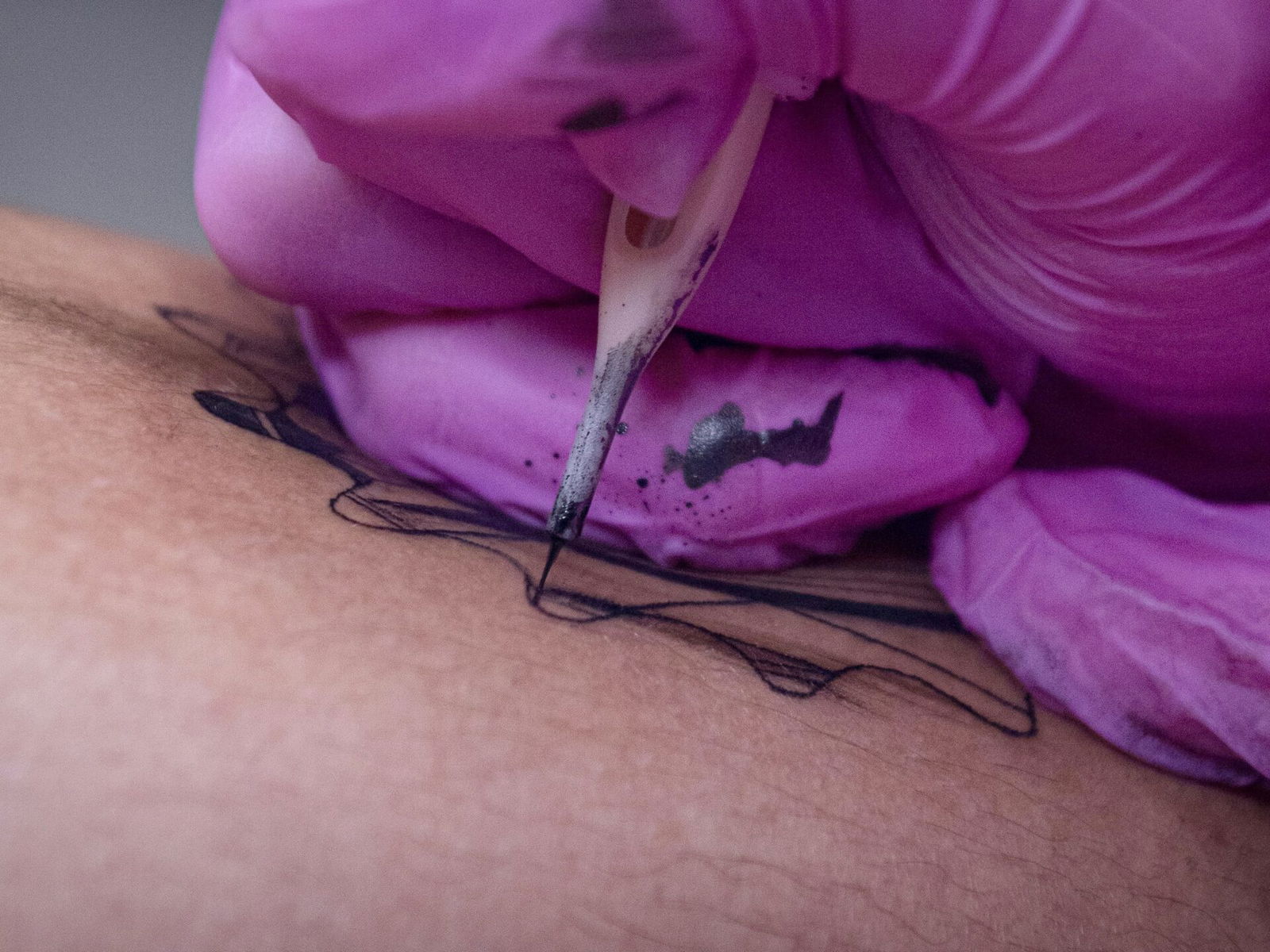
Tattoos with ashes in the ink follow the same process as traditional tattoos once the ink is prepared, but with one or two differences.
The only real way in which getting a cremation tattoo differs from a normal one is that the ashes need to be integrated into the ink of choice beforehand. Once this has been done, the rest of the process is virtually identical.
As there are no laws in the UK specifically governing the addition of materials to tattoo ink, it’s up to the seeker of the tattoo to decide how to go about doing this. There are now a number of companies with innovative, door-to-door processes for the hygienic and safe integration of ash into tattoo ink which they can choose from.
Even the aftercare of a cremation tattoo is exactly the same as that for a normal one, so the only thing the customer has to decide is which tattoo artist to opt for.
The final tattoo looks and feels virtually the same as a normal one — the ash is so finely blended that it doesn’t change the ink’s colour or texture. Some people say it might feel slightly itchier as it heals, but overall aftercare and pain are the same.
It’s even possible to use the ashes of a beloved pet for a cremation tattoo. Recently, a British Army veteran who served in Afghanistan had his dog Treo’s ashes incorporated into a memorial tattoo.
If you are selecting a cremation ink company for this purpose, make sure that they are happy to use animal ashes as well as human ones beforehand.
It goes without saying that in order to use the ashes of a loved one or treasured pet, they first need to have been cremated. We will now explain how the cremation process works, and how this relates to the ash’s incorporation into ink.
The cremation process roughly takes between one and three hours, following a body’s exposure in the cremator to temperatures of between 800 and 1000ºC. Once this has been done, and the cremator has cooled to a safe temperature, a crematorium attendant will gather the ashes of the person who has died with a rake.
The ashes are then stored in a transportable container of some kind. Once you have the ashes of your loved one in your possession, from there you can provide a portion of them to the provider of your cremation ink, who can then start their refinement and filtration process where they add them to the ink.
Exactly how the ashes of your loved one or pet are transformed into ink will depend on your provider’s own particular process. It’s likely that the process will generally work like this:
We hope this explanation of a new and interesting commemoration practice has been useful to you. If you’re interested in learning more about direct cremation, or anything at all relating to how to commemorate someone meaningfully, our helpful team would be delighted to receive your call.
Our free guide to arranging a direct cremation gives you a clear, step-by-step overview of what’s involved, helping you to understand the process and explore whether it’s the right choice for you or your loved ones.
Whether you are thinking ahead for someone on end-of-life care or arranging a funeral now for someone who has passed, we hope this guide can help.
In this guide, you will find:
Yes, it’s possible to mix a small amount of cremation ashes into tattoo ink to create a meaningful memorial tattoo. This is often done through specialised providers who sterilise and refine the ashes before incorporating them into the ink.
Yes, provided the ashes are sterilised and handled by a professional.
There are no specific UK laws regulating ash tattoos. General tattooing laws apply, meaning the practice is not illegal, but it should be carried out under sanitary conditions by a licensed artist.
When done by a hygienic and professional artist using properly sterilised ashes, cremation tattoos are considered as safe as any regular tattoo. Cremation eliminates harmful bacteria, but sterile handling remains essential.
Look for tattoo artists or companies who specialise in cremation tattoos. Ask about their process for incorporating ashes and ensure they follow strict hygiene standards. Some providers ship pre-sterilised ink with ashes mixed in for you to take to your chosen artist.
No, the tattooing process itself is nearly identical to a standard tattoo. The only difference is that the ink contains cremated remains, which does not impact the tattooing sensation or aftercare.
Costs vary depending on the artist and whether they use a specialised process to incorporate the ashes. Some may charge similar to a regular tattoo, while others include an additional fee for preparing and handling the ashes.
Yes. Many people choose to commemorate beloved pets in this way. Be sure to check that your chosen cremation ink provider accepts animal ashes before proceeding.
Think carefully about your design and choose an artist you trust. Ask about hygiene, how they incorporate ashes, and whether they’ve done similar work before. This is a permanent and deeply personal tribute, so it’s worth taking the time to feel confident in your decision.