×

Two Together: Save £100!Save £100 when you purchase two funeral plans together. Call us for more details.


Written by Mitch Tapner.
8 minute read

The anniversary of a death can be a tender and significant day. It’s a moment to pause, remember, and reflect on the life of someone you love. For some, this may be a quiet personal ritual; for others, it’s part of a shared gathering or memorial linked to the funeral.
Poetry has a special place in these moments. It can express emotions that are hard to put into everyday words, capturing both the ache of loss and the joy of shared memories. Whether read at a gathering or in the privacy of your own thoughts, a well-chosen poem can bring comfort, connection, and a sense of closeness that endures.
In this article, we’ll explore the meaning and role of death anniversary poems, different styles you might choose, and ways to make them personal to your memories. You’ll also find tips for writing your own poem, ideas for sharing them meaningfully, and gentle suggestions on how poetry can be part of the healing journey.
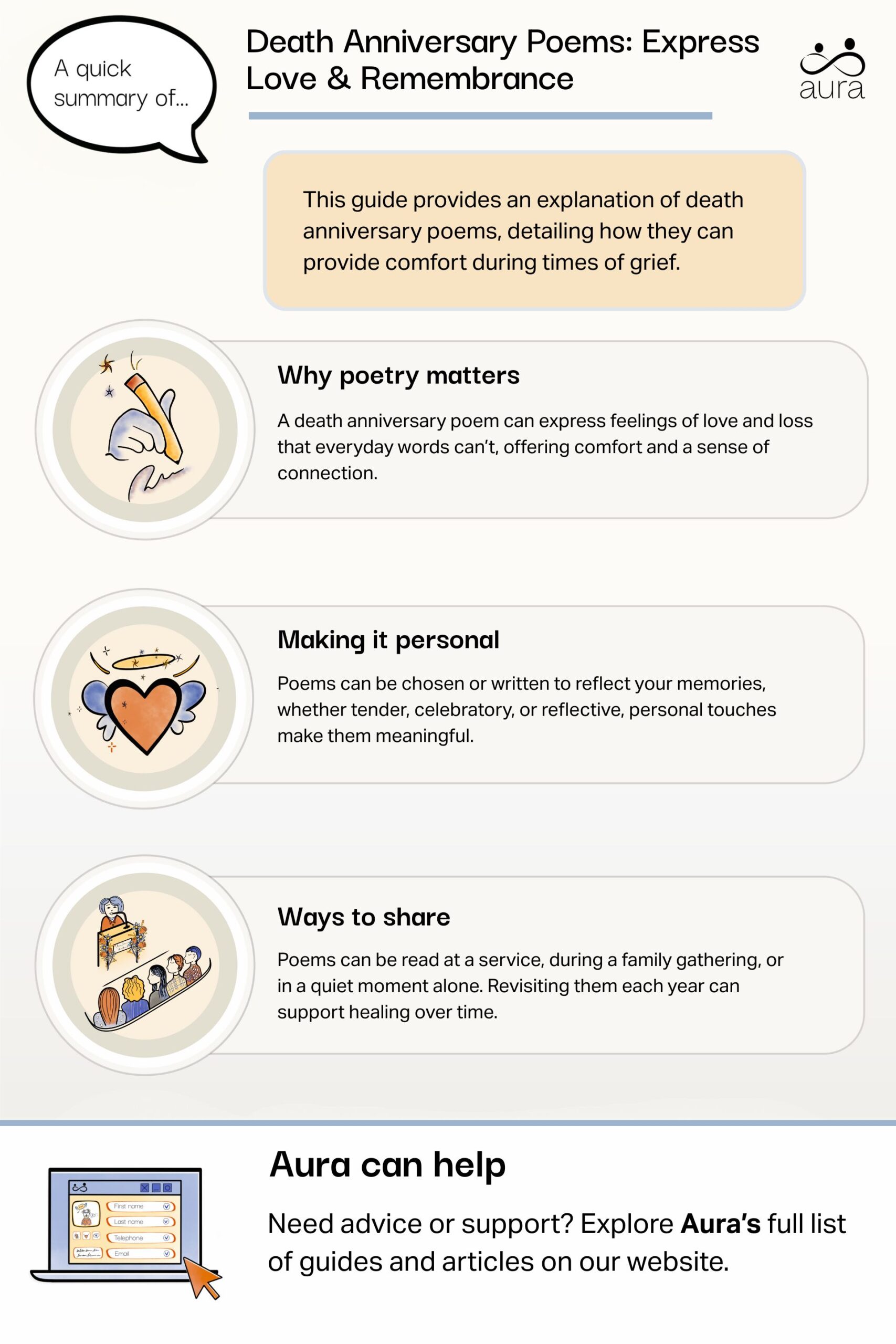
In British funeral traditions, poetry has long played an important role in remembering those who have died. Poems can act as a bridge between the living and the memory of the person, giving expression to feelings that everyday words can’t always capture.
When planning a memorial or end of life celebration, many people choose to read or write a poem to:
This might happen at a formal service, during a family gathering, or alone in quiet reflection. Some may combine poetry with other personal touches, such as displaying photographs or playing favourite songs. However it’s shared, the act can bring comfort, connection, and a renewed closeness.
The first anniversary of a death can bring back the shock of loss alongside gratitude for the love shared. Poems written for this moment may acknowledge the ache of absence while offering reassurance and hope.
Themes often focus on treasured memories, the hope of reunion, or the feeling that the loved one is still present in spirit. Even a short verse can carry deep meaning and help with healing.
Some people prefer to focus on the joy the person brought rather than on sorrow. These poems might be filled with images of laughter at the table, gardens in bloom, or holidays enjoyed together.
They can form part of an end of life celebration, sitting alongside other elements such as funeral tribute examples, music, and readings. This focus on gratitude can make the poem a lasting source of strength for those who hear it.
Tribute poems often blend admiration with grief. They might highlight kindness, humour, or dedication to family. These can be read at a service or kept privately as a keepsake.
Common features include:
When families compare funeral plans, they sometimes choose options that allow space for readings like these, whether as part of a traditional service, a direct cremation with a separate memorial, or a simpler farewell.
The right words can speak volumes. Terms such as mourn, honour, comfort, and remember carry emotional weight. This is true for personal verses as well as more traditional funeral poems, which often balance honesty with tenderness. Some writers use soft, soothing language; others prefer a more direct style.
For example:
“Though time moves on,
My heart still stays,
In the place where you lived,
In the light of your days.”
Personal touches make a poem truly moving. You might include a shared tradition, a smile you remember, or a private joke. This works equally well for friendship funeral poems, grief poems for healing, or verses marking the death anniversary of a parent.
Think about who the poem is for, yourself, your family, or a wider audience, and let that shape your tone. Even a few well-chosen lines can become a cherished part of an annual remembrance.

In a public setting, a poem can create a shared moment of remembrance. Choose one that reflects the feelings of those present and respects cultural or religious customs.
Some families pair the reading with music, candle-lighting, or a slide show of photographs, small touches that help create a meaningful atmosphere.
Others prefer a quiet moment alone. You might read the poem at the grave, keep it in a journal, or revisit it each year. Pairing it with a simple ritual, such as lighting a candle or playing a favourite song, can make the moment even more personal.
If writing feels too difficult, you could explore:
Choosing an existing piece can still feel deeply personal if the words resonate with your emotions and memories.
If you’re also thinking ahead about how you’d like to be remembered, you may wish to explore a funeral plan* that allows space for personal touches like poems, music, and readings.
*Terms and conditions apply. Your funeral plan summary will set out what is and isn’t included.
Counsellors sometimes suggest poetry as a healthy way to process grief. Writing allows you to express emotions safely, while reading can reassure you that others have felt the same.
Some people make it a yearly ritual to write or choose a poem for each anniversary, reflecting how their grief, and their relationship with the memory, has evolved. Over time, these poems can become a record of love, resilience, and connection.
Death anniversary poems can be written for anyone: a parent, child, sibling, friend, or member of the wider community.
The tone may vary, a poem for the death anniversary of a parent might be tender and reflective, while a friendship funeral poem could focus on shared laughter. But the purpose is always the same: to honour a life, offer comfort, and keep the connection alive.
Marking the anniversary of a death can be deeply personal, and there’s no single right way to do it. At Aura, we understand the importance of finding something that feels true to your memories and your relationship.
We can offer gentle guidance, ideas, and practical support, whether you’re planning a gathering, arranging a simple tribute, or looking for meaningful readings and poems. Our role is to help you create a moment that honours your loved one with warmth and dignity.
Whatever you choose, we’ll be here to make sure it reflects the life they lived and the love you carry forward.



If you have any questions, would like a brochure or simply would like a chat through our services, our award-winning team is here to help.
Unlike other providers, we won’t hassle you with constant calls. We’ll simply ensure you have the information you need and leave you to come to a decision in your own time. When you’re ready for us, our team will be ready to help.
A death anniversary poem helps to honour and remember someone who has died. It can give expression to feelings that are hard to put into everyday words, bringing comfort and a sense of connection.
Think about the memories, emotions, and tone you want to share. Some people choose gentle, reflective words, while others prefer verses that celebrate life. Selecting a poem that feels personal and true to your relationship will make it more meaningful.
Yes. Simple, heartfelt language can be just as powerful as a polished piece. Focus on personal memories, moments you shared, and the qualities you loved about the person. These details make your poem unique.
You can read a poem during a memorial service, at a family gathering, or in a private moment of reflection. The best time is whenever it feels most right for you and honours your loved one in the way you wish.