×

Two Together: Save £100!Save £100 when you purchase two funeral plans together. Call us for more details.

Written by Emily Cross.
19 minute read

Article reviewed by Judy Carole, Published Author on August 26, 2025.
Writing a eulogy for a friend is a chance to share special memories, celebrate their life and remember what made them so important to you. It doesn’t have to be perfect or beautifully written. What matters most is that your words feel genuine and reflect the friendship you shared.
Losing a close friend can be just as painful as losing a family member. You’ve shared experiences, made memories and been part of each other’s lives, often for many years. If you’ve been asked to speak at their funeral, you might feel honoured but also nervous about finding the right words, especially when you’re grieving yourself.
Sometimes, family members or next of kin may ask a close friend to deliver the eulogy. While it can feel like a big responsibility, it’s also an opportunity to share stories and moments that others might not know about, helping everyone remember your friend in a personal and meaningful way.
In this guide, we’ll explain how to write a eulogy for a friend, what to include and what to say. We’ll also share examples and practical tips to help you prepare and feel more comfortable speaking on the day.
As a family-run provider of direct cremation services, we understand how important it is to honour someone in a way that feels right. We hope this guide offers some reassurance and inspiration as you find the words to remember your friend.
Key takeaways:
The delivery of a personal, heartfelt eulogy is one of the most widely followed British funeral traditions and one that has been retained by many families who choose a more alternative funeral or memorial service.
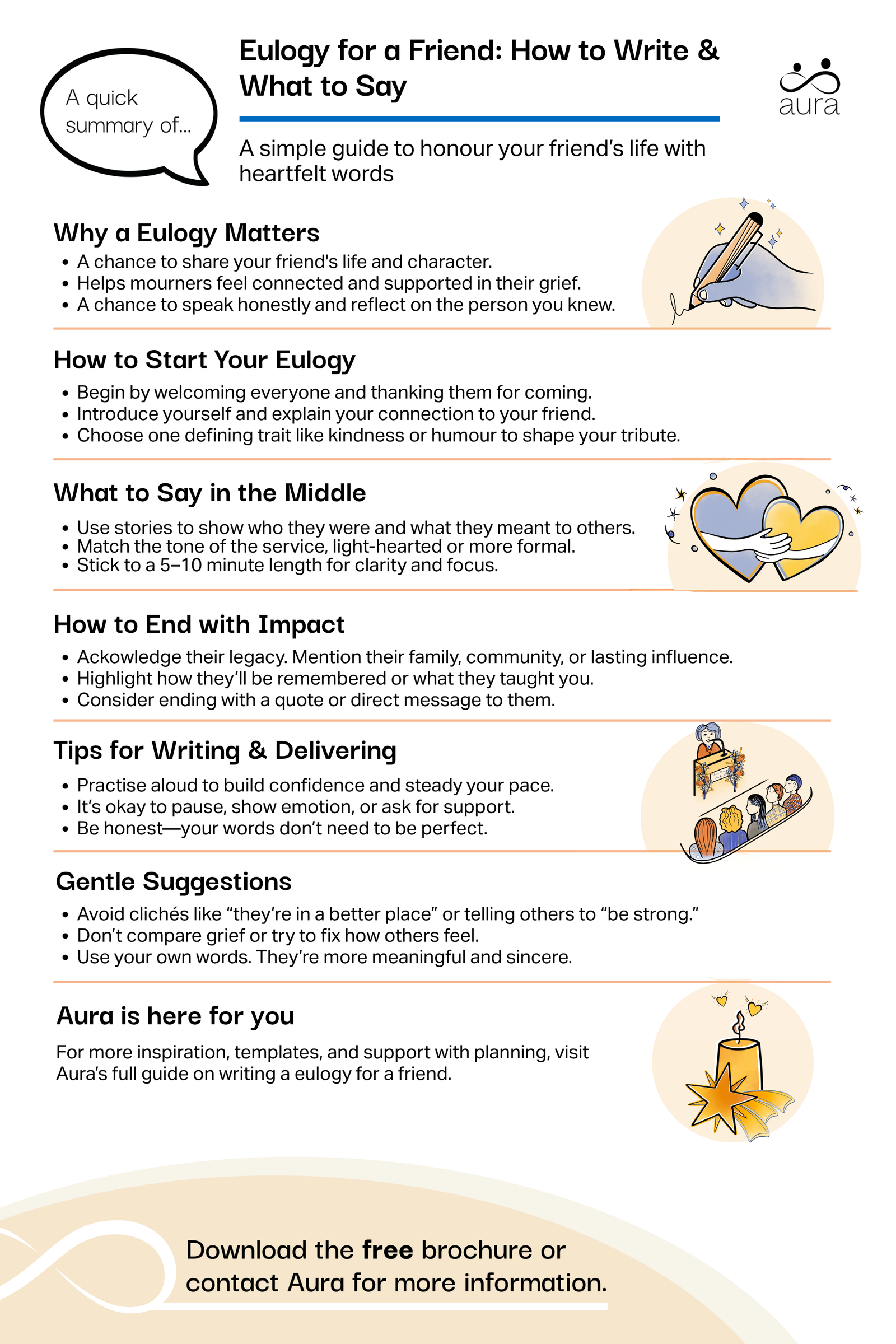
A eulogy is a spoken tribute that honours the life, character and memories of someone who has died. It’s often shared with those gathered at the funeral, offering stories, reflections, and moments that help others feel connected in their grief, creating a meaningful tribute to the friend’s life.
Rather than using clichés, it’s a chance to speak honestly, from the heart, about what the person meant to you, their family, and their friends. Finding the right tone can feel difficult, especially if you’re worried about saying too much or focusing too heavily on your own experience. But with time and care, you can shape a eulogy that feels thoughtful and respectful.
When a death, and especially an unexpected death of a loved one occurs, many mourners may feel a deep sense of loss, anger, and frustration. They come together at the funeral not only to pay their respects and remember their friend, but to share in the grief—so they can feel the comfort of not being alone in their loss.
When we are at home and grieving behind our front door, we might feel like we are the only ones dealing with such challenging emotions, especially when you’re grieving the loss of a friend. The purpose of the eulogy is to play a central role in showing everyone in attendance that the person who has died touched potentially dozens and dozens of lives.
Writing a eulogy for a friend can feel overwhelming, especially when you’re grieving yourself. You might have years of memories to share but struggle to know where to begin.
A meaningful eulogy doesn’t need to tell your friend’s entire life story. Instead, focus on what made them special, the memories you shared and the difference they made to the people around them. A simple structure can help:
You can also use a eulogy template to help organise your thoughts and turn your memories into a speech that feels natural.
The opening of a eulogy can be one of the hardest parts to write. You may feel nervous about speaking in front of others or worry about becoming emotional.
A good place to begin is by introducing yourself and sharing something simple about your friend. You don’t need a dramatic opening. Often, a few genuine words are enough.
Here are six opening lines you can adapt:
Choose an opening that sounds like something you’d naturally say. If humour was an important part of your friendship, a gentle joke may feel right. If you’d prefer something quieter, a simple introduction and a heartfelt memory can be just as meaningful.
The most memorable eulogies often focus on small, personal details rather than trying to cover everything someone achieved.
You might include:
Try to choose memories that other people can connect with, even if they weren’t there at the time.
A eulogy is a spoken farewell that is delivered in front of all of your fellow mourners, and as such, it can understandably feel like a serious responsibility. At a time when you are likely already processing a complex range of emotions and a deep sense of loss, you may find it helpful to know what happens at a funeral so that you can understand the bigger picture.
By understanding the context and thinking about the nature of the rest of the service, you may find that you can find new ideas regarding the tone, delivery, and style you feel is most appropriate. You may also decide that you wish to run your words past a member of the family or another close friend so that they can give you some feedback. If you are able to make the time, doing so a few days before the service will allow you more time to make any adjustments you feel you wish to make.
One of the most common ways to express gratitude for having known someone is to highlight what you are going to miss most about them. It could be their way with words, a shared activity they used to enjoy with you, or even just the way they always found time for their friends and family. You know your friend as well as anyone, so you may wish to take your time and devote a period of reflection to this part. You may also find that doing so allows you to start the grieving process in a way that shows you that rather than your friend simply being no longer with you, they have left you with so much more you can remember and cherish for the rest of your life.
Sharing a lesson they taught you during the course of your life is another way to open yourself up and tell your fellow mourners what your relationship was like. Many in attendance may find solace and comfort in knowing that the person they loved touched the life of someone else in a way that has had a profound impact. You may wish to know that you do not have to feel pressure to share a truly life-changing moment — sometimes it’s the little lessons we learn along the way that are just as important.
The final few words are of course your own, but you may find that speaking directly to your friend helps bring things to a conclusion you feel comfortable with. Previously everything you have said may have been directed at the mourners in attendance, so finishing with a few words spoken to your friend can have the desired impact. Others find that closing with a famous quote that describes what your friend meant to you and the impact they have on the lives of many of the people they met feels right. Sometimes considering a few different options may help you to settle on something that you feel is a fitting tribute.
Reading a favourite poem or quote during a eulogy can add emotional depth and personal resonance. It can be something your friend loved, or something that reminds you of them. These poetic elements can offer comfort and provide a gentle transition to your closing words.
Consider ending with a favourite quote or short poem that your friend loved. If they had a beloved song or lyric, playing or quoting it can be very touching.
One of the most helpful things you can do is practise reading your draft aloud. This can help you feel more prepared and confident on the day. You may find the following tips useful:

Ending a eulogy can feel particularly emotional. After sharing your memories, you may find it difficult to bring everything together and say goodbye. You don’t need to finish with a grand statement or offer advice to everyone listening. A simple, personal ending is often the most meaningful. You could:
For example, you might say:
“Thank you, [Friend’s name], for every laugh, every conversation and every memory. I’ll always be grateful for our friendship, and I’ll carry those memories with me.”
Or, if you’d prefer something shorter:
“I’ll miss you, [Friend’s name]. Thank you for being such an important part of my life.”
If you’re looking for more inspiration, there are many thoughtful ways to end a eulogy with words that feel personal and true to your friendship. Above all, remember that you don’t have to find the perfect ending. Speaking with love and sincerity is enough.
We completely understand that it is not our place to dictate what you should and should not say during the eulogy, but there are some social conventions you may wish to be aware of.
Many of the most impactful, heartfelt eulogy examples for a friend we have had the honour of reading and hearing over the years chose to avoid using the following elements:
Delivering the eulogy may feel like it comes with its own unique set of pressures, especially if you are someone who is highly attuned to the need to avoid any kind of funeral arrangements disagreements. Taking a moment to note the above suggestions and social conventions may help you to lift your confidence and give you the freedom you need to start getting words down on paper.
When the family or next of kin asks you to deliver the eulogy it may help to remember that they see it as an honour and that they have so much trust in you. When the family was working through their funeral arrangements checklist, it was touching that they thought of you when it came to the eulogy. They know you, they love you, and they want you to play a central part in paying tribute at this time.
Although it is okay if you feel you do not want to bother them with too much at this time, you may find that a few quick questions can give you real insight and peace of mind. Hearing about whether or not they are playing uplifting funeral songs could help you to set the tone for your words, as can hearing a little about any end-of-life celebration ideas they may already have.
In the event that you find your nerves are getting the better of you, it may help to check with the next of kin that they are happy for you to write the eulogy but to deliver it alongside someone else. Having another close friend by your side may help provide the comfort and support you need to share your words and provide a fitting tribute.
We believe that everyone has the right to grieve and remember the death of a dear friend in any way they wish. A central part of this is delivering the eulogy and it is something that many families choose to ask a close friend to take care of. While you may find the prospect daunting at first, being kind to yourself and remembering that the family has asked you because they trust you can make a real difference to your state of mind. We also want you to know that you are never alone.
Our services may cover things such as prepaid funeral plans for those looking to put their affairs in order while still alive, and our resources often touch on topics such as how to compare funeral plans, but we also believe in going far further. Our online guides are here whenever you need them and are designed to provide a sense of comfort at a time when finding the right details or information can make a difference.
We invite you to explore our other funeral arrangements guides that cover things such as the nature of funeral services, funeral etiquette, and funeral flowers. By no means do we want you to feel obligated to do so — we just want to let you know that we are here whenever you need us.
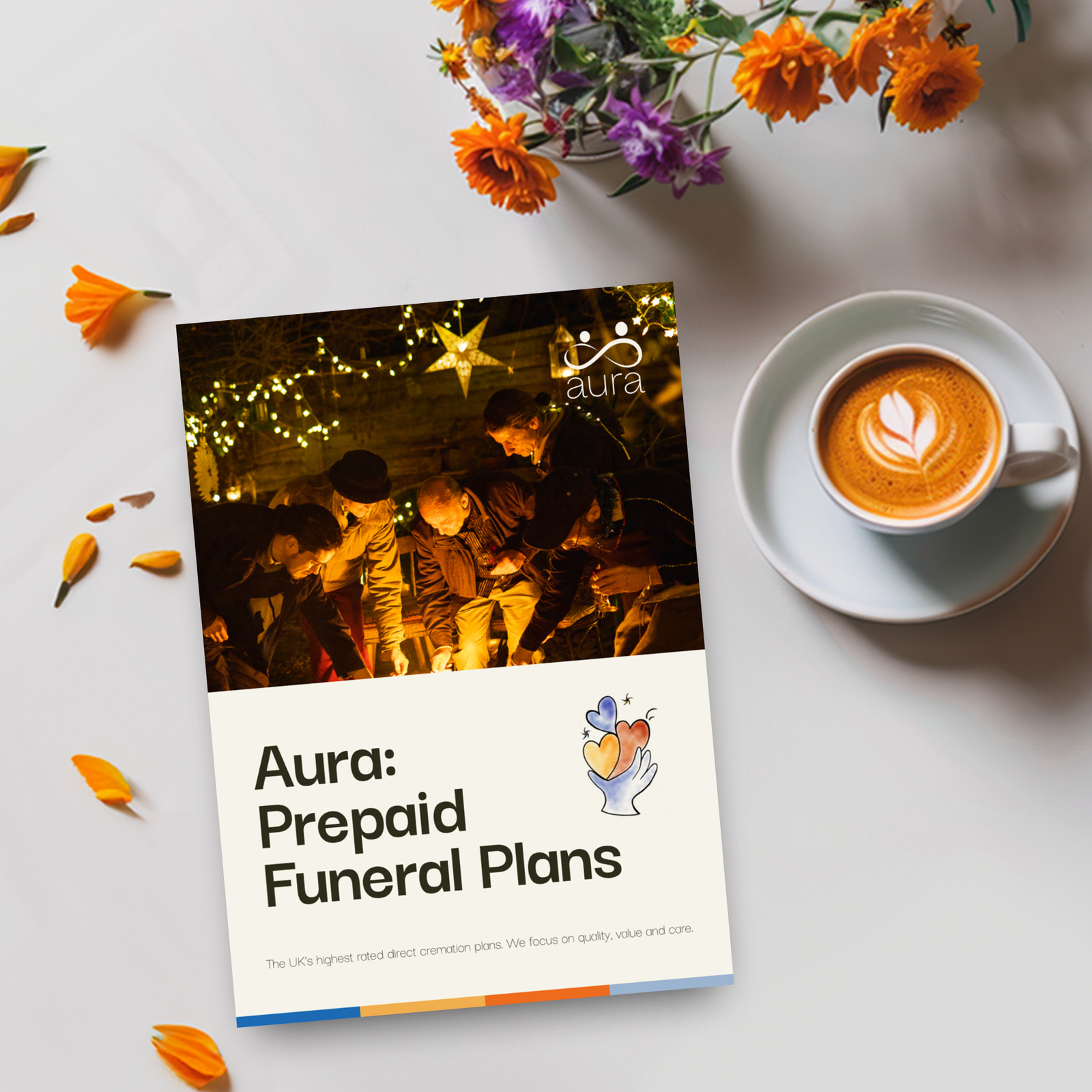
If you’d like to know more about how to plan a cremation with Aura, our brochure is a helpful place to begin.
Our funeral plans are a helpful way to put everything in place for you or someone else.
When the time comes, our experienced team will be here to guide you through each step, offering support and advice whenever you need it.
To find out more about how our plans work, what’s included, and our story, you can request a brochure by clicking the link below. We will then send you a copy by email or First Class post—whichever you prefer.
Talking about what you loved about your friend, what you will remember them for, and what they brought to your life will typically form the central part of the eulogy you deliver. Finding the right balance between light humour, paying your respects, and leaving your fellow mourners with a clearer picture of who your friend was is what it is all about. You may find that the act of writing down how you feel as you draft your eulogy gives you the time and space you need to begin processing how you feel.
There are a variety of different styles of quote you can include in a eulogy and the choice is ultimately left to the person who will deliver it. A common approach is to end with a short and powerful quote from a well-known figure. Doing so may allow you to tie everything together and end on precisely the type of sentiment you want to deliver. Here are three examples that may be helpful to consider:
One of the best ways to give a eulogy real authentic meaning is to begin with a few words about who you are. Although it is normal to feel self-conscious about doing so, it’s important to let everyone who attends know who you are so that they can listen to your words within the context of your relationship with the person who has died. Once they know you are close friends, they will know that any humour you may choose to use is in good taste and that the family has asked you because they trust your judgement.
While clichés often come to mind, you may decide that they have the unwanted effect of minimising the feelings of other people. Sometimes what you may feel most comfortable with are short, empathetic choices of words that show you are listening, that you care, and that you feel a similar sense of loss and grief. Meeting friends of the person who has died who are outside of your own friendship groups may help you find a sense of unity. It can also introduce you to new sides and memorable stories that you never knew before.
There is no set limit to a eulogy, but many choose to stick somewhere between 5-10 minutes. A eulogy of this length gives you enough time to tell several heartfelt stories and then end with a poignant or powerful choice of words that tie everything together. If you find that there is so much more you want to say, but you are mindful of overrunning, it may help to remember that a wake or memorial service afterward provides more time to share with others.