×

Two Together: Save £100!Save £100 when you purchase two funeral plans together. Call us for more details.


Written by Mitch Tapner.
10 minute read

Dealing with a loved one’s estate after they’ve died can feel overwhelming – especially when you’re also trying to organise a funeral. One of the biggest sources of confusion is probate: what it is, why it matters, and how it affects access to money for funeral costs.
It’s important to note that probate doesn’t apply in every situation. Many people, especially those with simpler financial arrangements, may not need it at all. But when it does apply, understanding the process can make a big difference.
In this guide, we’ll explain how probate works, who’s responsible for paying funeral expenses, and the different ways you may be able to cover the costs, even before probate is granted. We’ll also outline what support is available if money is tight, and how to manage debts from the estate.
Whether you’re planning ahead or supporting someone through a bereavement, understanding the process can make a difficult time that little bit easier.
Probate is the legal process of handling a person’s estate after they die. If there’s a will, it confirms it’s valid and gives the executor the authority to deal with the person’s money, property, and belongings. If someone dies without a will, an administrator takes on this role under the rules of intestacy.
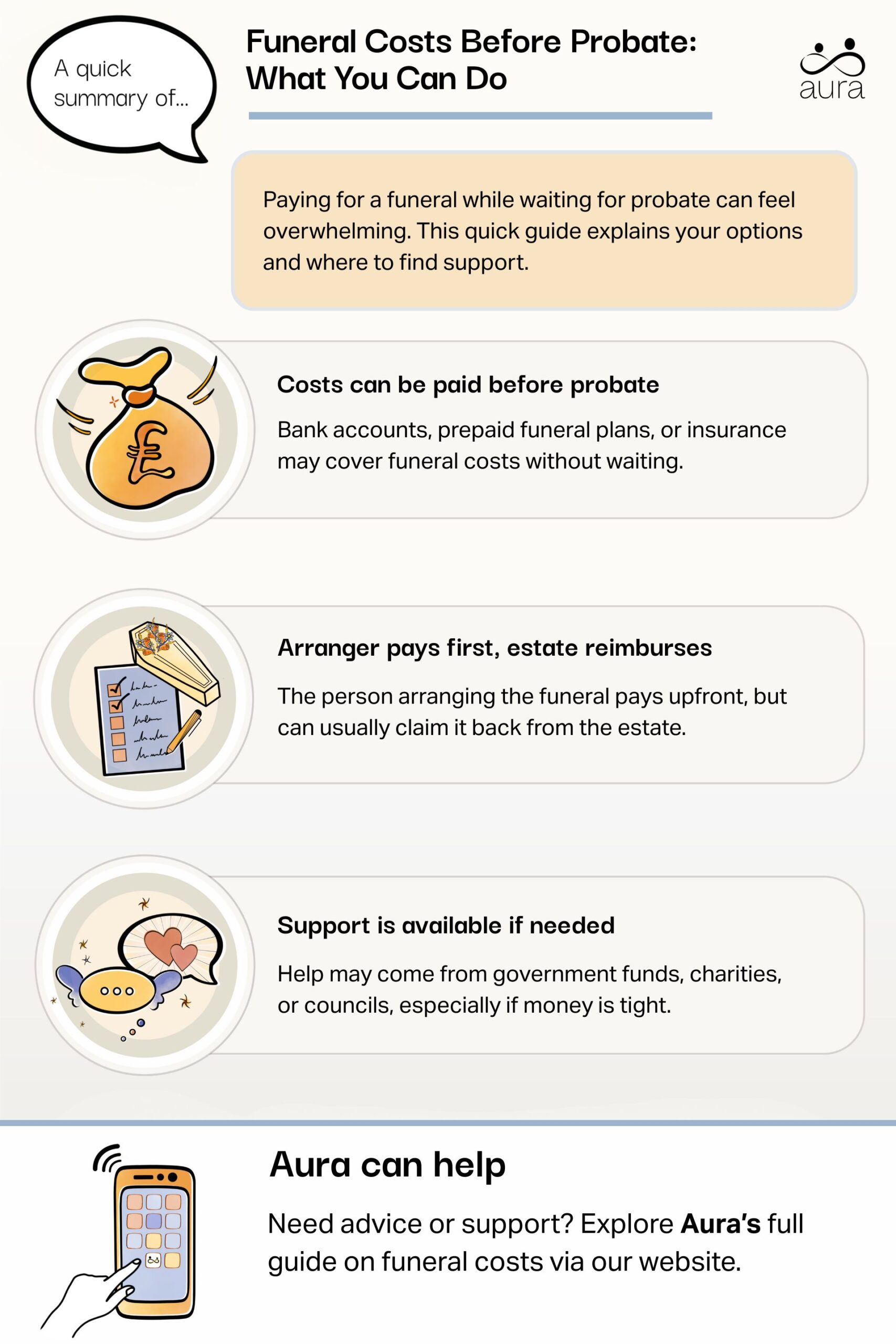
After someone dies, their sole bank accounts are usually frozen. This means loved ones can’t access the money directly — even to cover funeral costs. However, most banks will agree to release funds directly to a funeral provider if shown a copy of the death certificate and the funeral invoice. It can be a confusing time, as families are expected to organise a funeral while access to money is limited.
If you need any more information about how to apply for probate with a will – Aura is here to give you a helping hand.
In the UK, the person who arranges the funeral is responsible for paying the bill at first. This is often the executor, a close family member, or the next of kin. But that doesn’t always mean they’ll pay the cost in the long run.
Funeral costs are treated as a priority debt. They’re usually reimbursed from the estate before other debts like credit cards or personal loans. However, the person who signs the contract with the funeral director is legally responsible if the estate can’t cover the cost.
While banks normally freeze bank accounts after a death, many make an exception for funeral costs.
You can ask the bank to pay the funeral director directly from the person’s account. This avoids the need to pay out of your own pocket. You don’t need a full grant of probate, just the right documents, such as:
Each bank has its own process, but most major UK banks offer this service. Payments usually go straight to the funeral provider, not to the family.
In some cases, probate isn’t needed at all. This may apply if the estate is small or mainly consists of joint assets, such as a shared bank account.
Many banks have a probate threshold. If the estate is below this limit, they may accept a small estate indemnity form instead of full probate. A solicitor can help with this if needed.
If assets are held in joint names – for example, between spouses – the surviving person can usually access the funds right away to cover funeral costs.
If the person who has died had a prepaid funeral plan, the cost is already taken care of. These plans fix the price of a funeral in advance and often include key services like collection, cremation, and paperwork.
Life insurance can also help cover funeral costs. In most cases, insurers will release funds for funeral expenses upon presentation of the death certificate and the funeral invoice, though full payouts from the policy may take longer. It’s worth checking if a policy is in place before paying any costs yourself.
Aura offers prepaid funeral plans and direct cremation at a fixed cost – designed to ease financial pressure and avoid unexpected bills.
Terms and conditions apply. You will receive a funeral plan summary before purchase to help you make an informed decision.
If there’s no money available, support may still be available. The UK Government can offer help through the Funeral Expenses Payment scheme for people receiving certain benefits.
The Bereavement Support Payment may also be available to those eligible, with the scheme aimed at easing the financial strain if you’ve lost a spouse or civil partner. In Scotland, there’s also the Funeral Support Payment, which can help low-income families with the cost of a funeral. Aura’ article covering bereavement support should help provide you with all the details you need.
In England and Wales, a public health funeral may be arranged by the local council or hospital if there’s no one able or willing to pay. Some charities and religious organisations also offer funeral grants in emergencies, with the following potentially being able to help.
If you’ve paid for the funeral yourself, you can usually claim the money back from the estate – if there are enough funds.
To do this:
Reimbursement is usually one of the first steps once probate is granted, before any inheritance is paid out.
If there isn’t enough money in the estate to repay you, the responsibility stays with the person who signed the contract. If this happens, you could:
Working out how to pay for funeral expenses in this situation may be difficult, but there are options like public funerals. If no one is able or willing to cover the costs, the local council may arrange a public health funeral.These funerals are carried out with care and respect, but they are usually very simple, and the family may have little or no involvement in the arrangements.
One of the executor’s duties is to find and deal with any debts left behind. These might include:
You can check for debts by reviewing bank statements, post, and online accounts. A credit report can also help identify anything outstanding.
Let creditors know about the death as soon as you can, and provide a copy of the death certificate if asked.
Funeral costs must be paid first, before any other debts. After that, the order is usually:
No inheritance should be paid out until all debts and funeral costs have been settled.
If the estate has more debts than assets, it’s considered insolvent. Family members are not responsible for paying these debts from their own money – unless they were a joint account holder or signed a personal guarantee.
Don’t distribute any part of the estate until you’re sure it’s solvent. If in doubt, speak to a solicitor or an insolvency specialist.
When an estate is insolvent, debts are paid in a legal order. Some may be written off if there isn’t enough to go round.
We know how difficult it can be to navigate funeral arrangements and financial matters during a time of loss. Whether you’re worried about covering costs before probate is granted, or simply don’t know where to start, we’re here to make things a little easier.
At Aura, we offer simple, affordable funeral plans – whether you’re planning ahead for peace of mind, or arranging a funeral now. Our prepaid options and fixed-price direct cremation services are designed to ease financial stress and avoid unexpected bills.
Terms and conditions apply. A funeral plan summary will be provided before you make any decision.
If you’re unsure about probate, funeral costs, or what help you might be entitled to, our friendly team can guide you through the next steps, without pressure or jargon.
You’re not alone. We’re here to support you with honest advice and gentle guidance, every step of the way.



No, probate isn’t always needed to arrange or pay for a funeral. In most cases, banks will release money from the person’s account directly to the funeral provider, as long as you can provide a death certificate and invoice. If the person had a prepaid funeral plan or life insurance, these can also help cover the costs without waiting for probate.
If you’re struggling to cover funeral expenses, you may be able to get help. Government support is available through the Funeral Expenses Payment (for those on qualifying benefits in England, Wales, and Northern Ireland), the Funeral Support Payment in Scotland, or the Bereavement Support Payment for those who have lost a spouse or civil partner. Some councils can arrange a public health funeral if no one is able or willing to pay. Charities like Quaker Social Action and Turn2Us may also offer support.
Yes, if you pay for the funeral yourself, you can usually claim the money back from the estate—provided there are enough funds. Keep receipts, record all payments clearly, and include funeral costs in the probate application. Funeral costs are prioritised over most other debts and are reimbursed before any inheritance is paid out.