×

Two Together: Save £100!Save £100 when you purchase two funeral plans together. Call us for more details.

Written by Mitch Tapner.
8 minute read

Deciding what to wear to a funeral can be hard to navigate, especially at a time when emotions are already running high. Clothing, including footwear, is a way of showing respect to the person who has died and of offering quiet support to their loved ones.
Shoes may seem like a small detail, but they play an important role in how we present ourselves. The right footwear balances respect with comfort, helping you feel prepared for the day while blending in with the tone of the occasion.
This guide gently explains the traditions and expectations around funeral footwear, offering reassurance on what is appropriate and comfortable to wear. It also forms part of a broader British funeral attire guide, helping you understand how to dress with respect and sensitivity.
When attending a funeral service, the way you dress is not only about appearance. It is a gesture of respect towards the person who has died and their family. What you wear, including your shoes, can show care and thoughtfulness.
In British funeral traditions, dark, formal clothing is often chosen to reflect the solemnity of the occasion. Footwear is part of this formality. Shoes are not an afterthought; they contribute to the dignity of how mourners present themselves.
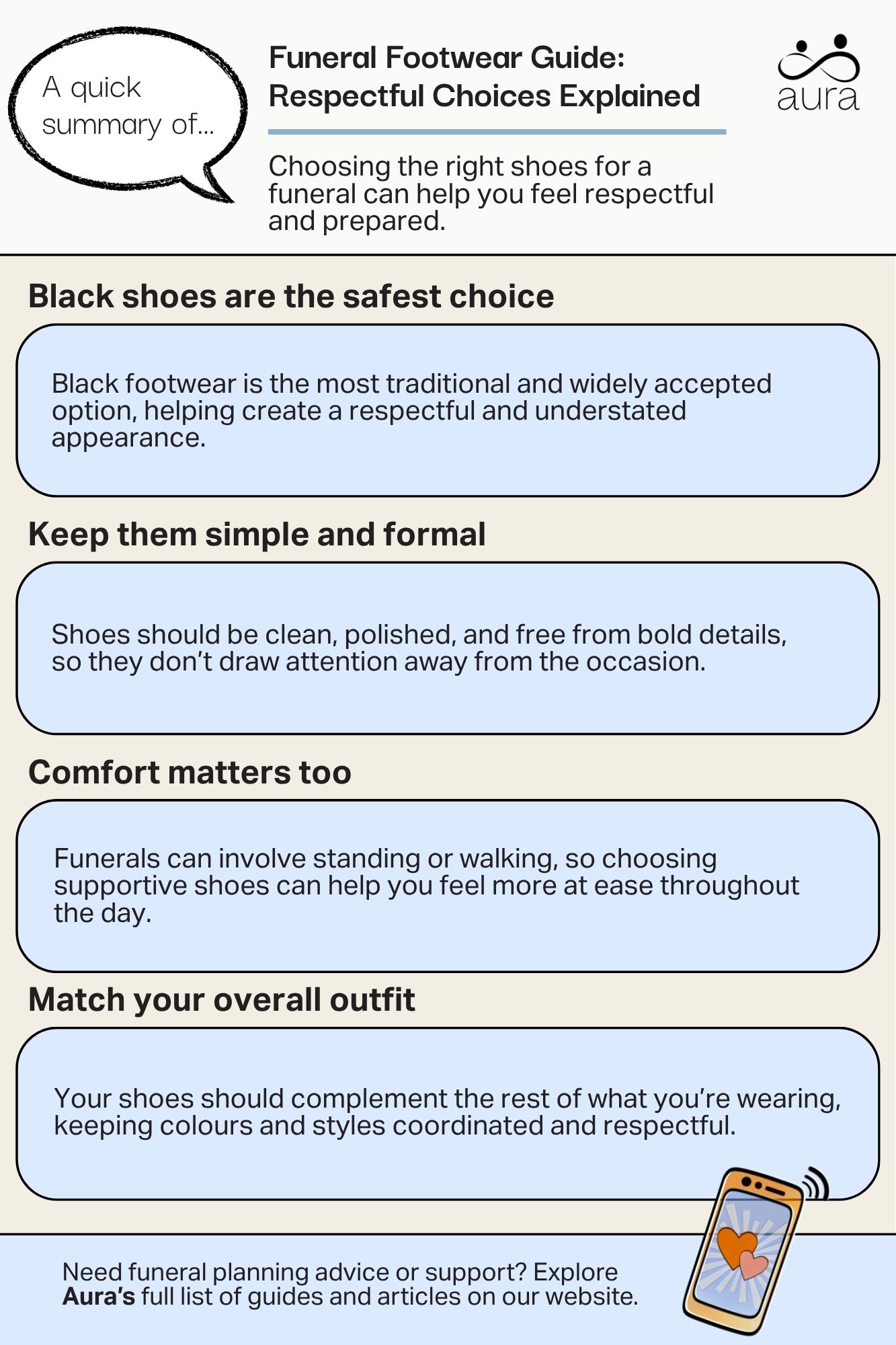
Try to keep shoes clean and polished. They should not draw attention but instead reflect quiet respect. The guiding principles are formality, modesty, and harmony with the rest of your outfit.
Traditionally, black shoes are the most accepted and respectful choice. They are discreet, versatile, and symbolise dignity. Black footwear complements formal clothing such as suits, dark dresses, and formal coats, which are all common in funeral etiquette in the UK.
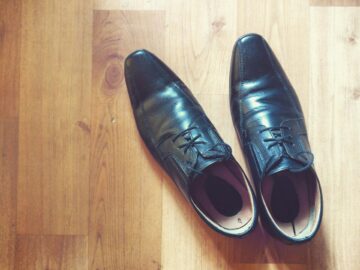
For men, polished black Oxfords or Derbies are the most common. For women, closed-toe black flats or modest heels are seen as appropriate. Black remains the safest choice for those unsure of what colours to wear to a funeral.
Many people ask whether brown shoes are acceptable at a funeral. The answer is yes, but only in certain circumstances. Dark brown shoes may be suitable if they are formal, polished, and paired with a dignified outfit. For example, a black suit with dark brown shoes can work if the overall look remains respectful.
Cultural or regional customs can also play a part. In some communities, black is expected without exception, while in others, dark brown or navy footwear may be acceptable. If in doubt, it is always best to choose black.
When deciding on footwear, it helps to think about both respect and comfort. Funerals can involve long services, walking, or standing, so shoes should be comfortable enough for extended wear while still being formal and understated.
For men, black Oxfords, Derbies, or plain loafers are timeless choices. These styles are elegant, formal, and avoid unnecessary detail.
A common question is whether a black suit can be worn with brown shoes. While very dark brown shoes may sometimes work, black shoes are generally the most appropriate. Choosing black removes any uncertainty.
Trainers, casual boots, or brightly coloured footwear should be avoided.
For women, closed-toe shoes are recommended. Low heels or flats in black leather or suede are suitable.
For children, smart and comfortable footwear is important. Black school shoes or simple formal shoes are usually appropriate. The focus should be on helping them feel at ease while remaining presentable.
Respectful footwear does not have to mean discomfort. Funerals often involve standing for long periods or walking to a graveside, so shoes should be supportive and practical.
Leather is a good option, as it is durable, breathable, and can be polished to maintain a formal look. Dark suede may also be appropriate if kept in good condition.
The aim is shoes that are subtle, comfortable, and refined, suitable for the occasion without drawing attention.
It is possible to look stylish without standing out. Polished black or dark brown leather is tasteful, while shiny patent shoes can be suitable if the design is simple.
Casual or brightly coloured footwear, heavy embellishments, or bold branding can appear out of place at a memorial service dress code. In general, refinement and simplicity should guide the choice.
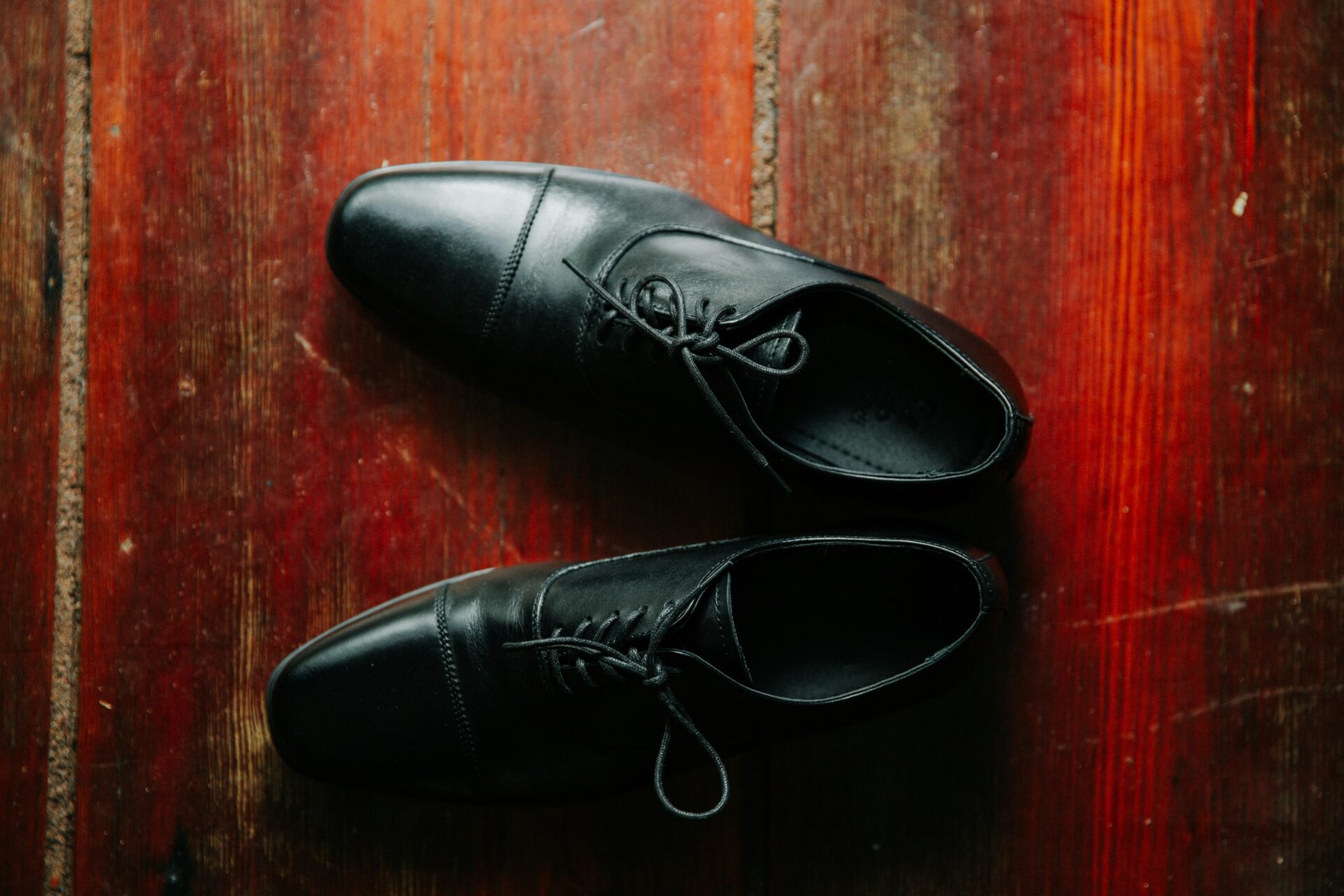
Shoes should be considered as part of the full outfit. Coordinating colour, texture, and formality helps create a respectful appearance.
A black or navy suit is best paired with black shoes. Grey or navy clothing may sometimes allow for dark brown shoes, though black remains the safest choice. Dresses and skirts are usually best complemented by simple, dark footwear.
Colour coordination matters. Black, navy, and charcoal clothing are best matched with black shoes. If brown shoes are chosen, they should be very dark and polished to maintain a formal tone.
Leather is the most appropriate material, with suede also acceptable if well cared for. Patent leather is suitable for women if the style is simple. Bright colours, casual trainers, or patterned shoes should be avoided unless a cultural or religious tradition allows otherwise.
Different traditions and faiths can influence what is considered suitable footwear. Some Christian funerals, such as Catholic or Anglican, lean towards strict black clothing and shoes, while less formal services may allow for dark brown or navy.
Fashion professionals like Best Shoes Reviews believe that shoes should reflect the tone of the occasion – formal, modest, and respectful – while also being comfortable enough for the day.
Many trusted retailers and designers provide formal shoes suitable for when attending a direct cremation or traditional service.
These brands are known for quality, durability, and understated style. The best funeral footwear will always be respectful, polished, and dignified.
Making decisions about what to wear is just one part of preparing for a funeral. At Aura, we understand that these moments can feel overwhelming, and we are here to guide you with kindness and care.
Whether you are arranging a funeral plan, or simply looking for clear advice on funeral etiquette, our team is here to offer support. We can walk you through traditions, answer your questions, and help you feel reassured about the choices you make.
Our goal is to make planning and attending a funeral feel a little less daunting, so you can focus on honouring the person who has died and supporting those around you.

If you’d like to know more about how to plan a cremation with Aura, our brochure is a helpful place to begin.
Our funeral plans are a helpful way to put everything in place for you or someone else.
When the time comes, our experienced team will be here to guide you through each step, offering support and advice whenever you need it.
To find out more about how our plans work, what’s included, and our story, you can request a brochure by clicking the link below. We will then send you a copy by email or First Class post—whichever you prefer.
Shoes for a funeral should be formal, simple, and respectful. Polished black shoes are the most common choice, but very dark brown may be acceptable if they are subtle and well-matched to the outfit. Trainers, brightly coloured shoes, or styles with heavy embellishment are best avoided. Comfort is also important, as funerals can involve standing or walking.
Black shoes are not strictly required, but they are the safest and most traditional option. In many communities, black is expected as it symbolises respect and dignity. Very dark brown or navy may be suitable in some cases, but if you are unsure, choosing black avoids any uncertainty.
Yes, flats are perfectly appropriate for a funeral. Closed-toe styles in black leather or suede are considered respectful and practical. Low heels are also acceptable if they are modest and comfortable, but high or decorative heels may feel out of place. The priority is to look presentable while feeling comfortable throughout the day.