×

Plan ahead and save up to £200 Save up to £200 on selected funeral plans until 30 September. T&Cs apply. Click here for full details.

Two Together: Save £100!Save £100 when you purchase two funeral plans together. Call us for more details.


Written by Mitch Tapner.
13 minute read

Article reviewed by Emily Cross, Self-Employed Death Doula on March 13, 2025.
Planning a funeral might not be something you’ve thought about before or it might be something you’ve been quietly considering for a while. Either way, it’s a deeply personal decision and a meaningful part of end-of-life planning.
Preplanning your funeral doesn’t mean expecting the worst. It simply means taking a little time now to make things easier for you, and for the people you love. It’s a way to make your wishes known, ease future stress for your family, and feel reassured that everything will be taken care of when the time comes.
In this guide, we’ll walk you through what funeral preplanning is, how it works, and why many people are choosing to plan ahead. Whether you’re exploring options for yourself or supporting someone else, we’re here to help you feel informed, confident, and cared for at every step.
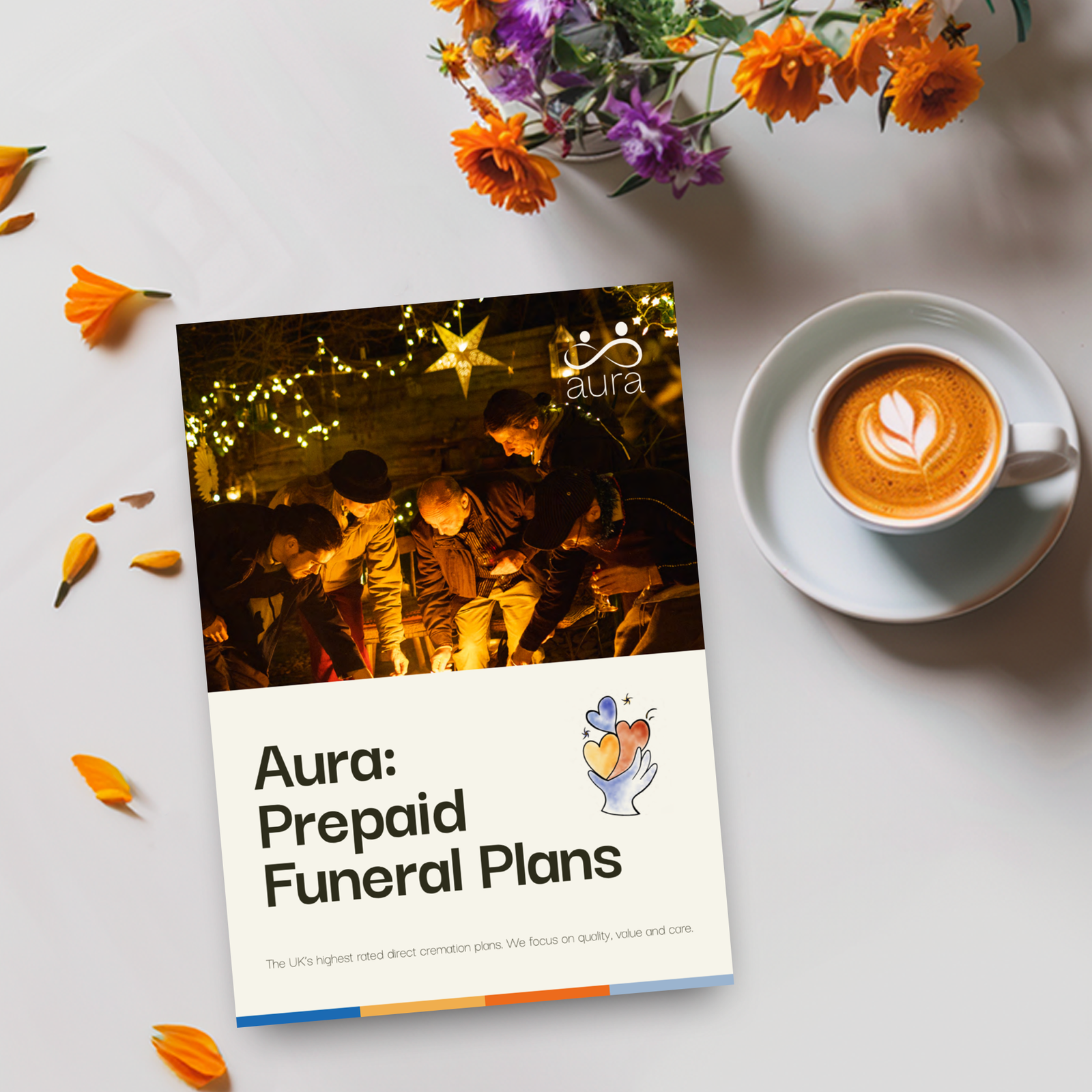
If you’d like to know more about how to plan a cremation with Aura, our brochure is a helpful place to begin.
Our funeral plans are a helpful way to put everything in place for you or someone else.
When the time comes, our experienced team will be here to guide you through each step, offering support and advice whenever you need it.
To find out more about how our plans work, what’s included, and our story, you can request a brochure by clicking the link below. We will then send you a copy by email or First Class post—whichever you prefer.
Funeral preplanning means making choices about what happens after you die, before it happens. It can involve writing down your wishes, deciding between cremation or burial, and choosing someone you trust to carry everything out. It’s a way to ease the load for your loved ones when the time comes.
For example, one person might choose a simple cremation with no service, while someone else might want a small memorial with music and readings. There’s no right or wrong. It’s about what feels right to you.
People often preplan to take the pressure off their family, to manage costs, and to have a say in how they’ll be remembered. It’s a thoughtful act of care, not a sign of worry. It helps bring clarity, comfort, and peace of mind to everyone involved.
Planning your funeral ahead of time means your family won’t have to make big decisions in a moment of grief. Instead of feeling overwhelmed or uncertain, they’ll know exactly what you wanted. It can also help prevent confusion or funeral arrangement disagreements at a time when emotions are already high. Having plans in place can also help families feel less anxious about the waiting time for a funeral, as many decisions are already made
You might be someone who prefers to be organised, or you might be thinking ahead as a carer or an ageing parent. Either way, preplanning is a way to quietly reassure those you love. Everything is in place, and they won’t be left wondering what to do.
Funeral costs in the UK have continued to rise. Preplanning allows you to choose a service that suits your budget and either pay in full or spread the cost in monthly instalments. This helps avoid unexpected bills later on, something especially helpful if you’re on a fixed income or want to protect your family’s savings.
At Aura, any money you pay for a funeral plan goes into a secure, regulated trust. It’s there when it’s needed, and nothing is hidden. You’ll always know what’s included and what isn’t.
Most funeral plans cover the essentials, such as cremation or burial, collection and care of the person who has died, and transport to the crematorium or cemetery. You can also include a service or ceremony if you’d like one.
There’s room for personal touches too. Some people choose to include music, readings, or a spiritual element. Others plan an ash scattering ceremony, or decide whether family and friends should attend the cremation or not. Some families may even opt for a quiet moment at home or a larger end-of-life celebration that brings everyone together. The plan can be shaped around your beliefs, culture, or preferences.
A clear plan also includes the right paperwork. This usually means having an up-to-date will, naming an executor, and keeping your funeral plan documents together with any life insurance or estate details.
You might also consider advance care planning—writing down your wishes for future medical care in case you’re ever unable to express them. This helps ensure that not just your funeral, but your healthcare preferences are known and respected.
Learning how to start a conversation about death can be a tricky first step, but it can also be the most meaningful. Talking to your family about what you want and listening to what might help them grieve, can open space for connection and clarity.
You don’t need to make it a serious or heavy conversation. Just be honest and practical. You’re not being morbid; you’re being thoughtful. If you have a faith or cultural leader who’ll play a role, it can be helpful to include them too.
Not all funeral providers offer the same level of care. Some are focused on selling extras; others prioritise transparency and compassion. It’s worth taking the time to compare your options.
Look for a provider that’s regulated by the Financial Conduct Authority (FCA). This means there are rules in place to make sure you’re treated fairly, from how your money is looked after, to the information you’re given. FCA regulation is there to protect you and give you confidence that you’re in safe hands.
It also helps to choose a provider who’s clear about costs, easy to talk to, and experienced in handling things with care. Aura, for example, is a family-run provider created to do things differently. Our team, known as Aura Angels, has supported thousands of families through planning and loss, always with warmth and respect.
Reading reviews can also help you make an informed choice. Aura for example is rated 4.9/5 stars on Trustpilot.
Once you’ve made your decisions, it’s time to put them in writing. This might include whether you want a cremation or burial, what kind of service (if any) you’d like, and any specific readings, music, or instructions for your ashes or resting place.
Writing down your end-of-life wishes helps make sure your voice is heard, even when you’re no longer here to speak for yourself. It can offer comfort and clarity to your loved ones, especially during a difficult time.
Once it’s written down:
If you buy a plan with Aura, we’ll send you written confirmation and store your details securely. Full terms will be included in your funeral plan summary.

What is funeral preplanning?
It means making decisions about your funeral ahead of time, so your loved ones aren’t left to figure it out during a difficult moment.
How much does it cost?
It depends on the type of funeral you choose. Direct cremation is usually more affordable, while funerals with a service and extras can cost more. Many providers offer the option to pay upfront or in monthly instalments.
Why do people preplan?
To make things easier for their family, avoid rising costs, and ensure their wishes are known and respected.
Is it safe to pay in advance?
Yes, if your provider uses a regulated trust, like Aura does. This protects your money and ensures it’s only used when the time comes.
Can I change my plan later?
Absolutely. A good provider will allow updates if your circumstances or preferences change.
How do I document my wishes?
Write them down clearly and share copies with your family, solicitor, or the person who’ll take care of things.
What if I don’t want a funeral service?
That’s completely your choice. Many people choose cremation without a service, or opt for a quiet gathering later on.
Cremation is now the most common choice in the UK. It’s simpler, usually more affordable, and gives families flexibility in how they say goodbye.
Many people now choose what’s known as direct cremation, a simple cremation with no service at the crematorium. This option offers a low-stress, low-cost funeral alternative, and still allows for personal touches such as a separate memorial or gathering at a later time.
You don’t need a burial plot, and arrangements can happen more quickly. There’s also more freedom in when and where ashes are returned or scattered.
Some people choose cremation without a ceremony, while others might request a particular piece of music, a poem, or a place for their ashes to be laid to rest. It’s your choice.
Preplanning a cremation with Aura includes a fixed cost, no hidden fees, and thoughtful touches like hand-delivering the ashes to your family. It’s a simple, respectful option that still allows space for meaning
It’s important to understand what’s included and what’s not, and to consider whether a funeral plan is right for your personal or financial circumstances.
Planning ahead doesn’t have to feel overwhelming. Whether you’re thinking about your own wishes or helping someone else get started, Aura is here to make things simpler, calmer, and more personal.
Our team takes care of everything with warmth and respect. There are no hidden fees, and any money you pay is kept safe in a regulated trust.
If you’d like to talk things through, ask questions, or just understand your options, we’re always here to help.
*Terms apply. A funeral plan summary outlining what’s included and excluded will be provided before purchase.*


If you have any questions, would like a brochure or simply would like a chat through our services, our award-winning team is here to help.
Unlike other providers, we won’t hassle you with constant calls. We’ll simply ensure you have the information you need and leave you to come to a decision in your own time. When you’re ready for us, our team will be ready to help.
Our team is available Monday–Friday, 9.00–5.00pm.
Funeral preplanning means organising and documenting your funeral arrangements in advance. It includes choosing between burial or cremation, planning the service, deciding on music or readings, and arranging how to cover the costs. It’s a way to reduce pressure on your family and ensure your wishes are followed.
Preplanning your funeral helps your loved ones avoid making difficult decisions during a time of grief. It provides peace of mind, locks in costs at today’s prices (if using a prepaid plan), and lets you personalise your funeral in a way that reflects your life and values.
A well-rounded funeral checklist covers:
Your choice of cremation or burial
The type of service (religious, non-religious, attended, or direct cremation)
Music, readings, and tributes
Preferred funeral provider
Budget and payment method
Documentation (will, power of attorney, funeral plan)
Instructions for handling your ashes (if cremated)
Location for stored documents
No. Cremation is generally more affordable than burial, which often includes extra costs like a headstone, grave plot, and maintenance fees. Direct cremation is the simplest and most cost-effective option.
A living funeral is a celebration of life held while the person is still alive. It allows friends and family to say goodbye in a meaningful way, offering closure and comfort ahead of time. These are especially powerful for those with terminal diagnoses and are becoming increasingly popular in the UK.
You can use:
A prepaid funeral plan, which locks in today’s prices
Over-50s life insurance
Personal savings
Aura’s prepaid funeral plans are fully regulated, protected by the FSCS, and managed independently in trust — ensuring your money is safe.
You may consider:
Writing or updating your will
Assigning power of attorney
Creating an advance care plan
Appointing an executor
These ensure your final wishes are respected and your estate is handled properly.
After the death has been verified by a medical professional, you can begin making funeral arrangements. This means that arranging funeral before registering the death is often possible, even though the funeral itself cannot take place until registration is complete.
Store copies of your funeral plan, will, and related documents in one central file. Keep them in a secure, accessible place — either at home, with your solicitor, or digitally using tools like Aura Circle, which allows you to share your wishes securely online with your trusted contacts.
Yes. If your preferences change over time, you can update your funeral plan or documents accordingly. It’s a good idea to review them annually to ensure everything still reflects your wishes.
Look for:
Clear pricing with no hidden costs
Positive customer reviews (Aura is rated 4.9/5 on Trustpilot)
Regulatory approval and independent plan protection
Compassionate, human support
Aura provides fully regulated, family-run services across mainland Great Britain.