×

Plan ahead and save up to £200 Save up to £200 on selected funeral plans until 30 September. T&Cs apply. Click here for full details.

Two Together: Save £100!Save £100 when you purchase two funeral plans together. Call us for more details.

Written by Betty Gardiner.
13 minute read

Article reviewed by James Daley, Managing Director at Fairer Finance on October 31, 2025.
Arranging a low-cost funeral can be a compassionate approach to saying goodbye, balancing respect and remembrance without an overwhelming financial pressure. After all, facing the loss of a loved one, or your own end-of-life plans, is hard enough as it is without the unexpected strain of high funeral costs adding to the emotional toll.
We understand that talking about cost doesn’t lessen the significance of such an emotional event. Many families simply look for the most affordable funeral choices to help ease financial pressures while still providing a respectful farewell. You and your loved ones do have options for a low-cost funeral and we are here to help you navigate these choices.
Key takeaways:
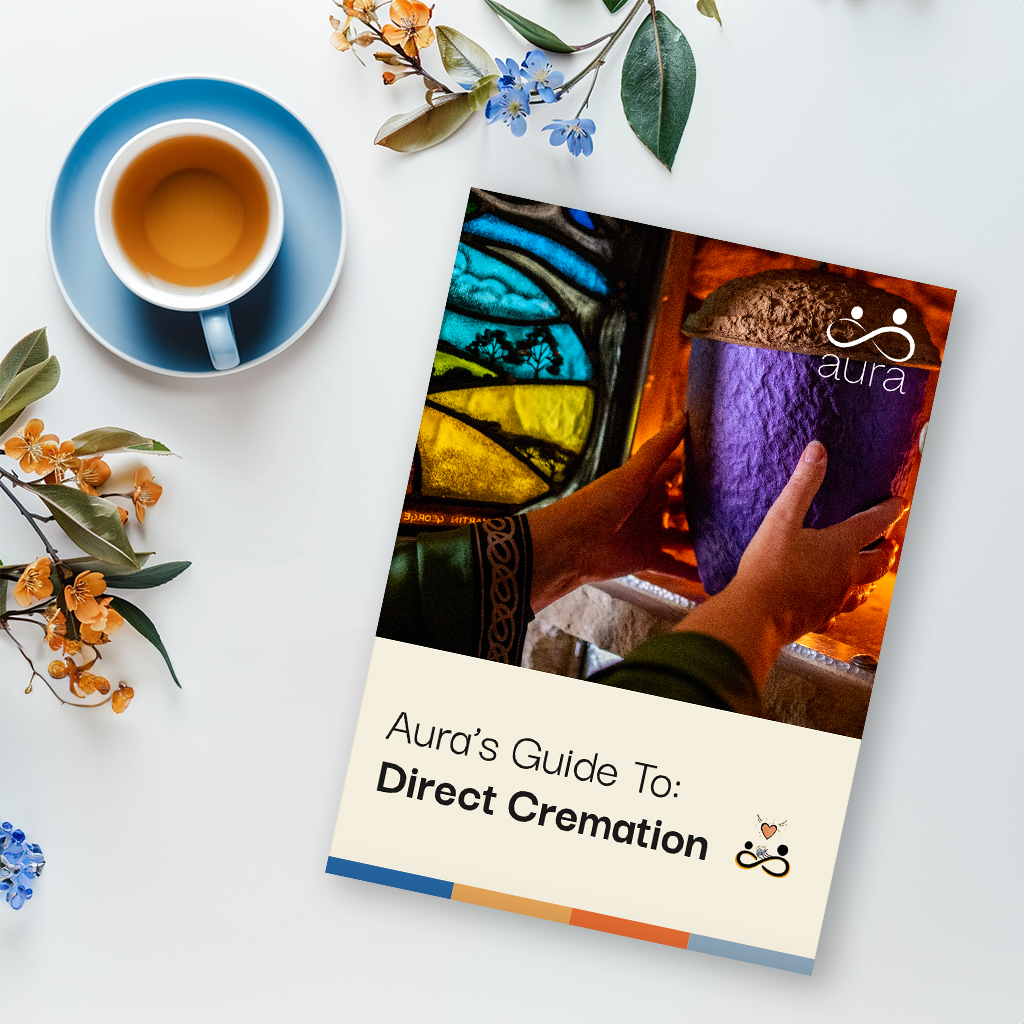
If you’d like more information about direct cremation and Aura’s funeral plans, then our downloadable guide can help. Find out why others are choosing this affordable, no-fuss alternative to traditional funerals and why it might be right for you too.
Download our guide by clicking the link below and learn more about this simple funeral plan option.
A low-cost funeral aims to minimise how much money is spent on the final farewell of those who have passed. They may look different from traditional services, but a low cost funeral can still provide a dignified send-off.
One way to figure out how much a funeral costs is to look at additional versus essential expenses. The essential costs are things like the urgent collection of the person who has died, and a bariatric (larger than standard) coffin, if needed. These are the parts required to legally and respectfully care for the person who has died.
The additional costs usually come from the optional ‘extras’ surrounding the day such as catering for a wake, flowers, or limousines. While these touches can add a personal feel, they aren’t essential to creating a meaningful farewell. Choosing a more affordable funeral often means reducing or removing some of these extras, while still honouring your loved one’s memory with dignity.
Affordable funerals aren’t just easier on your budget, they can help make planning smoother too. By stripping back these non-essential elements, families can focus on what truly matters: gathering together to start their grief journey after loss.
Navigating funeral costs can feel daunting. While it’s difficult to pin down an exact figure, the national average total cost of a funeral is placed at around £5,140, according to the data in the SunLife Cost of Dying Report. It should be noted that though this figure is widely used as a benchmark, it’s based on a broad range of services and may not reflect lower-cost alternatives like direct cremation. Actual costs can vary depending on the type of funeral chosen.
Direct cremation is a cost-effective funeral option for those seeking a price tag a lot lower than the cost of a typical traditional funeral. For many, it’s also the cheapest way to have a funeral while still ensuring that everything is handled with care and respect. It’s a simple cremation process that removes many of the traditional ceremonies and frills associated with conventional funerals, focusing instead on the essentials. For many families, simplifying the funeral process in this way can ease emotional pressure, allowing them to focus on remembrance rather than logistics.
There is no hearse, no pallbearers and, often, no ceremony. The funeral director selects the crematorium and the person who has died is transported in a private ambulance from their current resting place to their cremation. It’s crucial to recognise that a direct cremation is carried out with great sensitivity and dignity, even if no attendees are present.
Direct cremation prices offer affordability, simplicity and flexibility, allowing families the time to take a breath. A memorial service can be organised at a time that feels right without being rushed. This approach has gained popularity, as it respects both the memory of the loved one who has passed and the financial realities many face today.
A direct cremation usually includes:
Collection of the person who has died from anywhere in mainland Great Britain
A simple, dignified coffin
Cremation fees
Return of the ashes, typically by hand
What it does not include:
A funeral service
Family or friends attending the cremation
Extras such as flowers, limousines or a hearse
By removing these ceremonial elements, direct cremation keeps things simple, affordable and flexible without ever compromising on care or respect.
When it comes to low-cost funeral planning, using a simple funeral checklist can help you keep track of essential decisions and avoid unnecessary expenses. If you’re wondering how to plan a funeral without overspending, it can help to focus first on what’s truly essential and then consider which personal touches matter most to you. It’s no surprise that more people are seeking affordable alternatives. These cheap alternative funerals may look different to a traditional service but can still provide a thoughtful and dignified farewell. A study from Legal & General suggests that funeral expenses could potentially soar by 84% over the next two decades. This could push the costs from £3,395 in 2013 to a staggering £6,259 by 2033. Here are some ways to try to avoid these increasing costs.
If you’re looking ahead to their own end-of-life arrangements, one practical option is purchasing a funeral plan. Using a funeral plan to think ahead has its financial benefits as it allows you to pay for your funeral in advance at today’s prices, safeguarding against possible cost increases in the future. Some providers allow instalments or monthly payments to spread the cost, making low-cost funerals more accessible for families.
With Aura, you can get a funeral plan for a direct cremation starting at £1,795 . It’s more than just a cost-effective funeral plan, it’s a selfless gift to your family that relieves them of the financial and planning pressures during a time of grief. For many parents, this final ‘gift’ is arranging funeral cover in advance. It ensures children are not left facing unexpected costs or difficult decisions during a time of grief. It also offers peace of mind, knowing everything is organised and that your wishes will be respected.
You can pay in a lump sum when you buy your plan with Aura, or we offer instalment options over 12 to 24 months with no extra fees. That way you can spread the payments without fear of it costing you any extra.
Other than a prepaid plan, there are a few options for funeral insurance. This alternative provides a lump sum to your beneficiaries upon your death, which can be used to cover funeral expenses. Unlike funeral plans, insurance does not pay for services upfront but ensures there’s money available when it’s needed. However, this option can be more expensive and involve longer payment terms.
If you’re currently arranging a funeral for a loved one who has just passed, there are a few funeral budget tips that can help. Leading the service yourself, choosing a simple coffin, and hosting the wake at home can all help reduce expenses.
Other ways to reduce costs include:
Leading the service yourself
Choosing a simple coffin
Hosting the wake at home
Separating the cremation or burial from the memorial service to allow more flexibility
Consider a plain or eco-friendly coffin or even a shroud.
Additionally, separating the cremation or burial from the memorial service can offer more flexibility. This gives you more time to budget for a meaningful gathering later on. It can also help make the process less stressful as it is not so time-sensitive.
Prices vary depending on where you live and which provider you choose. It’s always worth comparing a few local funeral providers before making a decision, so you can be sure you’re getting the right balance of care and cost.

Finding funds for funeral expenses can be challenging, especially if there is no plan, insurance, or money left in the person’s estate. However, there are several avenues for assistance that you can explore:
The UK government offers help through the Funeral Expenses Payment. This is available if you receive certain benefits and need assistance paying for a funeral you’re arranging. It won’t usually cover all costs, and the amount you receive depends on your circumstances. You can check eligibility and apply on the government website.
In Scotland, the equivalent scheme is called the Funeral Support Payment, provided by Social Security Scotland. It’s available to people on certain low-income benefits and covers essential funeral costs, including burial or cremation fees, travel, and certain other expenses. Eligibility and payment amounts depend on your relationship to the person who has died and your financial situation. Applications can be made online, by phone, or by post through Social Security Scotland.
If your partner has died and you are below the state pension age, you might qualify for the Bereavement Support Payment (This is also available in Northern Ireland). The eligibility for this support varies depending on whether you were married, in a civil partnership, or living together as if married.
You can also get support for funeral costs from charities if you are facing financial hardships. You can seek advice from a support worker, social worker, or Citizen’s Advice, or use the Turn2Us online grants search to find suitable charities.
If you’re unable to make funeral arrangements due to financial constraints, or if you choose not to, the local council can carry out the burial or cremation. This is known as a ‘Public Health Funeral‘. In other words, being next of kin doesn’t force you to bear the costs if you truly cannot – so does next of kin have to pay for funeral by law? Our guide on next-of-kin obligations addresses this concern, detailing when councils or support can help.
This service is a last resort and very simple, but it ensures that everyone receives a dignified farewell.
In times of need, turning to friends, family, and the broader community can be a powerful way to gather support. Crowdfunding can be a useful method to raise funds quickly for funeral costs. This approach not only helps cover expenses but also brings people together in a shared expression of sympathy and support.
Remember, while these options may not cover all expenses, they can significantly alleviate the financial worry and help you arrange an affordable funeral.

When arranging a funeral on a budget, you can still explore additional services to add to your plan that can help keep costs down while maintaining a respectful and heartfelt ceremony. With three different plan packages, Aura bridges the gap between a traditional funeral and simple cremation by offering the choice to add on an intimate funeral.
Our attended service gives family and friends the chance to gather, share memories, and say goodbye in a setting that feels much like a traditional funeral. The main difference is its simplicity – without hearses, limousines, or the extra costs they bring. You can still add personal touches such as music, readings, or tributes, creating a ceremony that is every bit as meaningful and heartfelt. It’s a dignified way to honour your loved one with tradition, but without the financial strain of a full-scale funeral.
Whether you choose this option or a straightforward direct cremation, every Aura funeral package comes with clear, inclusive pricing. Collection, cremation costs, the coffin (including bariatric options), and the hand delivery of ashes are all covered. When the time comes, there will be nothing more for your family to pay.
Why not compare Aura’s funeral plans to find the right option for you? When you’re ready, you can contact us to discuss your low-cost funeral options or to start planning with our compassionate team.
Terms and conditions apply. You will receive a funeral plan summary before purchase.
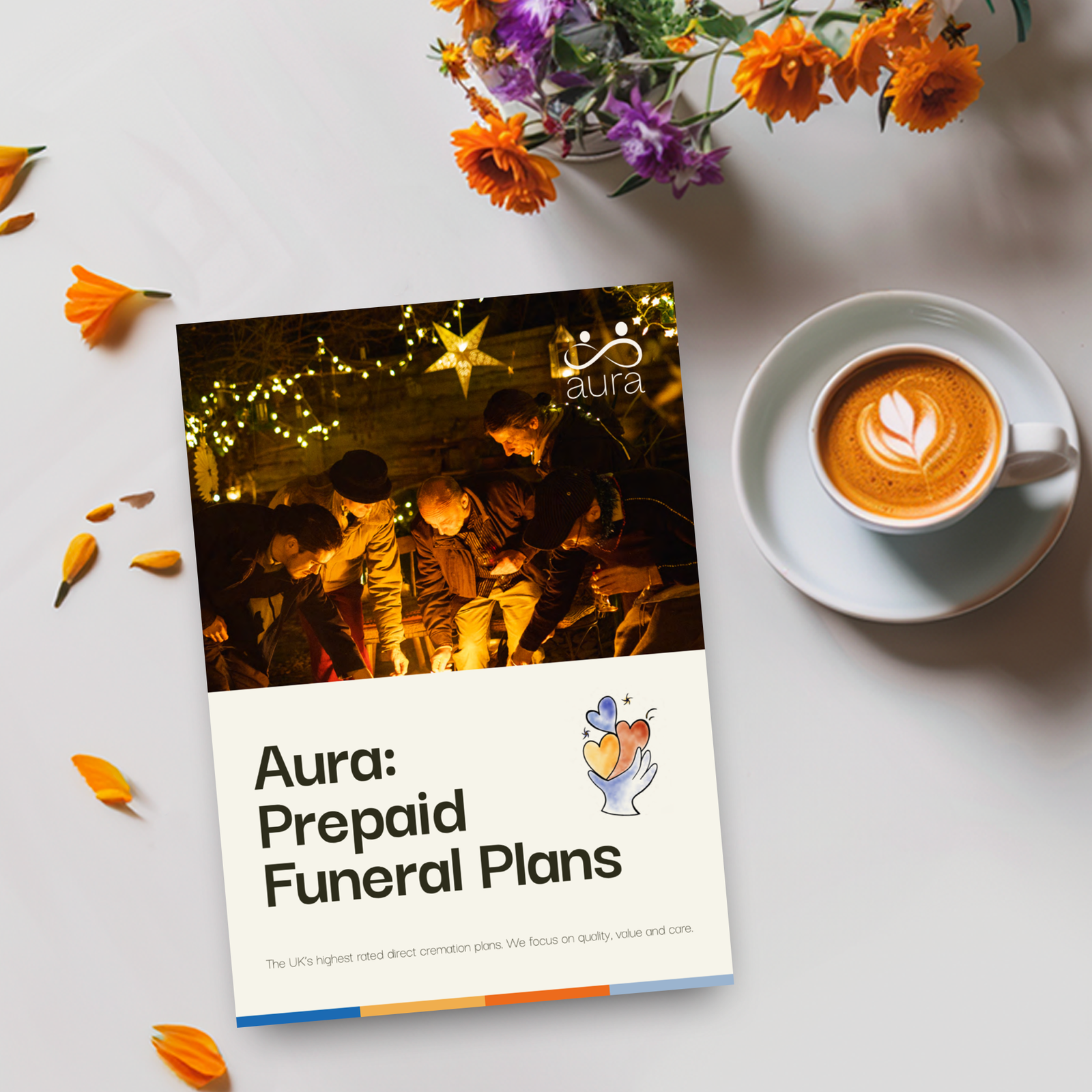
If you’d like to know more about how to plan a cremation with Aura, our brochure is a helpful place to begin.
Our funeral plans are a helpful way to put everything in place for you or someone else.
When the time comes, our experienced team will be here to guide you through each step, offering support and advice whenever you need it.
To find out more about how our plans work, what’s included, and our story, you can request a brochure by clicking the link below. We will then send you a copy by email or First Class post—whichever you prefer.
The most affordable funeral option is direct cremation. It’s a simple, unattended cremation with no service, no hearse, and no extras—just the essentials carried out with dignity.
Yes. Many families hold a memorial service later, when they’ve had time to grieve and save. This allows for a more personal gathering without the pressure or cost of a traditional funeral.
Yes. You might be eligible for government support like the Funeral Expenses Payment or Bereavement Support Payment. Local councils may also provide a Public Health Funeral if no one can pay.
With Aura, yes. You can spread the cost over 12 or 24 months with no extra fees, making it easier to plan ahead without financial stress.