×

Funeral plan prices are changing on 1 JulySecure today's price by calling our team or click here to request a quote.

Two Together: Save £100!Save £100 when you purchase two funeral plans together. Call us for more details.


Written by Mitch Tapner.
10 minute read

Losing someone can leave us feeling unsure of what to say or do, but small acts of kindness can make a big difference. One of the simplest, most thoughtful ways to show you care is by sending a sympathy card.
Whether you’re nearby or wondering how to send love and support from afar, a card can offer comfort when it’s needed most. This gentle guide walks you through what to write, when to send it, and how to tailor your message with care, whether you’re including remembering someone special or simply letting a grieving friend know they’re not alone.
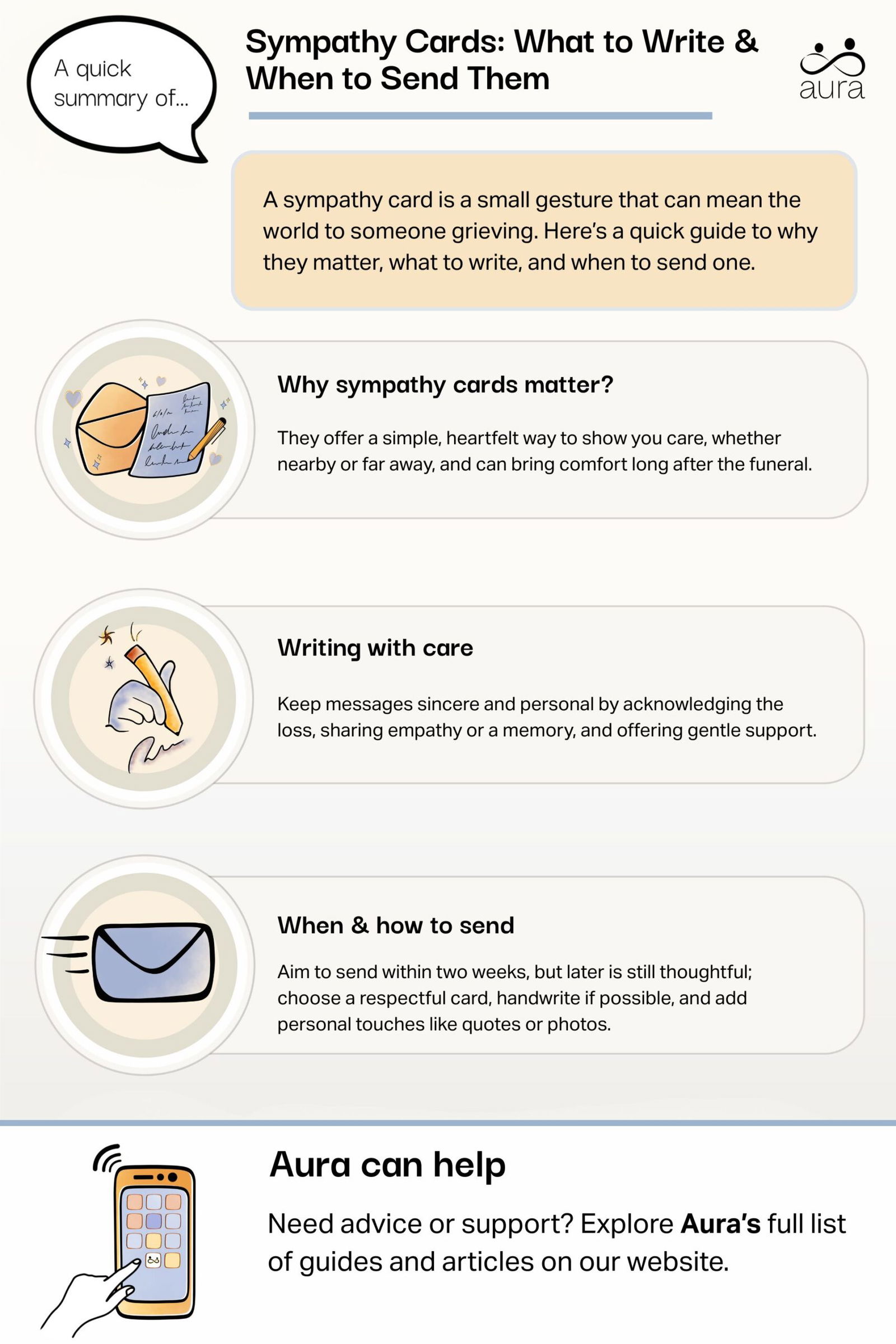
Sympathy cards offer a gentle, heartfelt way to show someone they’re not alone after a loss. When emotions run deep and words feel out of reach, a simple card can offer comfort and presence.
At its core, a sympathy card says: “I’m thinking of you.” It’s not about finding perfect words or answers, it’s about showing you care. Whether handwritten or chosen from a shop, a card can help bridge the quiet that often follows loss.
For those wondering how to send love and support from afar, especially when distance or circumstance prevents an in-person visit, a sympathy card is one of the most thoughtful ways to reach out. It’s also a meaningful way to accompany sympathy messages for funeral flowers, offering kind words alongside a floral tribute.
The act of writing doesn’t need to be perfect, what matters most is the intention behind it.
It’s usually best to send a sympathy card within a week or two of hearing the news. But there’s no set timeline. A message sent a little later can still bring comfort, sometimes even more so, as it reaches someone after the immediate rush of condolences has eased.
If you can’t attend the funeral, or if the family has chosen a direct cremation, a card becomes especially important. It’s a quiet, meaningful way to let someone know they’re in your thoughts, even if you can’t be there in person.
Providing a sense of warmth and sincerity can help those learning how to cope with grief.
Yes, you can absolutely send a sympathy card to close family members, even if you’re grieving too. Your message can offer strength and solidarity at a time when it’s needed most.
You might also want to write to friends, neighbours, carers, extended family, or anyone affected by the loss. In some situations, like a shared workplace or group of friends, sending several cards can feel appropriate.
Even if your connection to the person who died was distant, trust your instinct. A kind message is rarely unwelcome.
You don’t need to write a long letter or find exactly the right words. Sincerity and simplicity are what matter most.
You might start by acknowledging the loss, share a memory or gentle thought, and offer support, however that might look. If you’re unsure what to say, think about how you’d speak to them in person.
There’s no need to solve anything. Your presence, even on paper, is what counts.
Here’s a gentle structure to follow:
Try to avoid well-meant but unhelpful phrases like, “They’re in a better place.” Even plain, heartfelt words are often best.
If you’re unsure where to start, you might find comfort in looking at funeral committal words, which are often read at the end of a service. These can offer a calm, respectful way to shape your own message. You could also explore our guide to symbols of grief, which explains the meaning behind common gestures, images, and tributes, helpful if you’re choosing a card or writing something personal.
Every loss is different. Here are a few examples to help you write with care:
Loss of a partner:
“I’m so sorry. I know how deeply you loved him. I’m keeping you in my thoughts.”
Loss of a parent:
“Your mum was a remarkable person. I hope your memories bring some comfort.”
Loss of a sibling:
“Siblings leave a space no one else can fill. I’m so sorry for your loss.”
Loss of a pet:
“Our pets are family too. I know how much she meant to you.”
If you’re adding flowers, it can be helpful to read examples of sympathy messages for funeral flowers, which can guide you in writing something short, sincere, and comforting.
On the envelope, use the recipient’s full name. Inside the card, your tone can be warmer:
If the card is for a couple or family, address them together. If one person is especially affected, mention them in your message:
“Please pass on my thoughts to Jack too.”
A handwritten message often feels the most personal. But if that’s not possible, a neatly typed note is absolutely fine.
Choose a card that feels simple and respectful. There’s no need for ornate designs or religious symbols unless you know they’ll bring comfort.
Send your card by post, or deliver it by hand if you’re nearby. If you normally message the person digitally, an email or message may be appropriate too, especially for close friends or younger family members.
You can end your message with a closing that feels right for your relationship. Some gentle options include:
If you’re close to the person, something warmer like “With love” is perfectly suitable. If you’re unsure how to sign a sympathy card, keep it respectful, kind, and true to your relationship with the person receiving it. When in doubt, simple and heartfelt is always a safe choice.
A small, thoughtful addition like a favourite quote, a memory, or even a photograph, can make a big difference. You might choose to include one of their loved one’s favourite sayings, or a comforting line from a poem or one of many gentle grief and loss quotes, these can help express feelings that are hard to put into words.
These aren’t essential, but they can offer comfort if shared with care.
You could also include a gentle note of continued support:
“I’ll check in next week, but please don’t feel you need to reply.”
These quiet gestures often mean more than people expect.
“Dear Patel family,
I was so sorry to hear about your loss. Please accept my heartfelt condolences. Your father was a kind man, and I hope you’re finding comfort in your memories and each other.
With sympathy,
Amira”
“Dear Sarah,
I’m heartbroken for you. Ben meant so much to so many of us. I’m thinking of you every day and sending strength, even from afar.
With love always,
Tom”
“Dear James,
We were so sorry to hear of your loss. Please know we’re thinking of you. If there’s anything you need during this time, don’t hesitate to let us know.
Kind regards,
Emily and the team”
Only if you’re sure they’ll be welcome. If in doubt, keep your message simple and secular. For example:
“Wishing you peace and comfort” instead of “They’re with God now.”
Your message should feel right for the person receiving it. Faith can bring comfort—but only when shared beliefs are understood.
No, it’s never too late to show you care. A card received later can feel especially meaningful, as support often fades over time.
You might include a line like:
“I’m sorry this is a little late, but I’ve been thinking of you and wanted to send my condolences.”
Yes. Going to the funeral is a powerful act of support. But a card gives something to hold onto, a reminder they can return to later.
At Aura, we understand how difficult it can be to support someone through grief, especially when you’re not sure what to say or do. A sympathy card is one small way to offer comfort, but you may also be thinking about how to help with practical arrangements or plan ahead for the future.
We’re here to guide you through every step. Whether you’re considering a funeral plan*, exploring a direct cremation, or simply looking to understand your options, our team is here to help you make calm, informed choices. You can also compare funeral plans on our website to find what feels right for you or your loved one.
When words feel hard to find, we believe quiet support, given with care, can make all the difference. If you’d like to know more, we’re always here to listen.
*Terms and conditions apply. You’ll receive a full funeral plan summary before purchase.


If you’d like to know more about how to plan a cremation with Aura, our brochure is a helpful place to begin.
Our funeral plans are a helpful way to put everything in place for you or someone else.
When the time comes, our experienced team will be here to guide you through each step, offering support and advice whenever you need it.
To find out more about how our plans work, what’s included, and our story, you can request a brochure by clicking the link below. We will then send you a copy by email or First Class post—whichever you prefer.
It may be best to send a sympathy card within one to two weeks of hearing about the death. However, it’s never too late to show you care. A thoughtful message sent later, especially after the funeral or direct cremation, can still bring comfort and support when it’s needed most.
A good sympathy message is simple, sincere, and personal. Start by acknowledging the loss, express empathy, and offer gentle support. If you’re unsure what to say, reading examples of sympathy cards may be helpful.
Yes, absolutely. If you’re unable to attend the funeral or the family has chosen a direct cremation, a sympathy card is a kind way to send love and support from afar. Your message can still offer comfort, even if you’re not able to be there in person.