×

Two Together: Save £100!Save £100 when you purchase two funeral plans together. Call us for more details.

Written by Emily Cross.
20 minute read

When it comes to saying goodbye, there’s no one-size-fits-all. If a traditional cremation or funeral doesn’t feel like the right choice, you may be looking into alternative funeral and cremation options that feel more personal, flexible, or environmentally conscious.
In recent years, more people have sought meaningful options beyond traditional burial and cremation services, from direct cremation to water cremation to scattering ashes in space. If you’re grieving, making these decisions while carrying that loss can feel especially heavy. Alternatively, you may be thinking ahead for your own end of life plan by investigating alternative methods. Whatever brought you here, it’s okay to take your time and ask questions. This guide explores cremation alternatives, helping you understand what’s available, how they work, and what might feel right for you or your loved one.
Key takeaways:
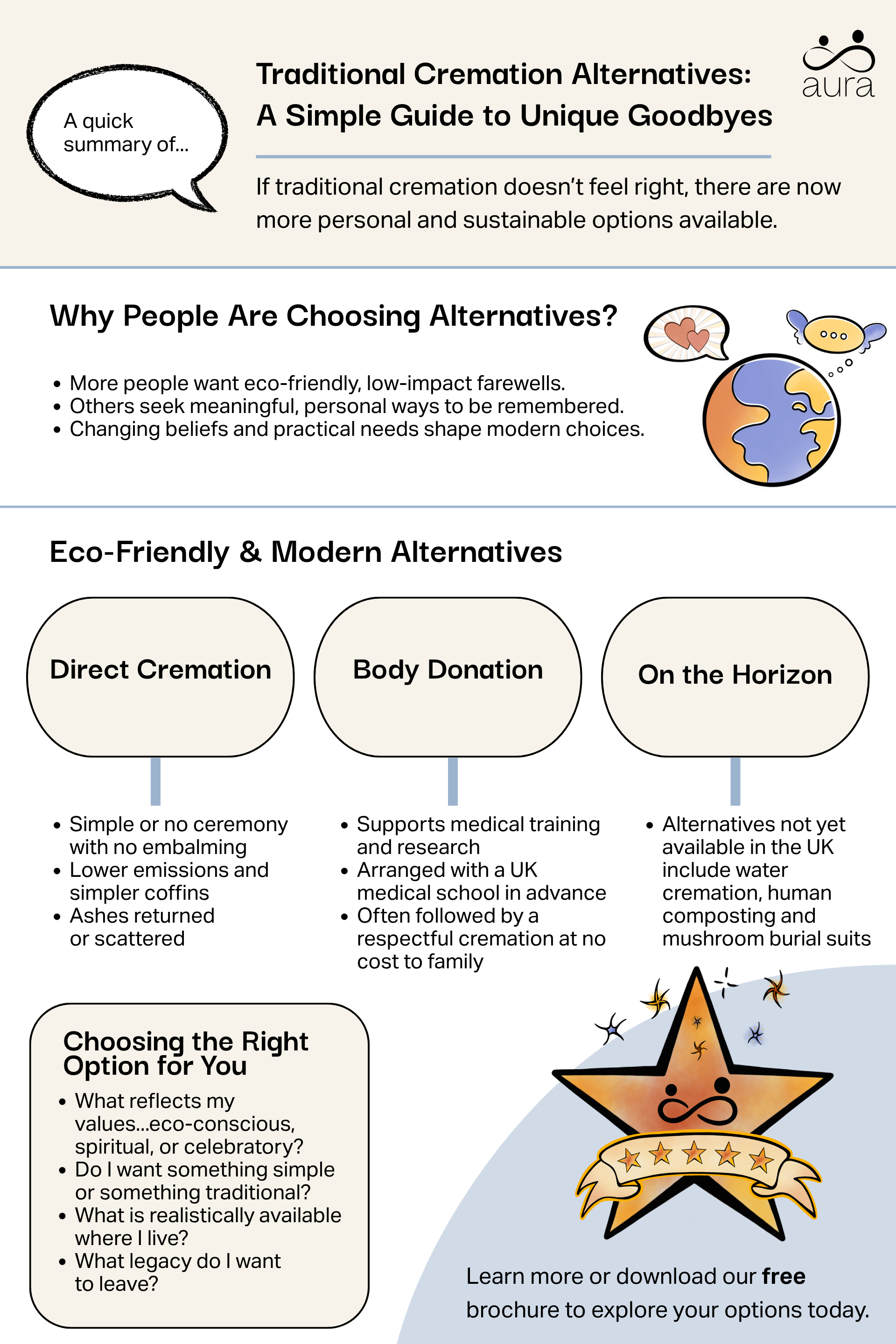
What happens at a cremation is not something many of us know much about. As more people explore their options, questions around different approaches and their impact are becoming more common. While the ‘flame-based’ cremation process or traditional cremation remains common, there has been an increased desire for more sustainable or symbolic options, such as green burial, that have led to the rise of alternative methods. From returning to nature to high-tech processes, these new approaches offer respectful and meaningful ways to think about how we pay tribute to a life and preserve memories.
The history of cremation goes back thousands of years, with its roots tracing back to ancient civilizations, but modern cremation as we know it became widely adopted in the UK during the late 19th and early 20th centuries as an alternative to burial. Though it has long been a popular choice, many people are seeking alternatives to traditional cremation due to overall changing outlooks on how we say goodbye to our loved ones, concerns about the environment, and personal preferences.
As awareness of climate change grows, many are looking for more sustainable end-of-life options.
Not only is direct cremation a more affordable option, it is considered more eco-friendly compared to traditional cremation services. While both methods involve cremation, direct cremation significantly reduces the environmental impact by eliminating many of the resource-heavy and polluting elements associated with full-service funerals. For some families, choosing direct cremation can also help reduce the waiting time for a funeral, as it does not depend on organising a formal service at a specific time
Understanding what a direct cremation includes can help you make informed decisions about burial or cremation options. It involves the collection and cremation of the person, usually without a formal ceremony, typically using a simple, eco-friendly coffin, and with the ashes either returned to the family to keep or have an ash scattering ceremony with. Alternatively, they can be scattered in the crematorium’s Garden of Remembrance by staff. In addition to creative ashes keepsakes, there are funeral options and alternatives that can commemorate a loved one without a conventional service.
One of the reasons direct cremation is considered a greener choice is that it eliminates the need for embalming, which involves chemical preservatives that can be harmful to the environment. Without embalming, there is less risk of introducing toxins into soil and water, making it a more eco-conscious option. Traditional cremation often involves coffins made with materials that do not break down easily, such as metal fittings, varnished wood, or synthetic linings. When burned, these materials can release pollutants into the air. In contrast, direct cremation typically uses a simpler, untreated container, which produces fewer emissions and reduces environmental impact.
Direct cremation has a lower carbon footprint as it simplifies the process and reduces transport, avoiding multiple trips between venues. With fewer emissions and energy use, it also allows families to choose sustainable memorials like natural settings, ash scattering, or biodegradable urns. By eliminating unnecessary chemicals and materials, direct cremation offers a low-impact, eco-friendly alternative to traditional funeral practices.
Pros:
Cons:
Water cremation, also sometimes called aquamation, resomation, or alkaline hydrolysis, is a gentle, water-based alternative to flame cremation that uses a combination of water, heat, and alkaline solutions to break down the body. It has recently become available in the UK, and is still a relatively new and lesser-known offering.
This method may appeal to those who prioritise environmental considerations, as it is sometimes seen as a gentler alternative to traditional methods like cremation or burial. By using a water-based process instead of fire, it avoids some of the concerns associated with the emissions and energy use of traditional cremation services.
It also allows families to make choices that reflect their values. As is the case with direct cremation, foregoing the need for certain materials or chemicals provides a simpler approach that feels more in tune with sustainability. As awareness of eco-friendly funeral options grows, water cremation is becoming an increasingly appealing choice for those looking for an altogether different kind of offering.
Compared to flame cremation, water cremation is said to use up to 90% less energy and produces fewer air pollutants. Traditional cremation emits carbon dioxide, mercury from dental fillings, and other airborne pollutants. In contrast, water cremation avoids these emissions entirely, though it does involve water and requires proper management of effluent. As water cremation becomes more available, its environmental advantages may make it a more widely chosen option.
Pros:
Cons:
Human composting, also known as natural organic reduction (NOR), terramation or recomposition, is a process that transforms the human body into nutrient-rich soil through natural decomposition. The body is placed in a controlled environment with organic materials such as wood chips and straw, where microbes break it down over several weeks. This method provides an eco-friendly alternative to traditional cremation, allowing a return to the earth in the form of soil.
This approach aligns with a broader shift toward eco-conscious choices in all aspects of life, including end-of-life planning. By avoiding certain materials and processes that may have a lasting impact, human composting offers a way to minimise one’s environmental footprint even after death. Though it is not currently available in the UK, for those who value sustainability, it represents a future possibility for a sustainable send-off and final act of care for the planet.
Pros:
Cons:
Promession is a technology used to freeze-dry a body. It is then cooled with liquid nitrogen, and gently broken down into organic particles. They are then placed in a biodegradable container and returned to the earth, allowing for natural decomposition with minimal environmental impact. Though this method is not currently available, it is legal in the UK and could be an option in the future.
The body is placed in a biodegradable suit infused with mushroom spores. Fungi help break down toxins and speed up the process of being broken down.
A biodegradable pod containing the remains is buried with a tree seedling planted above it, allowing the person who has died to be memorialized as a living tree.
Some families choose to organise a funeral entirely on their own, without hiring a funeral director. This is often called a DIY funeral or home funeral.
In this case, the family manages everything: care of the person who has died, transportation, paperwork, registering the death, and organising any ceremony. While legal in the UK, it requires care and attention to detail.
Pros:
Cons:
Sea burial involves either scattering ashes or, more rarely, placing a body in a biodegradable coffin into the sea. This practice requires a special licence in the UK and is permitted only in designated coastal waters.
Requirements include:
Pros:
Cons:
Entombment involves placing a coffin or urn inside a mausoleum or crypt, usually above ground.
Pros:
Cons:

You may already be familiar with organ donation, but for those looking for an altruistic alternative to traditional cremation, donating your whole body to medical science can be a meaningful option. In the UK, body donation supports medical training, research, and surgical education, helping future doctors and scientists improve their understanding of human anatomy and disease. However, donation must be arranged in advance, as family members cannot make this decision on your behalf after death.
To donate your body, you must register with a medical school and provide written consent, usually through a Body Donation Programme linked to universities across the UK. There isn’t a single UK-wide Body Donation Programme, as body donation is managed by individual medical schools. However, the Human Tissue Authority (HTA) provides an official list of medical schools that accept body donations, along with their contact details.
To register, you’ll need to contact the medical school in your area directly and complete their donor consent forms. It’s important to have a backup plan, as not all bodies can be accepted. Certain medical conditions, recent surgeries, or circumstances at the time of death may make donation unsuitable.
Once studies or training are complete, the donated body is respectfully cremated or, in some cases, buried. Many medical schools arrange a communal cremation at no cost to the family, and ashes can often be returned upon request. Some institutions hold annual memorial services to honour those who have donated.
Choosing an alternative to traditional cremation doesn’t mean there can’t be a meaningful service. Without the constraints of more conventional proceedings, you have the freedom to plan a personalised or non-traditional funeral, memorial service, or celebration of life in your own time and way. Exploring different memorial ideas and funeral wake examples can help inspire a send-off that feels authentic to the person being remembered.
There are plenty of options and cremation ashes ideas beyond the usual burial or cremation options that allow for flexibility and a more unique approach, reflecting the wishes and personality of the person being remembered. In addition to creative ashes keepsakes, there are alternative funeral ideas that can commemorate a loved one without a conventional service.
Not all cremation alternatives are available across the UK. Here’s a general guide:
Always check with a local funeral provider or authority for specific requirements and regulations in your area.
Different cultures and religions have specific requirements or prohibitions around funeral practices. For example:
It’s worth checking with a religious advisor if you’re unsure whether a particular method is appropriate for your beliefs or community.
Choosing an alternative to traditional cremation is a personal decision, and making your wishes clear can help ensure your family knows exactly what you want. A prepaid funeral plan allows you to outline your preferences and take care of the financial aspect of your funeral ahead of time, locking in today’s prices. With our pre-paid direct cremation plans, everything is arranged in advance, from transportation to cremation and the return of ashes. Our customers appreciate our transparent, affordable pricing and excellent service, which has earned us an excellent 4.9/5 stars rating on Trustpilot.
When it comes time to put the plan into action, our dedicated experts in funeral arranging, the Aura Angels, will be there to guide and support your loved ones through next steps, always keeping them informed. Whether it’s direct cremation without attendees, an intimate funeral service with a few loved ones present, or a unique memorial request—removing uncertainty for your loved ones gives them the freedom to honour you in a way that feels right.
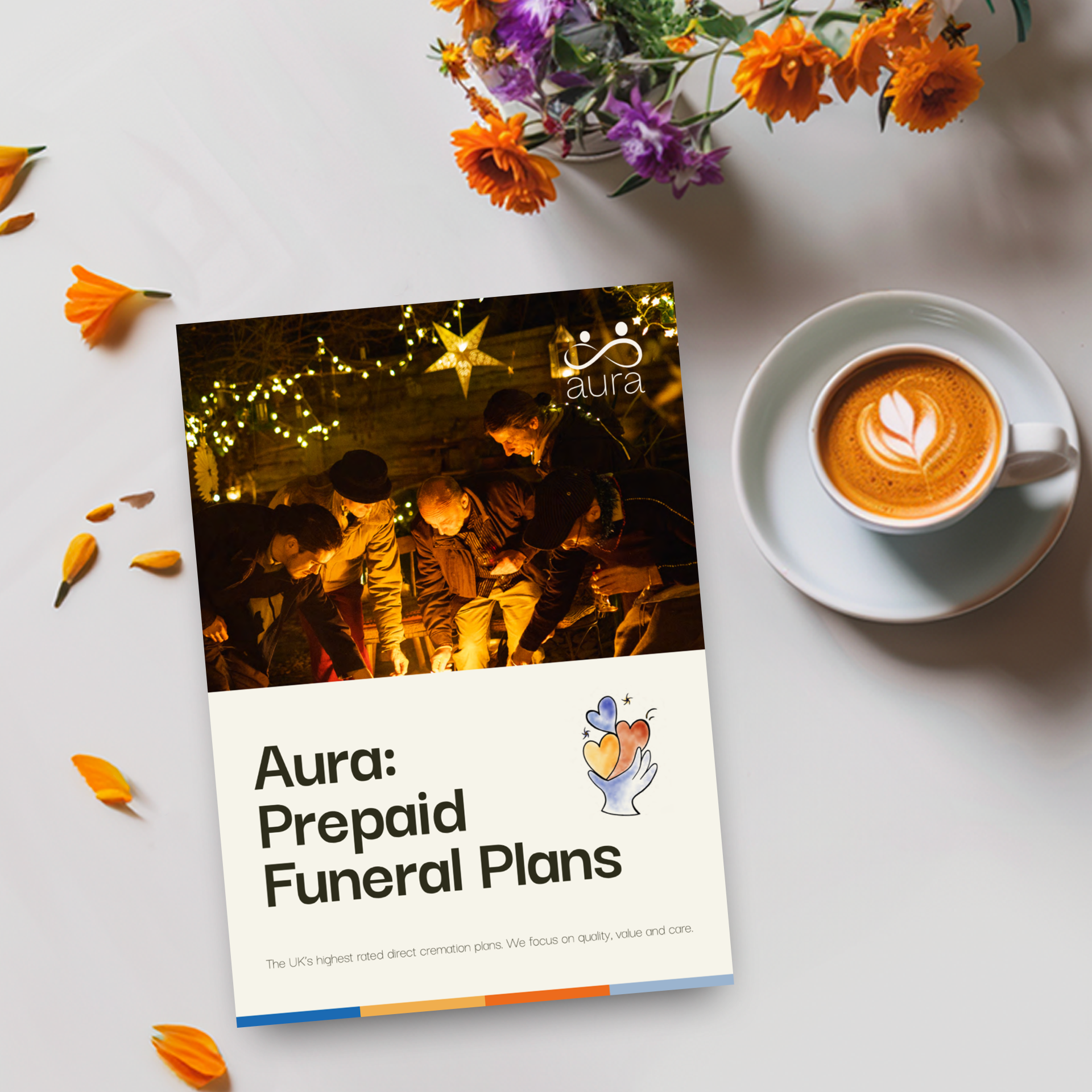
If you’d like to know more about how to plan a cremation with Aura, our brochure is a helpful place to begin.
Our funeral plans are a helpful way to put everything in place for you or someone else.
When the time comes, our experienced team will be here to guide you through each step, offering support and advice whenever you need it.
To find out more about how our plans work, what’s included, and our story, you can request a brochure by clicking the link below. We will then send you a copy by email or First Class post—whichever you prefer.
In a time when there are more options than ever, how can we confidently make a choice about something so important? Deciding on an alternative to traditional cremation is a deeply individual decision, shaped by beliefs, values, and practical considerations. With a growing number of possibilities available, it’s important to choose one that truly reflects what matters most to you and your loved ones.
Here are some key factors to consider:
Taking the time to explore these considerations can help ensure your farewell is as personal and meaningful as the life it honours.
As attitudes toward end-of-life choices evolve, more people are seeking options that reflect their values, beliefs, and environmental concerns. The funeral industry is responding with innovative approaches that move beyond traditional practices, offering greater flexibility and sustainability. With advances in science and shifting cultural perspectives, alternatives to standard cremation, such as green burial and woodland burial, are becoming more widely accepted and accessible.
Looking ahead, the focus will likely continue to be on personalisation, environmental impact, and meaningful ways to honour a life. As awareness grows and regulations adapt, more choices will become available, giving individuals and families the freedom to say goodbye in a way that feels right for them. The future of cremation alternatives is all about creating options that are respectful, thoughtful, and in tune with the changing needs of society. Today, there are more ways than ever to plan a farewell that reflects your life and values, and these options will only continue to expand in the future.
Making end-of-life arrangements in advance can bring peace of mind to you and your family, and making sure your wishes are clearly outlined and can relieve your loved ones of potentially difficult decisions. Aura’s pre-paid direct cremation plans offer a simple, flexible way to plan ahead, allowing you to choose what that reflects your values while avoiding unexpected costs.
With a focus on affordability, transparency, and dignity, Aura provides a straightforward alternative to traditional funerals. Whether you prefer a no-fuss funeral or want to leave space for a personalised memorial, planning ahead with Aura ensures your wishes are respected and your family is supported when the time comes. If you’d like to learn more about our prepaid options, download our brochure today.


If you have any questions, would like a brochure or simply would like a chat through our services, our award-winning team is here to help.
Unlike other providers, we won’t hassle you with constant calls. We’ll simply ensure you have the information you need and leave you to come to a decision in your own time. When you’re ready for us, our team will be ready to help.
There are several alternatives gaining popularity in the UK, including:
Direct cremation (no service, simple and eco-friendly)
Water cremation (also called aquamation or resomation)
Human composting (not yet available in the UK)
Promession (freeze-drying the body – also not yet available)
Body donation to science
Biodegradable burial methods such as mushroom suits or natural burial grounds
Symbolic options like space memorials, fireworks, vinyl records, or reef creation
Each option offers its own emotional, environmental, and symbolic meaning.
Currently, direct cremation and water cremation are among the most environmentally conscious choices available in the UK.
Direct cremation reduces emissions by eliminating embalming, metal fittings, and multiple journeys.
Water cremation uses a gentle alkaline solution and heat instead of fire, generating fewer pollutants.
Human composting and promession are also eco-friendly but not yet available in the UK.
Water cremation, also known as aquamation or resomation, uses a combination of water, heat, and alkaline solution to gently return the body to its natural elements.
Yes—it has recently become available in parts of the UK, though it is still new and not yet widely offered. It appeals to those seeking a more sustainable, low-impact send-off compared to flame-based cremation.
Yes. Direct cremation is one of the most affordable and flexible funeral alternatives in the UK.
It includes:
Collection and cremation without a formal service
Use of a simple, eco-friendly coffin
Ashes returned to the family or scattered by staff
Families can later hold a personalised memorial or celebration of life in their own time and way.
Human composting (or natural organic reduction) transforms a body into nutrient-rich soil through controlled decomposition. It’s legal in parts of the US but not yet available in the UK. However, there is growing public interest and advocacy, so it may become an option in future.
Yes. You can register in advance with a UK medical school through a body donation programme. After studies or training are complete, the body is respectfully cremated or buried, often at no cost to the family. Note: family cannot give consent after your death-you must register while living.
Ashes can be:
Returned to the family
Scattered in a crematorium’s Garden of Remembrance
Incorporated into memorial keepsakes, such as jewellery, vinyl records, or artwork
Used in space memorials, reef projects, fireworks displays, or eco-urns
Many people now choose creative ways to remember loved ones outside of traditional urns.
Yes. Many families now host:
Virtual memorial services
Online tribute pages
Livestreamed ceremonies
Digital memory books
These options allow loved ones to attend and remember from anywhere, especially if travel or in-person gatherings aren’t possible.
Consider:
Your values – e.g., environmental, religious, minimalist, scientific
Availability – some options (like water cremation) are still limited
Budget – costs range from affordable to premium depending on services
Family wishes – talk openly with loved ones to reduce future uncertainty
Legacy – do you want to contribute to research, nature, or symbolic tribute?
Taking time to explore what feels most meaningful will help you choose with clarity.
Yes. Choosing an alternative funeral method doesn’t mean skipping ceremony. Many families opt to:
Host a memorial at home or outdoors
Create tribute videos or photo books
Organise unique ceremonies such as ashes in fireworks or tree planting
Aura’s flexible prepaid plans allow families to arrange the cremation now and choose their own farewell format later.