×

Plan Now, Pay LaterSecure your plan today, don't pay until 9 January 2026. T&Cs apply, click here for details.

Two Together: Save £500!Save £500 when you purchase two funeral plans together. Call us for more details.


Written by Adam McIlroy.
21 minute read
Today people are always looking for ways to personalise the important moments and things in their lives. This is certainly true of funerals, with a vast rise in the number of people seeking direct cremation as a modern alternative to the traditional funeral. As more people explore different types of cremation, we’re also seeing changes in how we care for and remember the ashes of our loved ones.
In this article, we want to discuss some of the more popular cremation ashes ideas, reflecting on the different ways in which we are choosing to remember people dear to us, as well as any legal or health considerations.
Key takeaways:

It’s a popular cremation myth that human ashes are somehow harmful or dangerous to be around or to handle. When a body is cremated all toxins and bacteria are consumed by the extreme heat of the process, meaning that there is no risk attached to being near them. This partially explains why more and more of us feel it is okay to creatively use the ashes of those we’ve lost in gestures intended to honour their memories.
Cremation ashes, put simply, are what’s left of the body of someone who has died following the completion of the cremation process. Usually, a cremation lasts for between 1 and 3 hours, and is carried out at a temperature between 1000 and 1300C. The coffin is burned during cremation, meaning that the ashes that are left also contain some of the ash of the coffin, but the handles are either consumed entirely, or are extracted with a magnet after the process.
With an Aura direct cremation, we can do one of two things. We can either return the ashes directly to you by hand at home, in one of our scatter tubes. Or we can scatter them on your behalf at the crematorium’s own Garden of Remembrance. Once you have the ashes in your possession, it’s entirely up to you whether you scatter them, or memorialse them in some other way.
Many people, once they receive the ashes of a loved one after their cremation, like to scatter them in a place that was special to the one they’ve lost. Others like to keep them at home in an urn, or, increasingly, to convert them into something meaningful to them, such as jewellery, or even cremation tattoos.
Unlike with a burial, cremation can sometimes leave the bereaved families of someone who has died feeling as if they have nothing left of them. After a cremation, it’s not possible to visit the grave of someone who has died, which means that memorialising them has to be done in a different way. But there are a whole range of cremation ashes ideas out there.
There are a variety of different ways to keep the ashes of someone who has died, and how you decide to keep them is up to you. Many people keep them at home, but others prefer the more formal setting of a mausoleum or columbarium.
The most traditional option available to people who want to keep the ashes of their loved ones is to hold them in an urn at home. This is an ancient practice in the history of cremation which has been observed since before the days of the Romans. The urns we use today are not too dissimilar from those found in excavations of classical archaeological sites.
With that said, there is more choice now than ever in material and style for cremation urns, including those which are made of biodegradable substances so that they can be buried somewhere with minimal environmental impact. Others prefer options which are highly designed and stylised by artists to be bright and colourful; there’s a unique idea out there for everyone.
Modern technology also allows families to commission urns in almost any shape, such as a beloved object, symbol, or even a likeness of the person. These 3D-printed designs turn the urn into a unique tribute that reflects someone’s character or passions.
If you’re looking for ideas for loved ones’ ashes that go beyond urns, there are now many creative ways to memorialise cremation ashes. Urns are not the only option available to those who want something to remember their loved one by around the home. Cremation ashes can be incorporated into all kinds of keepsake, from earrings, necklaces and bracelets; to glass ornaments, vessels and paperweights; and even Christmas-tree decorations. This is an option that can allow many people from the same family to commemorate someone, like a grandfather for instance, in their own way, due to the fact that several keepsakes could be made from the ashes of one person.
Ashes can also be infused into candles, lamps, stained glass or ink — gentle ways to keep your loved one close in everyday life. Some people choose to have ashes solidified into smooth, stone-like shapes. Through a specialised process, the ashes are transformed into memory stones you can hold in your hand or keep in your pocket. These offer a more tactile, lasting way to feel connected.
Columbaria and mausolea are specific places, like cemeteries, where families can display and house the urns containing the ashes of their loved ones. For those who don’t want to keep their loved ones ashes at home, or to convert the ashes into something physical, this makes for a dignified and appropriate place to house the remains of their loved one.
Some families, rather than placing the urn in a niche within a public area of the columbarium, have their own private mausoleum within its walls. These private tombs may even contain the remains of prior generations, and therefore may come with a good deal of sentimental significance. But, of course, purchase and maintenance of this space can be very expensive, so it may not be for everyone.
The most popular cremation ash idea is to scatter the ashes in a place special to the person who has died. Although we feel that it’s especially important to comply with the dying wishes of our loved ones who may have wanted their ashes scattered in a special location, it’s important to approach it responsibly. There may be specific legal, moral or environmental considerations that you need to make beforehand, and in other cases, it may not be possible.
Many people want their ashes to be scattered in locations which connect with the interests and passions they had in life. For instance, at sports stadiums or places of natural beauty that they loved to spend time in. Scattering ashes at sea and in forested areas are popular choices. People often choose to scatter ashes in places that reflect their loved one’s personality or passions:
Some venues — such as football grounds or concert halls — have dedicated memorial gardens or specific rules, so it’s worth checking in advance.
We often like to vest the scattering of ashes with some formal significance, by having an ash scattering ceremony of some kind. The beauty of this is that the family organising it can decide on every element for themselves, from location, to dress-code, to who should scatter the ashes and when it should be done. A scattering ceremony doesn’t have to be formal or traditional — it can be whatever you want it to be. This could include:
For those who’ve had a low-cost direct cremation, such as those offered by Aura, they will have the option to spend the money they’ve saved on hearses, limousines, funeral processions and floral tributes, to personalise a scattering ceremony instead. This could be a more meaningful and special way to spend the money for some families.
In all cases where you are scattering ashes on land that doesn’t belong to you, you may need to seek the permission of whoever is the owner. It would be best not to assume that, just because you can access the location, e.g., a public park or a football stadium, that you will be allowed to scatter ashes there without the say-so of the ultimate owner of the space.
You may also be asked to show that you hold what’s sometimes called ‘ashes rights‘. This is the legal term for the person authorised to make decisions about what happens to someone’s ashes after cremation. It’s usually the person named on the cremation paperwork — often a close family member or someone named by them.
It’s possible to scatter ashes legally in the UK virtually anywhere, assuming you’ve acquired the permission of the landowner in cases where it’s not your property. That being said, it doesn’t mean it’s always appropriate to make use of the option.
It’s important to consider the environmental consequences of scattering ashes across the natural world. Ashes contain phosphates, alkalis and salts, which, when added in larger quantities to the surrounding soil, can overstimulate plant growth and change the ecologies of the areas in which they are scattered; they can also have the opposite effect, by harming growth. In fact, the Mountaineering Council of Scotland and Welsh conservationists asked people to stop scattering their ashes on mountain tops for this reason.
In short, any area where you’ve obtained the permission of the landowner is permitted for the purposes of ash scattering, including those that allow biodegradable urns.. You also don’t need any consent to scatter ashes over a body of water.
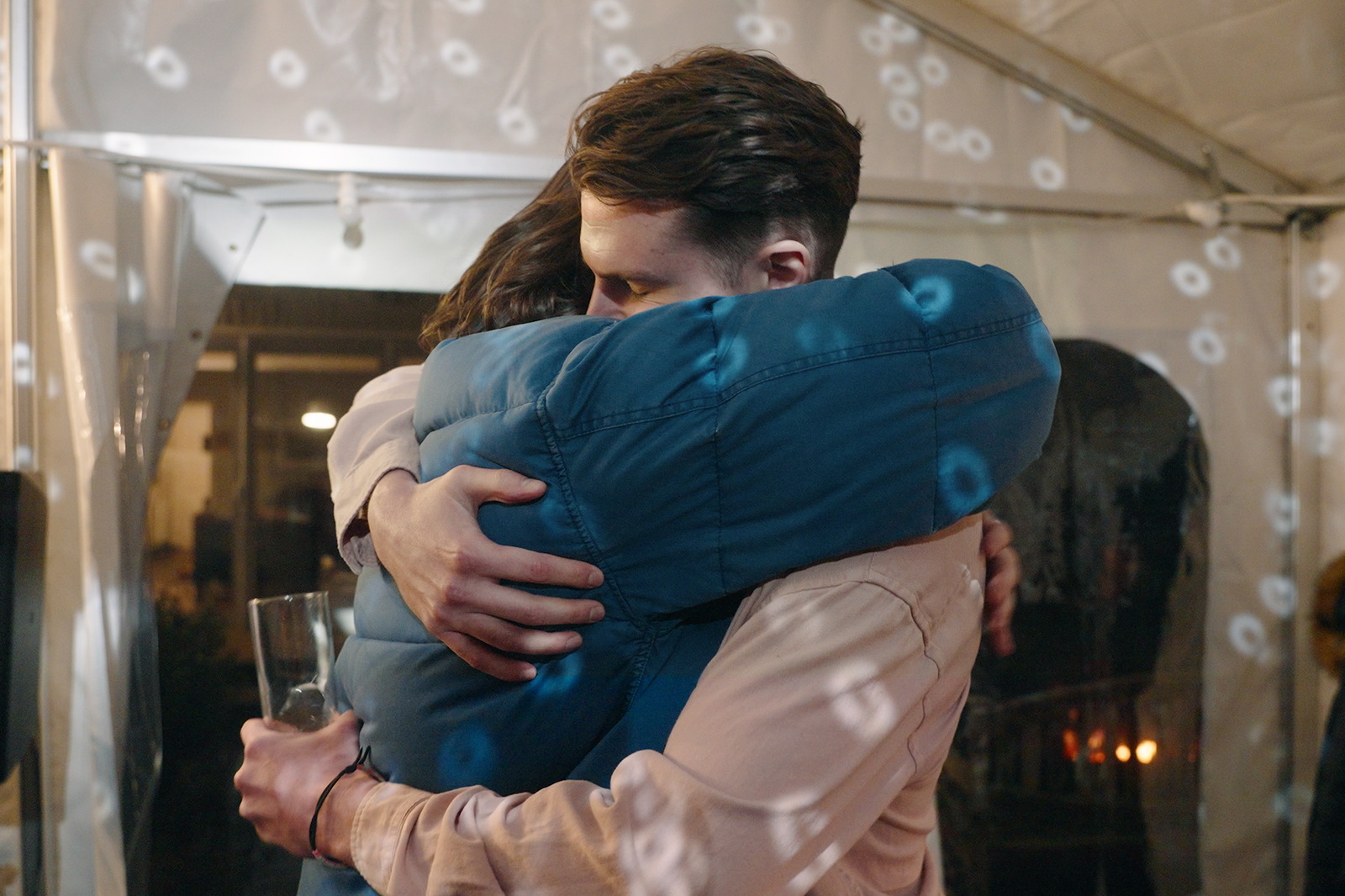
Ashes don’t have to be scattered or kept at home — they can be buried, too.
Burying on private land: In the UK, you can legally bury ashes in your own garden or on private land you own. If the land isn’t yours, you’ll need the landowner’s written permission.
Things to consider: If you choose a garden burial, think about the long term. If you move house, access to the site could be lost. Biodegradable urns are a thoughtful choice for home burials — they’re environmentally friendly and designed to break down naturally over time.
Burial at a cemetery or churchyard: Many cemeteries offer dedicated plots or urn gardens for ashes. Churchyards may allow burial of ashes too. Always check local rules — some sites allow more than one set of ashes per plot, or have specific headstone or container requirements.
Woodland or green burial sites: Some families choose to bury ashes at a natural burial ground or beneath a tree in a designated woodland. These peaceful, eco-friendly sites are managed by specialist organisations and may require advance arrangements.
When it comes to what to do with cremation ashes, there are now more possibilities than ever. From urn ideas for ashes to space launches and vinyl records, these ashes memorial ideas are designed to reflect who your loved one was — and how you want to remember them.
More of us than ever are opting to create jewellery and other keepsakes out of the ashes of our loved ones. Companies providing this service will typically send out a pack to the home of the customer, which contains everything they’ll need. This could include a measuring spoon for the transfer of ashes into a special, secure container, as well as unique order codes and references for security. The company will then incorporate the ashes into whatever item has been requested, at the point of creation.
This gives people the chance to feel as close as possible to the one they’ve lost by wearing a part of them on their body. Jewellery like rings and necklaces can even be passed down through the generations of a family, making it an especially meaningful way to remember someone.
For those who maybe feel like there’s too great a risk that they’ll lose a piece of jewellery containing the cremated ashes of a loved one, there are other cremation ashes ideas. For instance, rather than something wearable, some prefer to have an item that they can display at home.
Different companies provide the option to create vessels and items out of glass, such as plates, paperweights, ornaments and vases. Some feel that these items are more presentable and less sombre than an urn, and that they look more at home among their other possessions.
For music lovers, it’s even possible to press ashes into a vinyl record. The record can include a favourite song, a voice message, or simply be a display piece. The ashes are mixed with the vinyl material during pressing, and the label and cover art can be fully personalised.
It’s a powerful way for a musician or music lover to be remembered — through a record that plays on.
For those looking to inject some adrenaline into the scattering of their ashes, there are more high-octane cremation ashes ideas. Ashes fireworks allow people to ‘go out with a bang’. A family member will bring your ashes to a firework vendor, who can put them inside a firework of your choice. Some will even allow customisation of the exterior with a message or design.
Once this has been done, the firework should be treated like any other; that is, you can set it off on any day of the year in the UK, as long as it’s on your own land and before 11pm. If you want to launch it in a public place, then, much like with the scattering of ashes, you will need the permission of the land-owner. Remember to be extra careful – at an ashes ceremony like this, emotions are likely to be high, and it may be harder than usual to keep the safety of everyone in mind.
This is a fun and visually impressive way to go in peace from the world. Many find the idea of their ashes exploding in a ball of colour and light above their nearest and dearest to be beautiful and meaningful. In fact, our founder, Paul Jameson, wants this for his own ashes when the time comes.
For those who can’t settle on any one place for the scattering of their ashes, there are companies who can bring them up to the very edge of the earth’s atmosphere, and release them in flight. This idea has become more popular lately, with companies providing the service even appearing on Dragons’ Den.
The company may provide a special canister which will contain the ashes of the person who has died. The canister can be personalised with a photo of the person, and some companies will even film the moment that the ashes are dispersed via cameras positioned in front of the canister. It will then be attached to a stratospheric hydrogen balloon that surges to the very edge of the Earth’s atmosphere, and the ashes are released at the point where it’s possible to see its curvature.
The ashes will then gradually fall back to Earth over the following weeks and months, making for a cosmic and glorious send-off.
For those who want their ashes to be returned to nature, there are memorial reefs and trees. A memorial reef is an undersea memorial. Your ashes will be used to help make an environmentally beneficial, artificial reef. Coral and sea-life are attracted to the structure, and it can even help provide shelter and support to fish and other marine life.
Memorial trees are a similar cremation ashes idea for land-based natural memorials. There are companies in the UK who can provide a mix to be combined with the ashes of a loved one in the soil where you want to plant the tree. This mix neutralises the chemicals in the ash which could harm the growth of, or even kill, the tree sapling. In this way, the tree can thrive and act as a living monument to the person who has died.
Both of these ideas are beautiful in the sense that they create ‘living’ memorials to the one who has died, generating the sense that they have become part of the circle of life, and that they live still in continuous renewal.
Beyond this, there are some more left-field cremation ashes ideas that, while they won’t appeal to everyone, are also becoming more popular. The first of these is cremation tattoos: special tattoos on the skin of the bereaved using an ink infused with the cremated remains of a loved one, or even of a pet. People find this a powerful way to permanently memorialise their loved ones, wearing them on their body, and always having them close.
Finally, there are even companies, based in the US, who can infuse a portion of ashes into the manufacture of bullets. This is perfect, for instance, for those who’ve lost a relative or friend with whom they loved to go clay-pidgeon shooting. Now, the next time they go shooting, they can remember the one they’ve lost by doing what they used to love.
For children (or anyone who finds comfort in something soft), ashes can be placed inside a memorial teddy bear. These plush keepsakes include a secure inner compartment to hold a small sealed portion of ashes. They can also be personalised — for example, made from a loved one’s clothing or embroidered with a name or message.
Many families find this idea especially comforting for children who have lost a parent or sibling.
When we want to hold memorial keepsakes at home which contain the ashes of our loved ones, we might feel that we want to secure them or display them in something that is personalised.
This box can contain all kinds of things relevant to the one who has died, whether that’s stories, or letters from them, or souvenirs from the life that they lived. The box can be decorated in any way, adorned with images or words. It’s a great way to keep everything sentimental about the person together in one place, so that it’s protected and easily accessible anytime you want to reflect on them.
The beauty of a non-traditional send-off is that it has complete flexibility. If someone has received a direct cremation without a funeral ceremony, it’s entirely up to the family what to do next. Once they have the ashes back in their possession, they can come together to mark the scattering of those ashes, or the giving and receiving of gifts made from them, at any time or place they feel is right.
We hope you have found this article interesting and useful. If you have any questions at all about cremation ashes ideas, or what you’d like to do with yours; or if you have any questions about our direct cremation services, we’d be very pleased to hear from you. Our helpful team is just a phone call away.


During cremation, the body is exposed to extremely high heat — typically between 1000 and 1300°C — for one to three hours. This process reduces the body to bone fragments, which are then carefully processed into a fine ash.
Soft tissues and organs do not survive the cremation process. Most of what remains are small fragments of bone, along with traces of the cremation coffin. Any metal — like coffin handles or surgical implants — is either removed before cremation or carefully extracted afterwards using magnets.
So while it’s natural to wonder if certain body parts are left behind, the truth is that nothing recognisably human remains. The final ashes are clean, safe to handle, and made up entirely of sterile bone particles and remnants of the coffin.
Yes, cremated ashes are completely safe to handle. The cremation process takes place at such high temperatures—typically between 1000°C and 1300°C—that all bacteria and toxins are destroyed. What remains is sterile, odourless and inert. It’s one of the reasons more people now choose to keep or scatter ashes in personal, meaningful ways, without fear of health risks.
Cremated ashes are made up of pulverised bone and mineral fragments left after the body has been reduced by fire. In most cases, the ashes also include traces from the coffin, such as wood or cardboard. Handles and any metal are removed before return. The texture is similar to coarse sand or fine gravel, and the colour is usually greyish white.
Absolutely. Keeping ashes at home is a personal choice many families make—whether in a decorative urn, a discreet keepsake, or a purpose-built box. Some choose a dedicated space in the home, while others prefer more subtle tributes like glass ornaments or small jewellery items. If shared between family members, multiple keepsakes can be made from one set of ashes.
Yes, if you’re scattering ashes somewhere you don’t own, you must get the landowner’s permission first. That applies to places like parks, woodlands, beaches, and football stadiums. Even if the area feels open or public, permission should never be assumed. Most private venues and councils are understanding if approached in advance and treated with respect.
There can be. Ashes contain salts, phosphates and other minerals that may disrupt local soil chemistry if scattered in large quantities. Some conservation groups have even requested people avoid scattering ashes in certain natural areas, such as mountain peaks or protected forests, to protect plant life. If in doubt, it’s worth checking with local authorities or choosing biodegradable options for burial or scattering.
Today, there are more creative ways than ever to honour someone’s memory using their ashes. Many families choose to keep a small part of the ashes in a keepsake, which can be as personal and unique as the person themselves.
Some popular options include:
Jewellery — ashes can be infused into rings, necklaces, bracelets or earrings, offering a close and meaningful connection you can carry with you.
Glass ornaments — from paperweights to vases and tree decorations, ashes can be added to glass items that look beautiful in the home.
Fireworks — for a dramatic farewell, ashes can be placed inside fireworks and launched during a celebration of life.
Tattoos — a small amount of ash can be mixed into tattoo ink for a truly personal tribute.
Memorial trees or reefs — ashes can be combined with soil or reef materials to support living ecosystems.
Art or keepsake boxes — some families create memory boxes filled with stories, letters, and small items made from or containing ashes.
These keepsakes allow people to feel close to their loved one and create something lasting and meaningful — a tribute that can be passed on, shared, or quietly treasured.