×

Two Together: Save £100!Save £100 when you purchase two funeral plans together. Call us for more details.

Written by Emily Cross.
17 minute read

Marking the death of a loved one in a way that feels respectful to the family and allows you to pay your own respects can be daunting. There seems to be so many different opinions online about what you should and should not wear, most commonly around the choice of colour.
Because we know that you may already be trying to work through some upsetting memories and emotions, we want to do what we can to help simplify this process. If you are worried about what colour suit for funeral attire or what colour your dress should be, we’re here to help lighten your emotional load.
Aura can also help with all aspects of your funeral pre-planning checklist, including prepaid funeral plans. We provide direct cremation services that provide a simple, affordable alternative to traditional services. We’re here to provide guidance on every aspect of funerals, and right now, we’re going to guide you through what to expect in terms of colours.
Key takeaways:
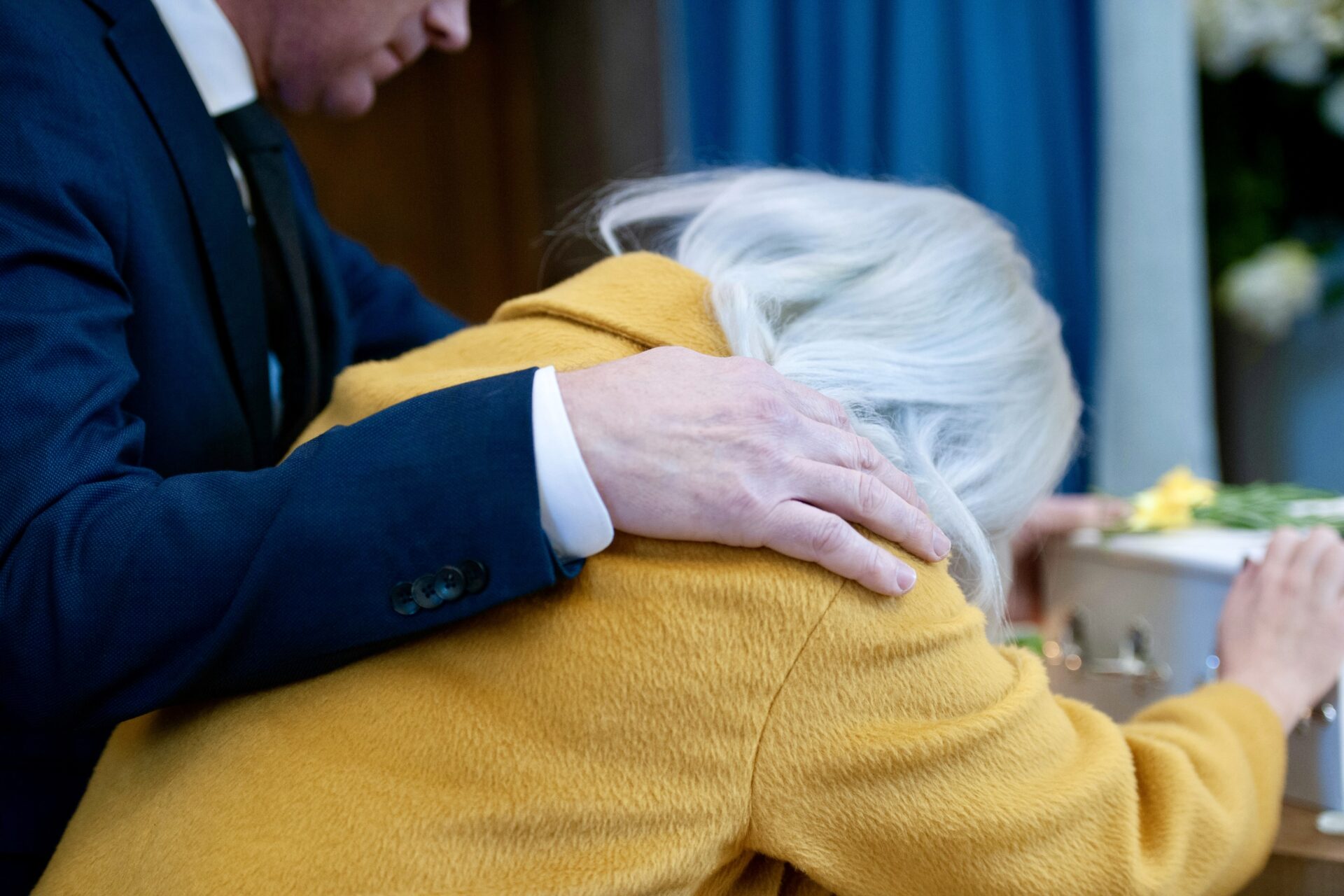
Dressing respectfully in British funeral attire has traditionally been seen as a mark of respect for the family of the person who has died. Dark, muted colors and funeral suits are traditionally preferred by some families because they have historically been worn so that mourners do not draw attention away from the service, but it’s important to be aware of exceptions.
Japanese and Chinese families, for example, will traditionally wear white, not black, because they view it as a celebration of the purity of life and the potential for rebirth. Certain religious customs that exist outside of the Christian faith will also call for mourners to wear brighter colours and other forms of attire.
Knowing what colours to wear to a funeral is not so much about rigidly following tradition as it is about being mindful of what the family wants. If you are able to accommodate their wishes, your efforts will certainly be appreciated at what is a difficult time.
Some may also find that the grief they are feeling is overwhelming to the point where they cannot contemplate preparing to attend the service. This is natural, and many others will be going through the same thing right now. If you prefer to speak to someone from outside the family as you begin to process your emotions, you may find that connecting with a trained online counsellor or even a death doula can help. They will be able to provide a kind, compassionate ear that can help you start coming to terms with your loss and potentially even remove some of the stress involved with preparing for the service.
Traditional funeral etiquette in the UK may call for black attire, with the exception of a white collared shirt when worn with a suit, but there are variations. For example, if you are wondering if you can wear grey to a funeral, chances are that most families will not mind this at all.
The main focus is on dressing in a way that is smart and respectful, and the family may well consider this far more important than the specific colour you choose to wear. If you know the family well or are a close family member yourself, you may have some insight into the specific preferences of the next of kin.
If the family expressly requests black attire, trying to accommodate this request will be appreciated. And if they decide to move beyond British funeral traditions and ask you to wear a different colour or a non-traditional item of clothing, they will appreciate your efforts in doing so.
Black may be the traditional and most commonly worn colour at UK funerals because it is conservative and understated, but it is far from your only option. Yes, it symbolises mourning and respect, but other dark colours are also increasingly acceptable these days. If you find yourself asking “Can I wear navy to a funeral?”, you will find that, although there is naturally some variation of opinion, a smart outfit in a dark colour will be widely accepted.
There are a variety of suitable black clothing options you may wish to consider. Suits, dresses, and skirts that are smart and representable can all be worn, as can matching accessories, although you may wish to make these pieces minimal and understated so as not to clash with the wishes of the family if they see the funeral as a solemn occasion. Using your discretion or speaking to a close friend may help you arrive at the right decision in terms of your attire.
Yes, navy is an appropriate alternative to black in the UK, but you may wish to consider wearing darker shades of blue rather than bright or pastel blues. While a lighter blue may be very smart and presentable, it may be the case that other mourners disagree with such a choice and see it as breaking with tradition too much.
If you decide that navy is the colour you feel comfortable in, there are a number of ways you could pair it with some muted tones for a look that is both formal and respectable. Black or dark brown leather shoes, white collared shirts or blouses, and even a muted grey can all help here. The key is to find something that you feel is both comfortable to wear and that will be in keeping with how the rest of the mourners will arrive. Getting the balance right may require a little thought and reflection, possibly taking a few minutes to run your attire past a friend or relative.
Grey and charcoal are neutral, respectful alternatives if you prefer not to wear black or navy. You can still achieve a formal appearance that will show the family and next of kin that they are in your thoughts, and it will also provide more flexibility than if you stick rigidly to black.
Although there are some very smart light grey outfits, you may wish to consider opting for a darker shade unless the dress code has been outlined as relaxed or smart casual. While we all grieve and remember someone who has died in our own way, close family will always appreciate it when mourners make an effort to dress in a way that adheres to any wishes they may have made.
Choosing between a black or white shirt for funeral attire can be difficult, and it’s something that’s typically influenced by the other items that make up your outfit.
Many people will tell you that a white shirt is the safest and most traditional choice when wearing a suit. They highlight the black tie, which is a traditional mark of respect, and the collar adds an air of formality that enhances the respectability of the attire.
If you are wearing a skirt or trousers and top, it’s more common to consider a black shirt in this case, especially if you are not going to be wearing a jacket on top of it. That said, you may wish to consider the choice of colour once you have picked out the rest of your outfit. This could help you achieve the right balance and help you feel more comfortable when the day of the service arrives.
Should you wish to explore neutral-colored shirts instead, many consider grey and navy blue as perfectly acceptable alternatives. Provided you feel like you are respecting the family’s wishes, knowing them as you do, you should be assured that they will appreciate your efforts.
If the family lets it be known that they are having a modern funeral or something non-traditional like a celebration of life party that is much more about remembering a life well lived than mourning loss, you may find you are asked to wear a much bolder colour than you are used to.
Even if you feel that the choice of colour is at odds with how you would want mourners to dress, making an effort to accommodate the family’s wishes is something that will always be appreciated by those in attendance.
There are a number of requests that families may make of mourners, with some common examples including:
If you feel slightly uncomfortable about dressing like this, don’t worry, it’s perfectly natural given the traditions in the UK. Speaking with a couple of fellow mourners before the day arrives can help you to find the right balance between feeling comfortable and following the family’s wishes.
A growing number of families are choosing to view a funeral service more as a celebration of life than the mourning of a death. This is very much a personal choice and one that will be guided by everything from the age of the person who has died and the life they led to the family’s wishes and the personality of their loved one. With this in mind, you may find that the family makes a request that unwittingly makes you feel somewhat uncomfortable. Here are some examples:
A key thing to remember here is that the family is neither right nor wrong for asking you to do any of the above. They simply wish to mark the death of a loved one in a way that they feel represents and reflects his or her life and personality. They will most certainly appreciate any efforts you make to accommodate their wishes.
If you are being asked to do something you just don’t think you can do while feeling comfortable about the way you are dressed, you may find that discretion and compromise are the way forward. At a time when they are grieving for a loved one, the family is unlikely to be emotionally available to have lengthy discussions about dress codes and variations in attire. In this case, you may find that a compromise is to wear a traditional understated outfit so that it is clear that you are paying your respects.
Examples of what not to do would include:
Taking a moment to breathe and think of a compromise may help you to arrive at a choice of attire that you feel comfortable with and that is a clear mark of respect for the family. They will appreciate your efforts and the fact that you have attended the service.
If the family has made no mention of any of the non-traditional wishes we’ve just talked about, you may find it advisable to stick with muted and conservative colours. Bold colours like red, yellow, and pink, while perfectly capable of playing their part in a smart and stylish outfit in a different setting, may not be seen as suitable by everyone in attendance that day. You may find that running your proposed outfit past a close friend will help you make a choice that is more in line with what the family has in mind.
Bold patterns or prints that catch the eye are also examples of non-traditional attire that some of your fellow mourners may view as a step too far. Even when families request a particular colour, they will still want to make sure that the focus is on the person who has died and the memories everyone who attends has of them. Unwittingly wearing something that is at odds with this approach may unintentionally detract from the way you pay your respects. Sometimes, a second pair of eyes that can offer an opinion is all that is required to make sure you wear something that you feel comfortable in but that is also suited to the occasion.
That said, there are a number of cultural customs that allow for different colours, and these should certainly be respected at a time of loss. Asian countries typically wear a crisp white, for example, and some followers of the Hindu faith will pair a white outfit with some more colourful accessories as part of their mourning process.
Provided everyone feels comfortable that this is what the family would want, there are no right or wrong choices when you want to pay your respects by wearing suitable attire.
Taking a moment to think about what happens at a funeral will help you stay focused on the fact that it is a time for reflection. Some families see it as a celebration of life, while others are in a deep state of mourning, but reflecting on the life and times of the person who has died is always at the heart of the funeral service. The attire you wear, whether you are male or female, should reflect this.
Opting for formal, well-fitted clothing that presents you in a smart and respectable way will ensure that you show you have the best interests of the family at heart. Self-expression is important, of course, as is paying your respects in a way that you feel is appropriate and that makes you feel comfortable, but with a little reflection, you may decide there is a balance to be struck.
If, for any reason, you are unsure about what to wear and there isn’t someone close to the family you feel comfortable asking, it may be best to err on the side of caution. Considering dark colours and conservative attire would be our suggestion on how to approach this.
We believe that although there are elements of tradition involved in what colours to wear, the final choice is also one that is deeply personal. The family may wish to make a special request, you may decide you would like to pay your own tribute, and sometimes there are unexpected little changes and additions that just feel right. There is no definite right or wrong here because every service and every loss is different, unique, and personal.
We hope that you have found some support and reassurance in the words we have shared with you today. Preparing to attend a funeral service and pay your respects may feel daunting as you read this, but it is also an important part of your own personal journey.
If you would like help and support at any stage, we are always right here when you need us.



If you have any questions, would like a brochure or simply would like a chat through our services, our award-winning team is here to help.
Unlike other providers, we won’t hassle you with constant calls. We’ll simply ensure you have the information you need and leave you to come to a decision in your own time. When you’re ready for us, our team will be ready to help.
Yes, in a lot of cases, the family will see navy as an acceptable colour to wear to a funeral. The one exception to be aware of is if the family has expressed a wish for everyone in attendance to wear traditional black. Any and all efforts you make to follow the family’s wishes will be noticed and appreciated at what is a difficult time for them.
You may wish to err on the side of caution and consider a darker shade of blue rather than something that is bright and light. While being in attendance and paying your respects is the most important thing, there is always the potential that some members of the close family think of the attire as too bright. If in doubt, perhaps consider a darker navy blue where possible.
While there is no strict requirement that you have to wear black to a funeral, this is the tradition in the UK. If you feel more comfortable in a different colour, or if you don’t have any appropriately styled black clothing you can wear, considering a dark blue or grey fabric is something some mourners choose to do.
Although black is the traditional colour in the UK, mourners frequently attend funerals in blue or grey suits to pay their respects. While we believe personal expression is important, you may wish to choose a darker blue or grey so that your suit isn’t deemed too bright by mourners who may feel more strongly about tradition.
Sometimes a family will ask mourners to wear a bright colour or a bold pattern, and in this case, any efforts you make to accommodate their wishes will be greatly appreciated. If, however, they have not made any such request, we would suggest avoiding anything that is too bright or bold. Many people in the UK choose to see funeral services as quiet, solemn occasions where the focus is on the person who has died and their loved ones. In these instances, wearing black, dark grey, or navy blue may feel like the most appropriate choice.