×

Two Together: Save £100!Save £100 when you purchase two funeral plans together. Call us for more details.
Written by Emily Cross.
16 minute read
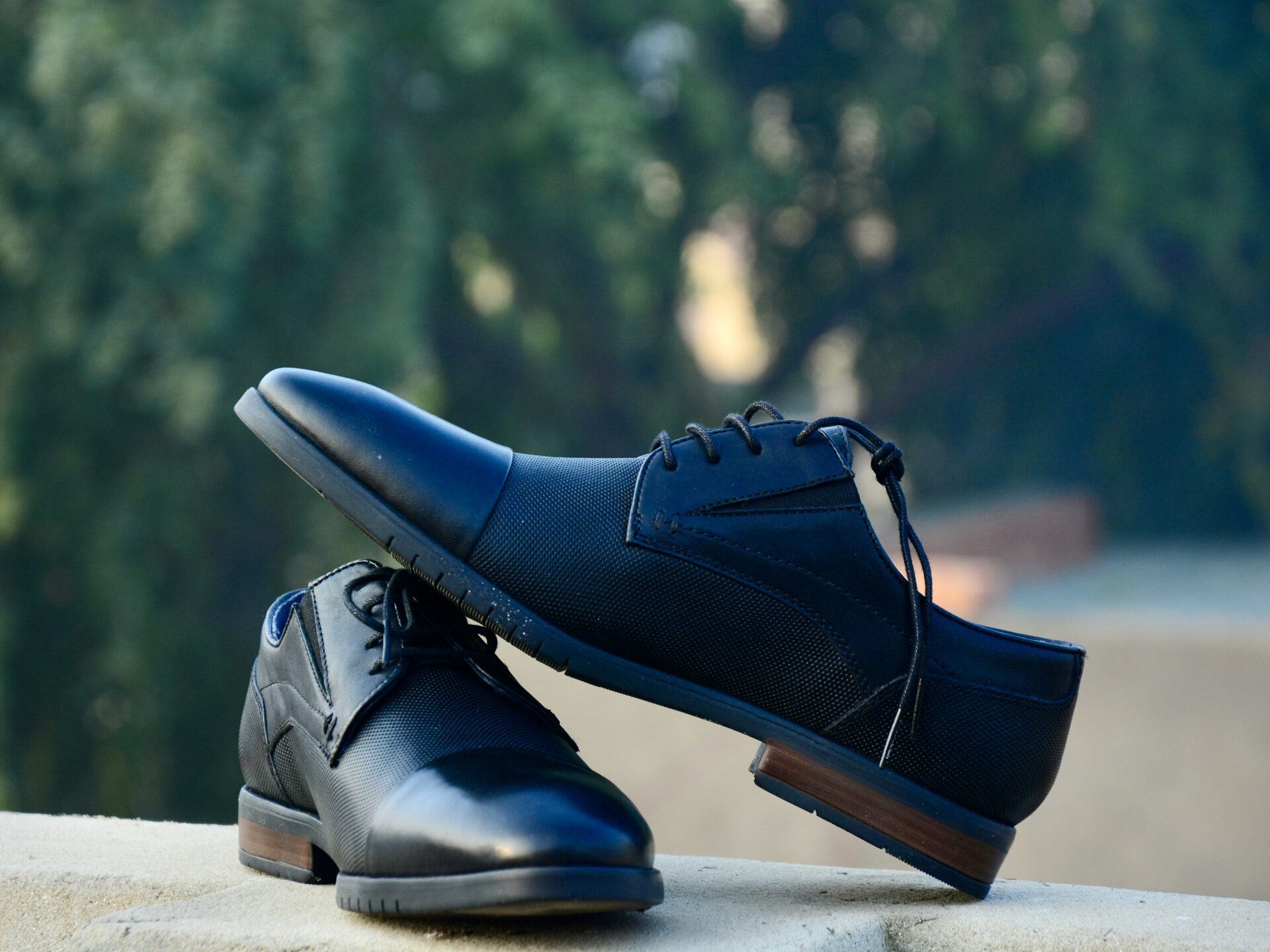
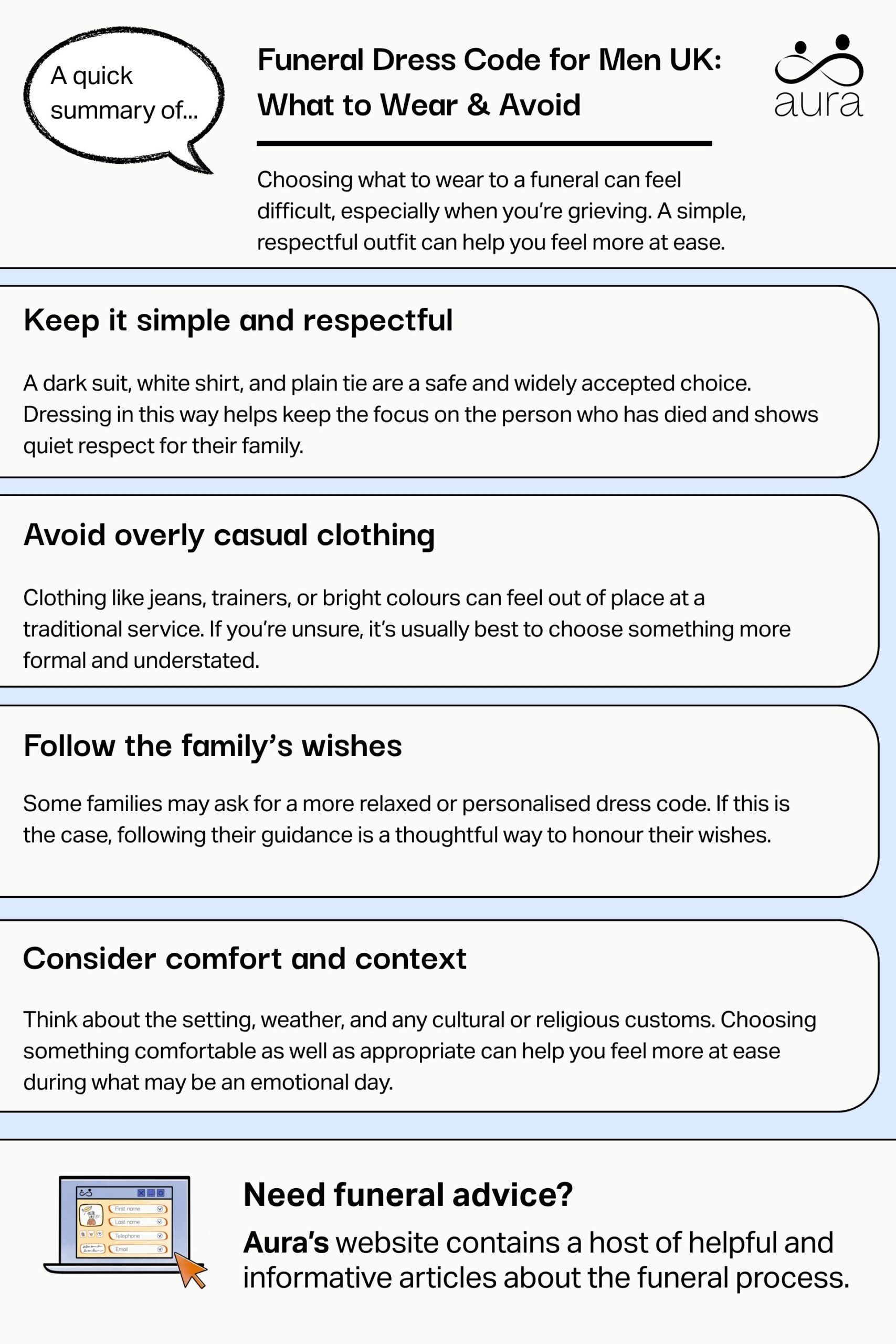
The death of someone you love may cause great upset and a period of prolonged grief. Being able to pay your respects to them in a way that feels right to you is important, though it’s also worth considering what might be expected by others. For example, funeral dress code for men often involves a dark suit, white shirt, and plain tie (something respectful but understated) unless the family has asked for something different.
Cultural differences, religious sensitivities, and traditional expectations could influence how you approach dressing for the funeral service. As providers of direct cremation services, we regularly serve families who feel more comfortable not having a formal service. But if the next of kin feels one is appropriate, you may be left feeling nervous or uncertain about what you should wear.
We hope that this guide will help you to understand your options and provide some direction at a time when your mind may be elsewhere. Taking a moment to familiarise yourself with the points it covers may help you to make a decision you feel comfortable with.
Key takeaways:
As a family-run funeral provider, we have seen the importance of the traditional funeral dress code for men for years. It’s something that many people naturally associate with a funeral service, and it’s something that provides comfort through familiarity. Understanding why it matters to so many people may help you to decide how you wish to follow or adapt it to suit the occasion.
British funeral traditions are largely grounded in the idea of quiet, solemn reflection as a way to pay respect to the person who has died and their family. For centuries, British funerals were mostly understated affairs that were distinct from the more celebratory tone that some families prefer today. Neither approach is right or wrong; it’s purely for the family to decide what they feel aligns with them.
Black attire is seen as a sign of respect and mourning because it doesn’t draw attention to the mourner. The focus of everyone attending the service will remain on the person who has died and their next of kin if everyone is dressed in a similar fashion. Britain may have evolved to become more diverse and multi-cultural, but many still feel a connection with the solemn and reflective nature of traditional British black funeral attire.
The history of funeral etiquette in the UK is something that you may find overwhelming at this stage of your healing journey. This is normal, and not something anyone will judge you for. A simple way to understand traditional expectations may be to list them:
Traditional British funeral wear is formal, modest, and has a conservative tone. Even in an age where there are more cultural influences and a marked shift towards acts of celebration, traditional attire is still perfectly acceptable. Some men who are unsure about what to wear will err on the side of caution and opt for the traditional outfit outlined above.
You may find it helpful to read our British funeral attire guide if you are unsure of what to wear. Alternatively, you may find that the following section breaks things down in a way that feels a little less daunting. Taking your time to work through it may help you clarify your thinking and make a choice you feel comfortable with.
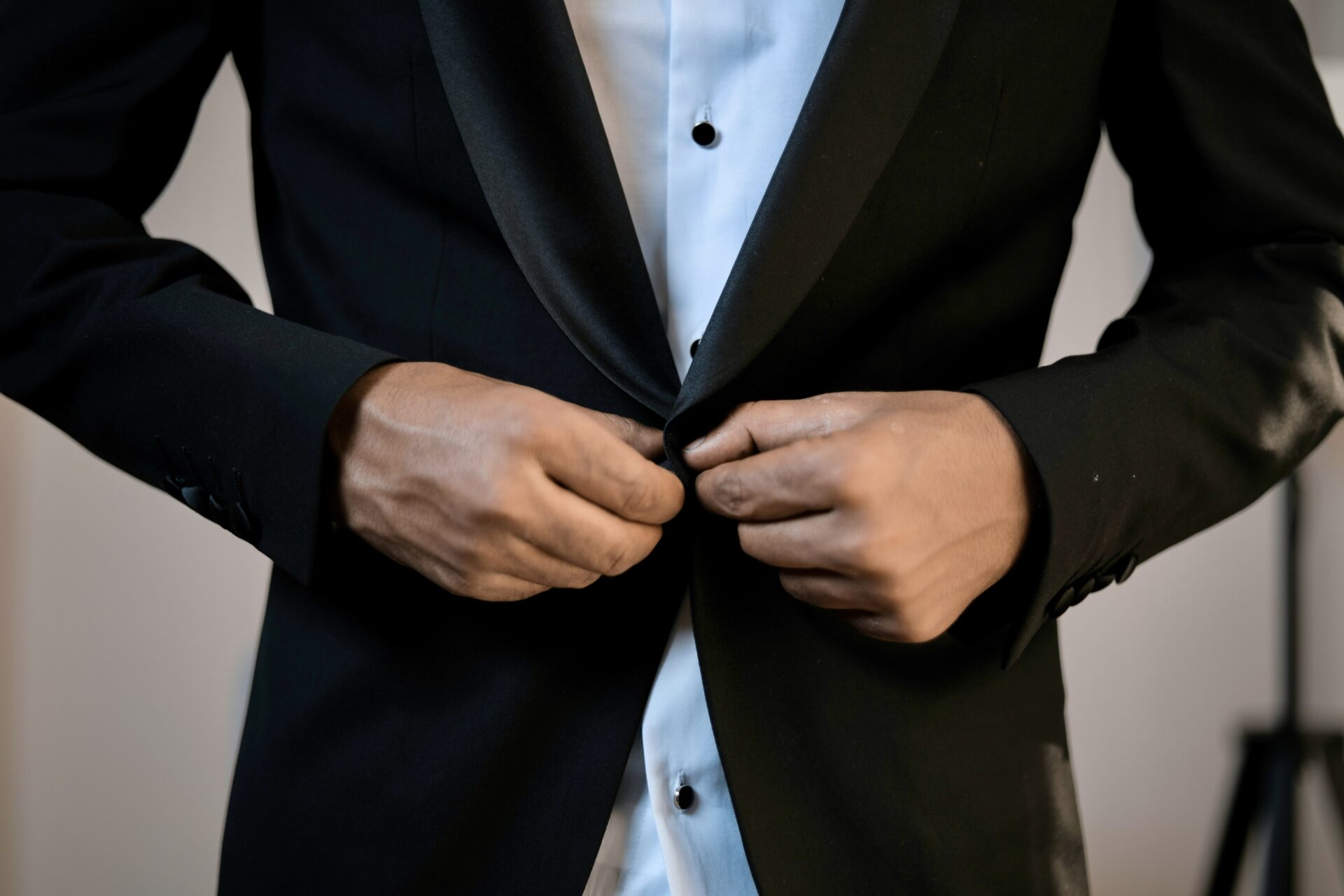
The foundation of any memorial service dress code will be the choice of suit. Many men opt for a well-fitted black or dark-coloured suit, navy and charcoal are increasingly common, to match the traditional focus on dark colours. If you do not have a suit, you may find that a smart blazer paired with formal trousers is sufficient. Focusing on clothing that is smart, formal, but not overly extravagant, may help here.
A plain white or a light muted colour is typical here, with many men being careful to avoid anything too bold. Finding a shirt that has a smart fit, but that is still comfortable to wear, may help you feel slightly more relaxed on the day. Adding a plain black or dark navy tie that is free from patterning or elaborate detailing is generally done as well.
Men who are attending a funeral will generally opt for minimal accessories. Wedding rings and watches are things no one would object to, but more ostentatious accessories like elaborate hats, tie pins, and prominent belt buckles may be better left at home.
Shoes and grooming
A clean, polished pair of black shoes that don’t appear overly casual is what most men will choose to wear. Brown leather shoes are also increasingly common and may help to create a respectful image. In terms of grooming, it’s mostly about getting the little things right. Ironing clothing, pressing a suit, cleaning the shoes, and neatening up head hair and facial hair are all things that other mourners will appreciate.
While we would never try to dictate what you wear, it may help to consider what colours to wear to a funeral from the point of view of your fellow mourners. Individual expression is important, but so are the thoughts, feelings, and sensibilities of people who are also grieving and mourning. It may help to consider the following key points.
Unless the close family or next of kin has stated otherwise, you may wish to consider avoiding the following:
Giving a little thought to how your fellow mourners may perceive your choice of attire can help to see things from their perspective. It’s not about constraining your right to expression, but more about making sure that you don’t unwittingly cause offence or upset at an already emotional time.
Many funeral disagreements come down to small differences in opinion. Some prefer tradition, while others see clothing as personal expression. Both are valid. But a few small compromises like avoiding bold accessories or overly casual outfits can help avoid conflict on the day.
We’re not here to judge. You should be yourself. But thoughtful choices are often deeply appreciated by family when emotions are running high.
The way you dress may also be dictated by the specific circumstances of the death. For example, families figuring out how to cope with the suicide of a loved one may feel that a service more focused on a celebration of life helps. Alternatively, the death of an elderly relative who had been unwell for an extended period of time may warrant more of a traditional approach. The location of the service may also need to be considered at this point.
Dressing for the weather can make a big difference to your comfort during the service. If any part of the funeral is outdoors, such as in a natural setting or at a burial site, muted outerwear like dark coats, scarves or gloves can help keep you warm and dry while maintaining a respectful appearance.
In warmer conditions, breathable fabrics and lighter layers can help you stay comfortable without having to remove formal items like a jacket or tie. A linen suit or lightweight shirt may be enough to keep cool while still looking appropriate.
If you are remembering a friend who has died, you may find that the family asks you for suggestions on how to personalise the dress code. There are many examples of families requesting themed, colour-coded, or “celebration of life” attire. They may feel that doing so is a more fitting way to honour their loved one and pay tribute to them than a traditional muted affair. This is very much their right and their choice, and something that they will appreciate your being able to accommodate.
It’s normal to feel unsure about moving away from tradition, especially if you’re more comfortable in classic black formalwear. Even so, the next of kin will likely appreciate the effort you’ve made. If you’re unsure what’s expected, check the service invitation or ask the organiser. Clarifying the dress code can help you feel more at ease with a more personal approach.
Although resources like our funeral suit guide can be helpful at times, there are also cultural and religious variations that determine how some families dress. Being aware of them and finding ways to accommodate the wishes of the immediate family is something they will appreciate.
Christian and secular funerals often follow the tradition of black formalwear, though this depends on the family and venue. Devout Christian families may expect it, while Catholic families from South America may prefer purple.
Muslim mourners in the UK often wear black too, but with modest, loose-fitting clothes. Jewish mourners typically wear black and a symbolic ribbon, which is cut after the service. Hindu and Sikh traditions favour white, reflecting purity and a celebration of life.
If you’re unsure, most families will appreciate respectful effort. A formal, understated outfit is usually a safe choice.
We understand that you don’t want to cause upset by appearing careless, and that concerns about cultural appropriation can add to the uncertainty. It’s natural to hesitate before asking a grieving family about something that feels small, like clothing. But that doesn’t mean you can’t find support elsewhere.
If you’re unsure, speak to the funeral director or a more distant relative you feel comfortable with. They can often advise on traditions, expectations, or anything to avoid. When in doubt, being slightly overdressed is safer than too casual. A black suit, white shirt, and tie is a respectful choice that’s widely recognised across faiths and cultures.
Traditions evolve over centuries and become ingrained in cultures. The UK has a rich documented history that allows us to look back and see how men’s funeral attire has evolved over time.
If we go back to the 19th century and the time of the Victorians, we see a version of Britain that was much more reserved and private in terms of emotional expression. Black mourning attire came to be commonplace at all levels of society and was seen as a mark of respect. The act of wearing a colour that was both muted and lacking any form of personal expression was important.
The Victorians saw it as the responsibility of every citizen to respect the feelings of the next of kin, but not to ask about them directly, unless in private. Wearing black became a public demonstration of sympathy, but one that did not require verbal expression. Many also saw the depth of black as a representation of the grief and solemnity they were experiencing. As one generation led into the next, the tradition of black mourning attire was passed down from parent to child.
As society shifted to become more open, diverse, and multicultural, the way we dress to mourn shifted with it. During the course of our work providing prepaid funeral plans, we meet lots of families who want to celebrate their loved one, rather than mourn them. This has given rise to greater flexibility in some cases, especially if the family expresses a wish for themed attire or relaxed dress codes.
One thing you may wish to be aware of is that it is still common for the family to announce the dress code. If they make no such announcement, it may be best to play it safe with traditional black attire. Mourning a friend and wearing something you know they would appreciate may have the best of intentions, but it could cause offence or upset if the family disagrees with your choice. Erring on the side of caution, or making a suggestion to the close family via a relative or family friend you are comfortable talking to may be the best approach here.
We sincerely hope that you have found some ideas and sources of reassurance in this guide. It’s perfectly understandable if you are unsure what to wear and are worried about accidentally offending or upsetting someone. The fact that you are thinking about these issues shows that you respect the family and the person who has died.
Having an understanding of why traditional attire takes the form it does may help you to make your choice. Making an effort to accommodate cultural differences and the wishes of the family is important, but so is feeling comfortable with your choices. A short period of reflection may help you to strike a balance that you feel is appropriate. You may also find that there is a relative or close family friend you can ask if you need some guidance on what to wear.
If you’d like more information about direct cremation and Aura’s funeral plans, then our downloadable guide can help. Find out why others are choosing this affordable, no-fuss alternative to traditional funerals and why it might be right for you too.
Download our guide by clicking the link below and learn more about this simple funeral plan option.
No, it is not mandatory to wear black to a funeral in the UK, but many people will choose to do so. Black is the traditional suit colour in the UK, and it is chosen so that no one unintentionally draws attention away from the person who has died with overly colourful or flamboyant clothes. Many people also find a sense of comfort in the solemn nature of black and feel that it gives them time and space to sit with their thoughts, particularly during the course of the service.
Yes, wearing navy or grey suits is something that is becoming increasingly common in the UK. The main point here is that the next of kin will appreciate the fact that you are smartly dressed and neatly presented, as they will see it as a mark of respect. The precise shade or colour is secondary in this case. However, if the family expresses a wish for everyone to wear black, any efforts you are able to make in this regard are sure to be appreciated.
Many people find that they feel most comfortable when avoiding casual footwear such as trainers. Opting for formal black leather shoes that are freshly polished and free from obvious marks and scuffs is a popular approach. If you have dress shoes in a different colour, they will often be perfectly acceptable, provided they are clean and well presented. It’s more important to be neat and tidy as a mark of respect than to wear black shoes that may not be pristine.
Yes, many families who have strong connections to Asian culture will choose to wear white as a sign of respect. To them, white symbolises the purity and sacred nature of life and is something to be celebrated. Having some degree of understanding of different cultural norms may help avoid any unintentional upset at what is already a difficult time.
In previous generations, it was typical for men’s attire to be very formal, but this has relaxed somewhat in recent years. Some men may feel that a smart casual approach is understated and well-presented is something they feel more comfortable in. Having an understanding of what you think the next of kin will expect is something that can help when making your decision.
Although there is no rule barring patterned ties from funerals in the UK, a degree of sensitivity and understanding may be required here. Some families will ask mourners to wear a particular colour or pattern as a celebration of their loved one, in which case a patterned tie would be a suitable option. If, however, you know that the immediate family is traditional, opting for a simple black tie as a mark of respect may be more appropriate.
Many men find they are most comfortable in a traditional single-breasted black suit, black tie, black shoes, and a white collared shirt. If you are unsure what the family expects and have not heard about any special colour requests, you may feel like this is the safest approach. If nothing else, you won’t run the risk of unintentionally offending or upsetting some if they feel your choice of attire lacks respect.