×

Two Together: Save £100!Save £100 when you purchase two funeral plans together. Call us for more details.


Written by Adam McIlroy.
16 minute read
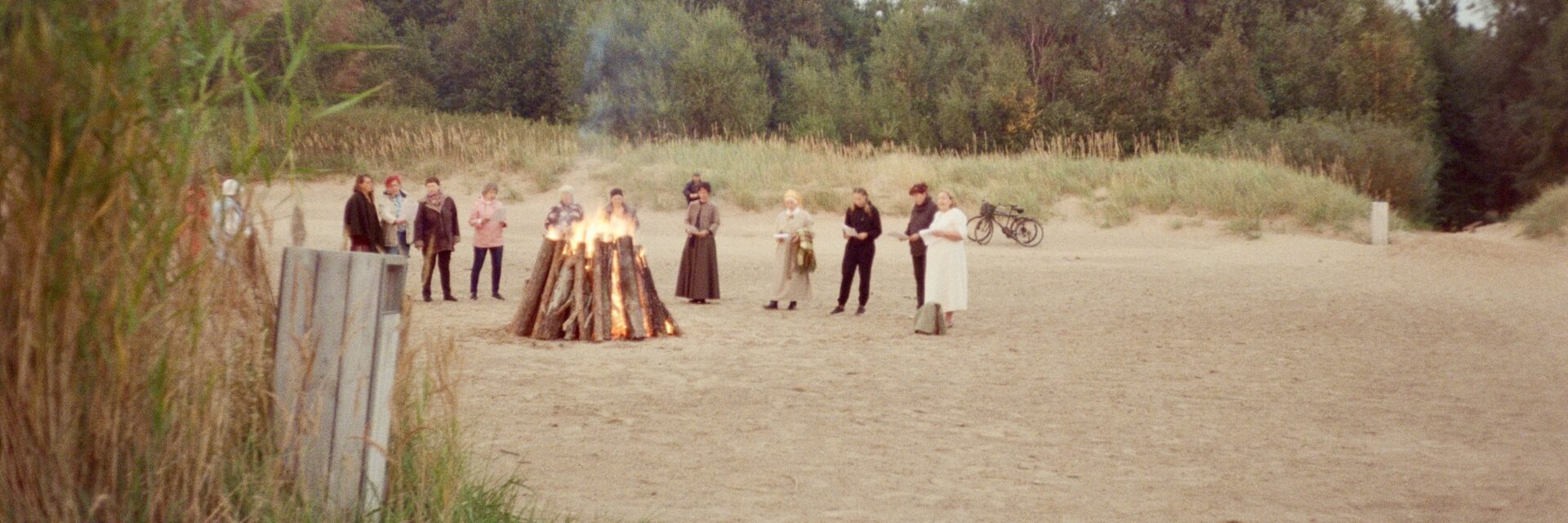
There are now more different kinds of funeral and memorial ideas out there to choose from than ever before. For those who want something traditional, to those looking for something at the cutting edge of technology, there’s something for everyone. We’re also looking to customise and personalise the experience as much as possible these days. And that doesn’t just go for our funeral itself, but also for what happens after with the memorial or celebration of life.
If you’re getting started with your end-of-life planning journey, and you’re beginning to think about what kind of funeral you’d like to have for yourself, you’re in the right place. In this article, we are going to discuss different funeral and memorial ideas to help you to get thinking – including funeral suggestions and memorial personal touches.
Key takeaways:
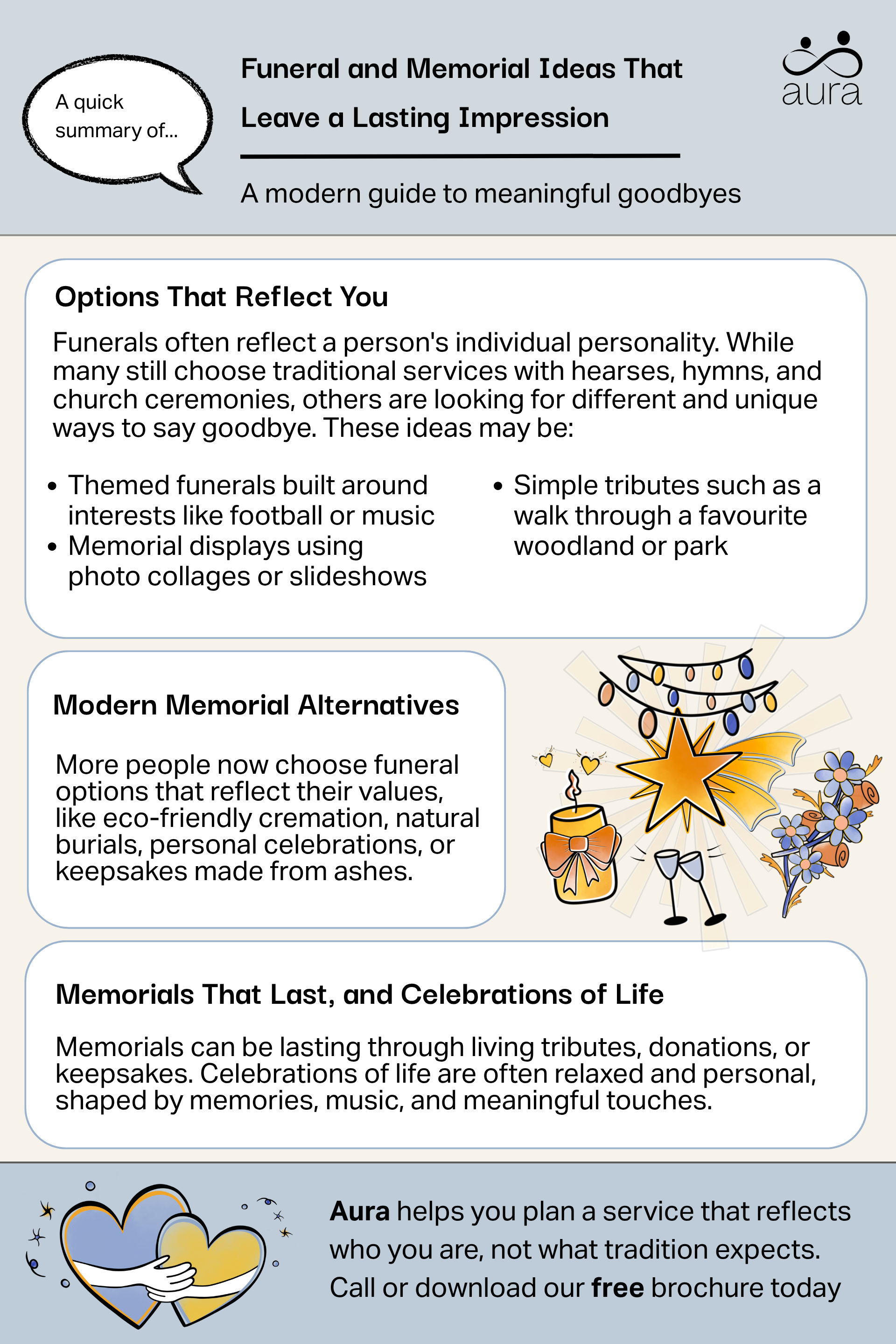
Unlike a traditional funeral where the body is usually present, a memorial or celebration of life is held separately and doesn’t require the body to be there. This separation allows families to plan at a time that feels right for them – whether that’s days, weeks, or even months later. It can take place after cremation or burial, giving everyone time to travel, reflect, and choose a meaningful setting. These more flexible gatherings open up space for funeral location ideas that feel personal, whether that’s a garden, a hall, or a forest trail.
Traditional funerals are still popular, despite the decline of religion in the UK.
There are many different beliefs on death and funerals in religion, and, naturally they can vary quite widely. This has an impact on the different kinds of funeral and memorial ideas that religious people can have. For instance, muslims believe that an important spiritual episode occurs, after death, once the person who has died is within their coffin. For that reason, in Islam, there is no choice to make when weighing up cremation vs burial because cremation is not permitted. Conversely, for Hindus, cremation is very important, with the ashes of those who’ve died being scattered afterwards over a river (the Ganges, if possible).
Religious or traditional funerals in the UK normally include various formal elements, such as a hearse, pallbearers, and floral tributes to the person who has died; there may even be limousines and a funeral procession. The ceremony itself will be structured according to the format provided by whatever religious institution it’s being held at. And it will likely include words and prayers from the faith, and, for example, music from among the most popular funeral hymns.
In general, a traditional funeral is likely to take place at a religious building, such as a church, or within its cemetery. But it could also take place at a crematorium with a chapel or at a funeral home. The dress code, depending on what has been specified by the family, is often mournful and somber, with attendees wearing black out of respect for the person who has died.
The traditional way of doing things doesn’t suit everyone. That’s why personalised funeral and memorial ideas are becoming more popular than ever.
A personalised ceremony might include: a welcome, a reading or poem, music (live or recorded), shared memories or a eulogy, a photo slideshow, symbolic acts like lighting candles or scattering petals, and closing words. You can follow any structure , or none at all, based on what feels right.
Involve guests in meaningful ways. Some ideas:
Each of us has some sort of hobby, passion, or interest that we love to spend our time on. It can be a really powerful and special way of remembering a loved one to build their funeral around these interests. In the moment we are saying goodbye to them, it can feel as if we are bringing their personality back to life for a brief moment.
For instance, if the person who has died was a big football fan, those who are coming together to mourn could wear the shirt or scarf of the club they supported. The location of the funeral could be decorated in the club’s colours, and, in some cases, the coffin itself can even be themed to reflect this interest. The best funeral songs don’t necessarily need to be the most popular ones; they could be inspired by the person’s interest too, or simply be from the favourite music of the person who has died.
There are ways to more creatively remember the person who has died at their funeral. For example, photos and videos of them can be used to great effect, along with funeral favors that reflect their personality. Depending on the set-up of the funeral location, there may be technology which could be used to display slideshows of home videos or photos of the person before, during, and after the ceremony. This can increase the emotional impact of the ceremony on the day. It also gives all of the attendees a chance to see different aspects of the person who has died, which they may not have had the chance to see before, depending on how they were connected.

Some people like to use the different types of cremation or burial themselves as a means of self-expression.
One of the benefits of modern funerals is that the memorial or celebration of life can take place separately — weeks or even months after the cremation. This gives more flexibility to plan something thoughtful, allow distant friends or family time to travel, or align with meaningful dates like birthdays or anniversaries.
Some people want to avoid traditional burial or cremation for environmental reasons; particularly if they have been passionate about green issues in their lifetime. There’s a growing interest in alternative funerals for this reason. For example, as more environmentally friendly alternatives to traditional cremation, there are water cremation (aquamation), and promession (freeze drying). In either case, the body is reduced to a powder and returned to the family in a scatter tube, but they don’t need the extremely high heat of a traditional flame-based cremation, and therefore they use less energy.
Alternatively, people choose to be buried in a simple shroud at a natural / woodland burial ground, rather than paying for a plot at a cemetery and for a higher-end, varnished coffin. These methods all use fewer resources, and can, in some cases, even lead to positives, such as through the growth of ashes trees, or coral reefs.
Rather than a traditional funeral, many families now choose a non-religious funeral or non-religious service that focuses on personal meaning rather than formal structure, with some people choosing to have a celebration of life instead. We can opt for a direct cremation funeral to take care of the practicalities, and then our family can arrange for an end-of-life celebration.
There’s no limit to what a celebration of life can include. In fact, if the person who has died has been cremated, cremation ashes ideas can be incorporated into things. An ash scattering ceremony in a place special to the person could be held, or keepsakes made from their ashes could be distributed among family members. But it doesn’t need to be as elaborate as that: the family and friends can simply do something together, such as having a barbecue in the back garden or going to the favourite restaurant of the person who has died. They could also gather together to watch their favourite film together. The beauty of it is that it can be as low- or high-key as the family wants, and they can wait for as long as they like before organising anything.
Meaningful doesn’t have to mean expensive. Here are some low-cost memorial options:
The power of a good memorial service can last beyond the ceremony itself, especially when incorporating celebration of life ideas.
One increasingly popular way to make a memorial more potent and memorable is to make it last. Some people like to do this by incorporating nature into acts of remembrance, such as planting a seed packet in honor of their loved one. There are some companies offering the service of infusing cremation ashes with tree saplings and other fauna, ensuring that your remains, or the remains of a loved one, can be fused with something that can go on living. It’s a truly beautiful lasting memorial idea.
Others prefer to do something that is less tangible and more of a gesture that can continue to do good in their name. For example, you may be very passionate about a certain charitable cause. In that case, why not consider leaving a part of your estate to charity, so that you can continue to do good after you have gone? Not only does the importance of writing a will relate to what charitable donations you might want to make, but, in donating to charity, you may also be able to reduce what your executor needs to pay in inheritance tax.
Cremation ashes can be used to create keepsakes to be kept by friends and family. For instance, paperweights, jewellery and even pieces of art can be made using ashes. These things can be kept for a lifetime as sentimental reminders of the person who has died. There’s even the practice of putting cremation ashes in a tattoo which is becoming more popular. In this way, you can create an image or put some words on your own body that signify the connection you once had with the one you’ve lost.
If a loved one of yours has some funeral or memorial ideas, you might be wondering how to go about conducting a celebration of life.
A celebration of life doesn’t need to be elaborate to be successful; it just needs to be authentic. The best way to make sure that it’s authentic is to plan it around the likes and the interests of the person who has died. You can give a speech, like a eulogy, if you like, but don’t feel any pressure to do this if you feel like it won’t come naturally to you. The goal could be to give everyone the space and time to say something they remember or miss about the person who has died, but to do so in a place that is safe and casual. If the gathering has been organised a long time after the death of the person, then it should hopefully mean that people are more able to reminisce without struggling to deal with their grief.
If you’re planning something more traditional or want to blend formal and informal elements, exploring funeral wake ideas might offer the right balance. From light refreshments and memory tables to music and small keepsakes, a wake can be both comforting and personal.
You or your family could also take the time to make some meaningful, symbolic gestures, such as lighting candles together, releasing balloons, or playing / singing a favourite song together. Such gestures can lift the spirits and increase the meaningfulness of such occasions, helping them to live longer in the memory, and for the attendees to feel a powerful sense of closure.
Gifts and offerings, both to the person who has died, and to those attending the funeral or memorial, can add a nice touch to proceedings.
Small, genuine gifts for those attending a celebration of life, like a candle, or a memory book, can be kept by them for years to come. You could even hand-write a letter of things, or provide them with a small photo collage.
Honouring the person who has died by making a symbolic offering to them, perhaps of flowers or by lighting a candle, can be a nice touch.
Thank you for reading: we hope you have found this article about funeral and memorial ideas useful. Aura is the top-rated provider of ‘Cremation Services’ on Trustpilot, with a score of 4.9/5 stars. We offer those direct cremation services to those in need now, and to those looking to the future through our prepaid funeral plans. Our direct cremation services are ideal for letting families take care of the simple, practical elements of a funeral, so that they can arrange a later celebration of life whenever they are ready.
If you’d like to see whether Aura could be the right match for you in end-of-life planning, why not download our free funeral plan brochure today?
If you’d like to know more about how to plan a cremation with Aura, our brochure is a helpful place to begin.
Our funeral plans are a helpful way to put everything in place for you or someone else.
When the time comes, our experienced team will be here to guide you through each step, offering support and advice whenever you need it.
To find out more about how our plans work, what’s included, and our story, you can request a brochure by clicking the link below. We will then send you a copy by email or First Class post—whichever you prefer.
Non-traditional ideas include themed funerals, celebrations of life, eco-friendly burials, and creative ashes keepsakes like jewellery or vinyl records. These allow for more personal, flexible farewells.
A celebration of life is an uplifting, informal gathering held after a death. It can include music, food, shared stories, or symbolic gestures—focused more on honouring the person’s life than mourning their death.
A celebration of life is just one way to honour someone. Here are some other options to consider:
Traditional funeral – A structured service with religious or cultural elements, often held at a church or crematorium.
Memorial service – A flexible, non-religious event held after the funeral or cremation, without the body present.
Private gathering – A small, informal get-together with close family or friends, such as a meal or walk.
Ash scattering – A simple ceremony in a meaningful place, often with a few words or personal touches.
Living memorial – A lasting tribute, like planting a tree or donating to a cause the person cared about.
Keepsakes at home – Creating memory boxes, keepsake jewellery, or decorative urns for quiet remembrance.
Each option offers its own way to reflect, remember, and honour someone in a way that feels personal.
A unique funeral is one that truly reflects the life, personality, and values of the person who has died. Here are some thoughtful ways to personalise it:
Choose a theme – Base the service around their passions, like music, sport, or hobbies. This could include themed decorations, clothing, or even a custom coffin design.
Use personal touches – Share stories, display photos or videos, play their favourite songs, or invite guests to write messages or memories.
Select a meaningful location – Hold the service somewhere special, like a favourite park, garden, or even at home.
Involve loved ones – Invite family or friends to read poems, perform music, or share memories during the ceremony.
Add symbolic gestures – Light candles, release balloons, plant a tree, or give small keepsakes to guests.
Incorporate their values – Include charitable donations, eco-friendly choices, or cultural and spiritual elements that mattered to them.
Even simple changes can make a funeral feel more personal and heartfelt – it’s about what feels right for those saying goodbye.
Yes. Options like woodland burials, water cremation, and biodegradable coffins or shrouds are growing in popularity for those wanting a lower environmental impact.
Absolutely. With a prepaid funeral plan, like those offered by Aura, you can outline your wishes—whether traditional or unique—while locking in today’s prices.
Living memorials like ashes trees, charitable donations, or memorial jewellery help your memory live on. Some also choose custom tattoos or legacy projects to honour loved ones in meaningful ways.