×

Plan ahead and save up to £200 Save up to £200 on selected funeral plans until 30 September. T&Cs apply. Click here for full details.

Two Together: Save £100!Save £100 when you purchase two funeral plans together. Call us for more details.


Written by Adam McIlroy.
21 minute read

One of the key things that we tend to find reassuring when shopping for anything is impartial expert advice. It cuts through the noise of promotional material and advertising like nothing else. One such impartial expert in money-related matters is Martin Lewis, who offers advice on all kinds of things, from car insurance to credit cards. But does Martin Lewis recommend funeral plans? In this article, we aim to answer that question. We’ll also explore the common question: do I need a funeral plan, and how can I decide if it’s the right choice for me or my family?
If you’ve found us here, it could mean that you are ready to start your end-of-life planning journey. We at Aura would be pleased to help you on your way: we are the top-rated national ‘Cremation Services’ provider on Trustpilot, and we proudly offer our affordable, compassionate prepaid funeral plans across mainland Great Britain.
*Terms and conditions apply. You will receive a funeral plan summary before purchase. Plans may not cover all funeral costs. Please ensure the plan meets your needs.*
Key Takeaways
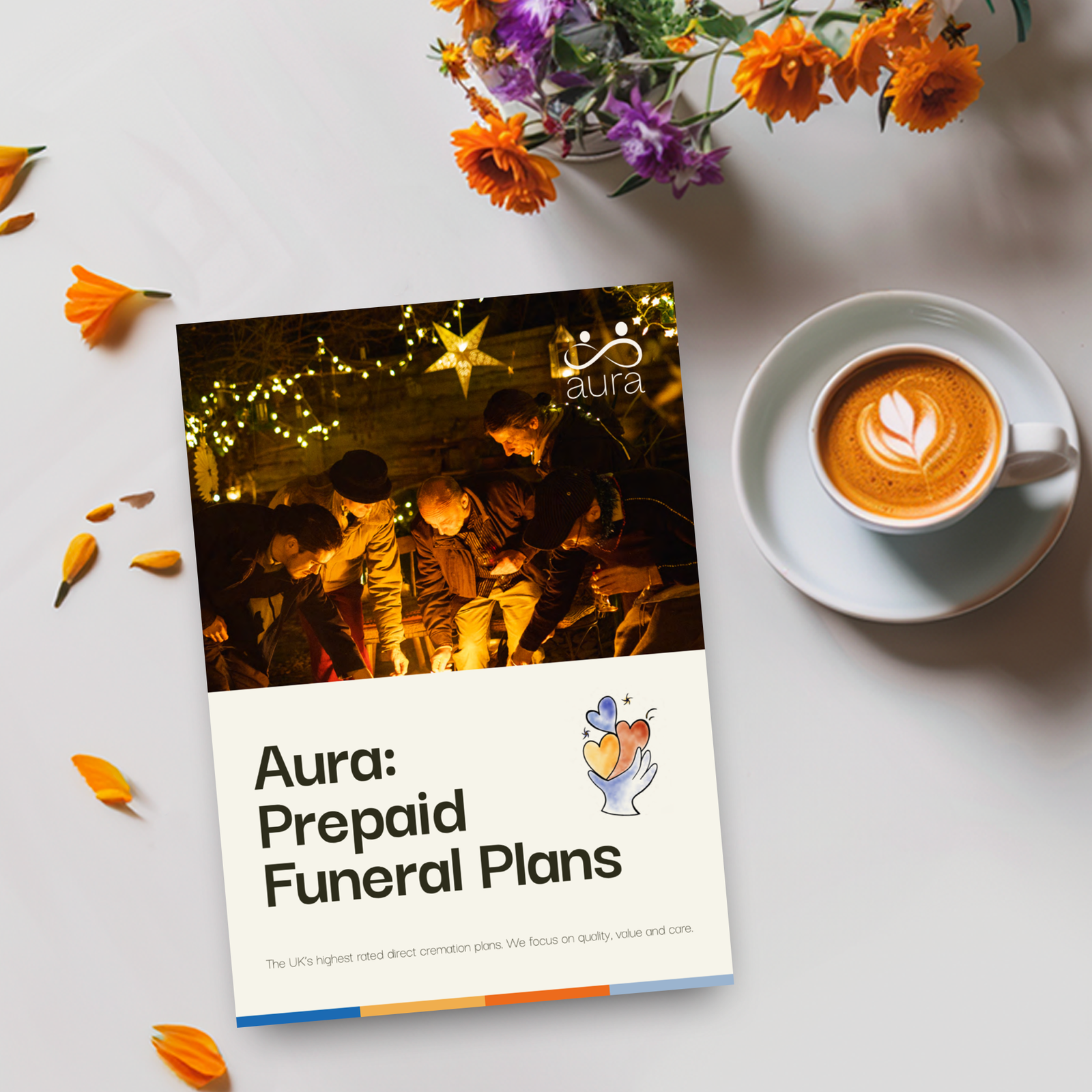
If you’d like to know more about how to plan a cremation with Aura, our brochure is a helpful place to begin.
Our funeral plans are a helpful way to put everything in place for you or someone else.
When the time comes, our experienced team will be here to guide you through each step, offering support and advice whenever you need it.
To find out more about how our plans work, what’s included, and our story, you can request a brochure by clicking the link below. We will then send you a copy by email or First Class post—whichever you prefer.
Martin Lewis is known for being a balanced and forthright consumer champion whose mission is to help us all to make more informed and self-beneficial financial decisions.
If you’ve ever wondered what is a funeral plan, it’s a way to arrange and pay for your funeral in advance, helping lock in costs and reduce stress for loved ones. Martin Lewis regularly explores whether these plans are good value, and what to watch out for when considering one.
On Martin Lewis’s information website, Money Saving Expert, he gives an overview of prepaid funeral plans, explaining what they are; how they work; when they might and might not be appropriate for you; and what the alternatives are.
In general, he explains that they are worth it if:
He also advises that they may not be worth it if:
In general, Martin Lewis recommends caution whenever there’s a risk that the consumer could pay in more than they get back, which is something he generally stands against. With some of the larger, national providers of funeral plans, such as Co-op, funeral-plan lengths could stretch as long as 25 years. Naturally, with such a long arrangement, the amount of interest being paid can accrue considerably, which may lead to you paying in more than the funeral is actually worth.
He also recommends avoiding funeral plans which charge fixed monthly instalments until death or your 90th birthday, for the reason that this is not really a funeral plan, but a form of insurance for covering funeral costs. He is “not a fan” of arrangements such as over-50s’ life insurance, not only because they cost you much more than necessary, but your coverage could be completely voided if you were to miss a single payment. Indeed, as he himself puts it, “You wouldn’t buy a lottery ticket if it cost more than the jackpot”.
Since July 2022, all prepaid funeral plan providers in the UK must be authorised and regulated by the Financial Conduct Authority (FCA). This means greater protection for you: if your provider goes out of business, your money should be safeguarded under FCA rules.
Before buying a plan, you can check whether the provider is FCA-authorised by searching the FCA register online. Buying from an unauthorised provider puts your money at risk and could mean the plan isn’t legally allowed.
There are certain key advantages about funeral plans which Martin Lewis exemplifies on his website, such as how they can lock today’s funeral costs for your own funeral in the future, and how they can help your family to avoid a financial burden when you die.
As Lewis points out, one of the key advantages of a funeral plan is that, in paying for one, you are locking in today’s prices. According to SunLife, the national average total cost of a funeral last year was £5,140, and, over a 21-year period, funeral prices have risen by 134%, where inflation has only risen by 75% over the same period. For this reason, it’s a very valuable benefit, as it means, when buying a funeral plan, you can stop the clock on funeral price rises.
To put it bluntly, if you decide not to buy a funeral plan now and were to die in 10 years’ time, your family would need to arrange and pay for your funeral at future prices—which, if current trends continue, will likely be significantly higher. For anyone asking “how much does a funeral cost?”, it’s important to consider how location affects funeral costs costs. In more expensive areas like London or Edinburgh, opting for a national funeral provider that offers one fixed rate regardless of location can help ease that financial pressure.
One reason people consider funeral plans is to protect against rising costs. Here are some average UK funeral prices (2026):
| Direct cremation (unattended) | Traditional Cremation (attended) | Traditional Burial |
|---|---|---|
| £1,628 | £4,200 | £5,440 |
*Data from SunLife 2026 Cost of Dying report*
According to Martin Lewis, funeral plans are at their best when you can pay for everything in one go, i.e., if you already have the cash you need to make the purchase. Paying in instalments over the longer term can become less and less cost-effective for you. With that said, many providers, like Aura, offer the option to pay over 12–24 months at no extra cost. It’s normally only over longer periods, where the plan is purchased via a credit agreement, that interest or admin fees begin to be charged per payment.
A direct cremation plan with other providers may cost less when paid upfront in full, but the same plan could end up costing significantly more if it’s paid over five years or longer. That’s because interest and fees can add hundreds of pounds to the total amount paid, pushing the final cost well above the plan’s starting price. Some providers may offer payment terms of 10, 15, or even 25 years — and naturally, the longer the payment plan, the more interest you may pay over time.
Some other providers add instalment fees or administration costs to any payment, even if you’re paying for your plan over 6-24 months. For that reason, if you’re able to pay upfront, it will usually be the most cost-effective option. To make sure you’re getting the best value, it’s worth looking closely at the total cost you’ll pay overall, what’s included in the plan, and whether interest or extra charges apply when paying monthly.
Perhaps the greatest benefit available through a prepaid funeral plan is that, because of the fact it will all have been organised and paid for in advance, your family will not need to stump up for extra costs when the time comes. It’s hard enough at the best of times to deal with grief, but having the added complication of needing to figure out how to pay for funeral expenses at short notice can make it a lot worse. In fact, many parents choose to set up funeral cover for parents early, so their children never have to worry about finances when the time comes.
For this reason, it’s really important to set out, ahead of time, your end-of-life wishes. You might want to consider starting a funeral preplanning checklist in order to make this process a bit easier. All of this preparation can go towards making life easier for your family when you’re no longer here.

While some funeral plan benefits are clear, it’s just as important to know their limits.
Most prepaid plans cover some or all of the following:
Most funeral plans are designed to cover the essential, practical parts of a funeral. However, there are some elements that are not usually included and may need to be paid for separately if you would like them. These can include:
Every provider is different, so it’s important to check what’s covered. A good provider will clearly explain what is and isn’t included, so your family won’t be left with unexpected costs or uncertainty later on.
Despite the positive conclusions that Martin Lewis tends to draw about funeral plans as a way of paying for a funeral, he also highlights some alternative options that could work better for some people, depending on their circumstances. These include receiving help from others, using the estate, or relying on the government.
If there’s enough money in your estate to cover the cost of your funeral, it can be used for that purpose by the executor of your will. They may need to use your will to apply for probate before they will be able to do this, which is one of the things behind the importance of writing a will. With that said, oftentimes, banks will allow the family to access funds in the bank account of someone who has died in order to pay for the funeral after the verification of certain documents, such as their Death Certificate.
Lewis points to various different third-parties from whom support can be secured. For instance, if your family is willing and in a position to pay for your funeral, this may make for a better outcome than paying for things yourself. When it comes time, your family may also find that bereavement support is available to them from the UK government in the shape of the Funeral Expenses Payment, and the Bereavement Support Payment. Both of these payments can help to keep funeral costs down when the time comes, assuming your next of kin is eligible.
From time to time, Martin Lewis does refer to insurance, such as over-50s life insurance, as a means of paying for future funeral costs. However, as noted, he largely recommends avoiding this kind of product. The main reason for this is that, unlike a funeral plan (which has been purposefully designed to pay for your funeral in full), an over-50s life insurance policy may not cover the full costs of your funeral when the time comes. That’s because it pays out a cash lump sum to the beneficiary of the policy, which doesn’t necessarily need to be used to pay for a funeral. There’s also a risk that, if you miss a payment, your policy could be null and void, regardless of how long you’ve been paying for.

There are a number of tips which Martin Lewis offers for helping you to decide on the right funeral plan for you.
Before you sign up, Martin Lewis recommends that you make sure you understand what is included in the price of your plan. There are many different providers out there, each offering similar plans. Some have low starting prices which mask the fact that other elements need to be added in at extra cost. Others have plan structures which include things you don’t necessarily need at a higher price. You might find that some providers only include the collection of the person who has died from certain places at certain times in their price, whereas Aura will collect from anywhere in mainland Great Britain at any time. For that reason, it is very important to compare funeral plans against one another, so that you can get a good sense of which offer aligns most closely with your needs.
Lewis also recommends checking that the provider you are interested in is FCA-authorised. In practice, it would be highly unlikely to find one that isn’t authorised, as this has been an industry requirement since July 2022. But it will just give you that little bit of extra reassurance that funeral plans are safe. There’s no single list of recommended funeral plans — the right one depends on your needs, preferences, and budget.
It could be useful to ask some of the following questions of a funeral provider in whom you’re interested:
Can I cancel my plan for free if I change my mind?
As standard, there is usually a 30-day cooling-off period when signing up to a funeral plan, within which the provider will allow you to cancel your plan free of charge and get your money back. This typically applies to paying in a lump-sum payment. Some providers may have different cancellation terms if you cancel your plan while paying for it in instalments.
However, if you want to cancel after your cooling-off period, you might find that you will need to pay a cancellation fee which could be quite steep depending on the provider. Co-op’s cancellation fee outside of the cooling-off period is currently £125. Pure Cremation’s is £350 and with Golden Charter, you could pay £350 to cancel. With Aura, there is no cancellation fee should you wish to cancel your plan at any time, for any reason.
What happens to my ashes after I have been cremated?
When looking at a direct cremation plan, a question people often have relates to what will happen to their ashes. Of course, there are many different cremation ashes ideas that people have today, from scattering ashes somewhere to having an ash scattering ceremony. For that reason, you should ask the provider you’re interested in what their process is with regards to ashes: some only offer the option to collect ashes from them, or to have them scattered in their own Garden of Remembrance. Aura includes the hand-delivery of your ashes back to your family within one of our durable scatter tubes.
We hope you have found this article useful, and that it has answered the question “does Martin Lewis recommend funeral plans?”. Lewis offers impartial advice on the subject, framing the advantages available through buying a funeral plan against extra considerations you may want to make. It’s a very important decision, and it’s key that you take the time you need to get it right, and to find objective sources of information on the subject.
Aura has a score of 4.9/5 stars on Trustpilot, which helps us to stand out as one of the most compassionate and high-quality funeral plan providers in Great Britain. We are family-run and family-focused, with our founder, Paul Jameson, running the company today alongside his son, David (our CEO) and a family friend called Ben (our COO). Paul founded Aura back in 2019 after his diagnosis with motor neurone disease, and we all work with the same goal now as he had back then: to provide low-cost, high-quality funeral plans to families across Britain. That’s why, in the work we do, we strive to provide a level of quality that Paul would expect for his own family.
If you’d like to see whether Aura could be the right funeral-planning partner for you and your family, why not download our free funeral plan brochure today?
*Funeral plans may not be suitable for everyone. Please read the brochure carefully and consider whether a plan meets your personal and financial circumstances.*


If you have any questions, would like a brochure or simply would like a chat through our services, our award-winning team is here to help.
Unlike other providers, we won’t hassle you with constant calls. We’ll simply ensure you have the information you need and leave you to come to a decision in your own time. When you’re ready for us, our team will be ready to help.
Our team is available Monday–Friday, 9.00–5.00pm.
Martin Lewis does recommend prepaid funeral plans in certain situations. He believes they can be worthwhile if you’re able to pay in full or over a short, interest-free period. However, he advises caution with long-term payment plans that include interest or insurance-style arrangements that continue until death, as these often end up costing more than the funeral itself.
Just like it says on the Money Saving Expert website, we always suggest that you do your own research and consider your personal circumstances before you purchase a prepaid funeral plan.
Martin Lewis is cautious about plans where the total amount paid over time exceeds the value of the funeral provided. He also warns against monthly-for-life insurance models that resemble funeral cover but can be voided by missing a single payment. He urges people to read the small print, understand what’s included in the plan, and confirm that the provider is authorised by the Financial Conduct Authority (FCA).
Martin Lewis points out that a prepaid funeral plan can help you lock in today’s prices, which is important given the steady rise in funeral costs over the years. He also notes that a plan can reduce the emotional and financial burden on your family, particularly if you suspect your estate may not have enough money to cover funeral expenses.
There’s no single provider that will suit everyone. The right funeral plan depends on your individual wishes, your budget, and how much involvement you want your family to have when the time comes.
However, many people choose Aura for a few key reasons:
In Martin Lewis’ view, the most cost-effective way to pay for a funeral plan is upfront, in a single payment. If that isn’t possible, he recommends choosing a short-term payment option, ideally over 12 to 24 months with no interest or additional charges. He advises avoiding extended payment terms or plans that continue indefinitely, as these can result in you paying more than the funeral is worth.
Yes, there are potential risks if the terms of the plan aren’t clear or if you’re locked into an inflexible contract. Some plans may appear affordable initially but include extra charges later on. There’s also a risk of losing cover if you miss payments. Martin Lewis stresses the importance of asking questions, comparing providers, and reading all the terms carefully before signing up.
Martin Lewis suggests that you look into the terms and conditions of over-50s life insurance as a way to pay for a funeral. It is often that these policies don’t always cover the full cost of a funeral and often end up costing more than they pay out. He also highlights that if you miss a single payment, the policy might be cancelled entirely, even if you’ve been paying into it for years.
However, this may not always be the case. Every provider will have different terms and conditions.
Martin Lewis suggests asking whether you can cancel your plan without a penalty, what will happen to your ashes after cremation, and whether there are any additional charges not covered by the plan. He also recommends checking if the provider is FCA-authorised. For instance, Aura does not charge cancellation fees, collects from anywhere in mainland Great Britain, and hand-delivers ashes back to your family in a scatter tube.
Yes, there is financial support available for those on certain benefits. Your family may be able to apply for a Funeral Expenses Payment or a Bereavement Support Payment through the UK government. These can help to reduce the cost of a funeral if there are no funds available in your estate or from elsewhere.
Alternatives mentioned by Martin Lewis include setting aside funds in your estate to cover the cost of your funeral, asking family members to contribute, or relying on government support when the time comes. However, without a prepaid plan, your family may need to arrange and fund your funeral at future prices, which could be significantly higher than today’s rates.