×

Plan ahead and save up to £200 Save up to £200 on selected funeral plans until 30 September. T&Cs apply. Click here for full details.

Two Together: Save £100!Save £100 when you purchase two funeral plans together. Call us for more details.


Written by Adam McIlroy.
27 minute read

There’s no polite way around it—when someone dies, the paperwork quickly builds up. That’s why having a funeral arrangements checklist prepared in advance can be a real weight off your shoulders.
It gives you time to think through what matters most—whether that’s a simple cremation, a particular song, or how you’d like your ashes handled. And it makes things much easier for your family later, giving them clarity and confidence when emotions are high. For many people, it’s one of the most important steps in end-of-life planning.
This guide walks you through how to build a practical, thoughtful funeral arrangements checklist. We’ll look at what needs doing straight after death, whether you prefer cremation vs burial, and what you might want included in the service—if anything at all.
A thorough checklist should cover everything: who to notify, how to choose a cremation or funeral provider, and the legal and financial tasks that follow, such as probate, settling debts, and closing accounts. Whether you’re planning ahead for yourself or preparing for someone else, this is a way to keep things simple, clear, and manageable.
Key Takeaways

We’ll cover each of these steps in more detail further down, but here’s a quick overview to help you get your bearings straight away:
Check for funeral instructions in the will or paperwork – The person who died may have left specific wishes, either in their will, a prepaid plan, or through a document like an Advance Funeral Directive.
Find out how the funeral will be paid for – This could be through a prepaid funeral plan, funds in their estate, life insurance, or help from relatives.
Ask for support if needed – Don’t try to take on everything yourself if you’re feeling overwhelmed. Reach out to family members or close friends who might be able to help with decisions or admin.
Think about appointing a funeral director – Especially if you want support with paperwork, collection and cremation arrangements, or transport.
Decide between cremation, burial, or a direct funeral – A direct cremation is often the simplest and most affordable option, but it depends on personal wishes and what feels right for those involved.
Planning your own funeral involves various elements: deciding on your funeral preferences; setting up a funeral plan; and organising your important documents. These are all useful elements for your funeral preplanning checklist.
Thinking about and communicating your end-of-life wishes is important; by getting off your chest what you’d like to happen when you die, you can bring peace of mind to yourself, knowing that you’ve tied up all the loose ends, and to your family, who can feel reassured that they’ll be doing right by you. To start with, you’ll have some big general decisions to make: would you prefer to have a burial or a cremation as part of planning the funeral service? Or perhaps an alternative funeral? There are many more burial and cremation types out there than there used to be. You’ll also have to consider whether you’d like a traditional funeral with a religious theme and content, or a modern, more personalised alternative.
If you’re thinking about what kind of funeral you’d like, you probably ought to consider how it would be best to pay for it. There are a number of ways of paying for a funeral in advance, and which one you opt for will depend on your personal preferences. A popular way of paying in advance for your funeral is through a prepaid funeral plan; it lets you lock in today’s prices, meaning that you can specify and pay for everything in advance and your family won’t have to worry about paying unexpected costs when the time comes. For this reason, many parents opt for funeral cover for parents to spare their children any financial pressure when the time comes. Sometimes people prefer to cover funeral costs with insurance. As always, doing a bit of reading online and finding out what’s out there, for instance by comparing funeral plans, is a good way to make sure you are coming to an informed decision.
Getting your documents organised, and, importantly, communicating to trusted family members where they are, is vital. Part of the importance of writing a will is making sure that your estate is administered according to your wishes, but before that can happen, you will need to write it, and choose your executor. This will require you to talk about death and dying with your family, so it is best done sooner rather than later. The will, along with other key documents, such as an Advance Care Plan, will need to be stored securely, whether physically at home or with a solicitor, or online.
Alongside a will and advance care plans, understanding how to set up a power of attorney can be an important part of organising your documents, helping avoid delays or uncertainty later on.
When someone dies, there are a number of immediate steps that need to be taken to set the wheels in motion. A medical professional, called the Medical Examiner, will need to officially issue the medical cause of death, which they will do in a document called the ‘Medical Certificate of Cause of Death’. Once issued, and barring any complications with identifying the cause of death, they will send this to the local registrar’s office, allowing the family to make an appointment there. At this appointment, they will register the death; the Registrar will then give them the Death Certificate, and issue some other paperwork which will allow the funeral to go ahead legally.
The family will also need to notify various public and private organisations about the death. For government matters, such as the DVLA and HMRC, a service called Tell Us Once exists (for people on the British mainland), which allows them to notify the public sector one time of someone’s death. For private, financial matters, though, like bank accounts or investments, it may be that the executor will need to apply for probate and share a copy of the Death Certificate in order to close things down and transfer funds onwards, depending on the type and amount of assets.
Naturally, if a funeral plan is in place, then the funeral director will need to be notified immediately too. This way, as quickly as possible, they can bring the person who has died into their care and begin to prepare them for their preprepared funeral.
You will have to decide whether you’d like the support of a funeral director or whether you’d like your family to arrange your funeral themselves.
In order to find the right funeral director for you, you’ll first need to have a fairly solid idea of what kind of funeral you are looking for: cremation / burial; attended / unattended; traditional or not. Once you’ve got that figured out, you can then weigh up the options as to who can deliver on your wishes near you at your budget.
You’ll also need to consider the reputation of the funeral director among their previous customers. It can also help to prepare a few questions to ask a funeral director in advance, so you feel confident about costs, services, and how the person who has died will be cared for. Comparing funeral plans and their providers is a good way to start. Having professional support can also help manage expectations around the funeral waiting time, as much of the paperwork and booking is handled on your behalf
It is something of a funeral myth that a funeral director is mandatory when arranging a funeral. It’s actually possible (and completely legal) to organise a funeral entirely without the help of a funeral director, but it’s important to realise that this will be challenging — especially at a time when your family might be struggling to deal with their grief. They will need to handle all of the cremation forms (or other paperwork); the logistics, such as transportation of the person who has died, booking a venue for the funeral, as well as essential elements like a coffin etc.; and, depending on the kind of ceremony, they may need to officiate things themselves too.
It’s important to bear in mind that you will still need to register the death and secure the funeral permits before you proceed.
Another big consideration you will need to weigh up is cremation vs burial, among other, less prevalent alternatives.
In general, cremation costs are lower than burial costs because burial requires certain elements which cremation doesn’t. Obviously, a headstone and a plot in a cemetery will be needed, and these things can be very pricey. There are also many different beliefs on death and funerals in religion, so you will need to consider whether burial is right for you and your world view. If you’re sure it’s a burial that you want, then you will need to settle on the kind of burial that you’re interested in. There are non-traditional methods becoming more popular these days, such as burial at a natural burial ground, which can be part of planning a funeral.
It’s also important to bear in mind that location affects funeral costs more for burials than cremations, with inner city locations likely to be significantly more expensive than a cremation.
With a cremation, you’ll need to decide on whether you’d like mourners to be present or not. You’ll also have to decide on the kind of cremation you’d like, whether traditional cremation alternatives, like promession or aquamation, or the traditional model. If you’re trying to keep your funeral costs down, direct cremation is a good option: according to SunLife, the national average total cost of a funeral in the UK last year was £5,140; Aura’s direct cremation prepaid funeral plans are available from £1,795.
You might also want to give some thought to what should happen with your ashes, as there are many different cremation ashes ideas to choose from. For instance, there’s the interment of ashes, or your family could organise an ash scattering ceremony. With Aura, ashes are hand-delivered to the family within 21 days of the cremation. Or, if preferred, we can scatter them on your family’s behalf at a Garden of Remembrance.
What is a Green Funeral?
A green funeral (sometimes called an eco-friendly or natural funeral) focuses on reducing environmental impact. For many people, it’s a way of honouring life by protecting the planet.
A typical green funeral might include:
Burial in a natural woodland or meadow instead of a traditional cemetery
Biodegradable coffins made from wicker, bamboo, or cardboard
No embalming, which avoids harmful chemicals
Natural grave markers, like a tree or wooden plaque rather than a stone
A simpler, quieter ceremony in keeping with nature
These funerals are usually more affordable than traditional burials and often appeal to those who lived sustainably or had strong values around conservation.
Can you have a funeral at home?
Yes, and it’s more common than many people realise. A home funeral is a personal, family-led option where the ceremony, and sometimes even the care of the person who has died, takes place in their own home or that of a loved one.
A home funeral might involve:
Keeping the person who has died at home (for up to five days in England, Wales and Northern Ireland, with proper care)
A gathering of close friends and family for quiet reflection, music, or storytelling
A homemade coffin or shroud
A private cremation or burial arranged separately
It’s completely legal in the UK and can be deeply meaningful—but it does require careful preparation. If you’re choosing a direct cremation, a home-based memorial held afterwards can offer a peaceful way to say goodbye.
For families choosing a traditional funeral or burial, you may be offered the chance to visit the person who has died in the chapel of rest. This is a quiet, private space, usually at the funeral director’s premises, where you can spend time with them before the service. You may wish to sit with them, leave a flower, say a prayer, or simply say goodbye in your own way. Some people find it comforting; others choose not to go. There’s no right or wrong, just what feels right for you.
After a burial, many families arrange a lasting memorial, such as a headstone, plaque, or natural marker. If you’re considering this, be aware that cemeteries and natural burial grounds often have rules about size, materials, and design.
Headstones usually can’t be installed straight away, as the ground needs time to settle, which can take several months. Your funeral director or cemetery manager can guide you through the process, including inscription options, materials like granite or sandstone, and how to include personal messages or symbols.

We understand that discussing end-of-life plans with your family may not always feel easy, but it can provide peace of mind once it’s done. Our guide is here to offer you helpful advice on how to talk to your loved ones about direct cremation in a simple, clear way.
For tips on how to make these conversations easier, click the link below to download our guide.
When organising a funeral service or planning ahead, you’ll need to decide what kind of service to have and how to personalise it. To avoid funeral arrangement disagreements with family, it can help to talk about your wishes early—honestly, gently, and in your own words—so there’s no uncertainty when the time comes, just a clear sense of direction and peace for those left behind.
An important part of recording your end-of-life wishes relates to what kind of funeral service you’d like. This will depend on your own personality, as well as your cultural preferences and your religious beliefs. Despite the decline of religion in the UK, a traditional funeral ceremony, complete with a religious order of service and setting, is still popular. Of course, you might want a completely non-religious funeral service, conducted by a humanist, or perhaps a more personalised alternative funeral with religious elements, led by a funeral celebrant.
The type of funeral that you want will influence its content. Obviously an explicitly christian funeral will likely have some of the most popular UK funeral hymns, as well as words from christian scripture. However, less or non-religious funerals could simply have music from some of the best funeral songs, as well as words from some of favourite stories or poetry of the person who has died.
Aside from music, the funeral could also be personalised with a eulogy, as delivered by a family member. The eulogy could focus on the achievements, sayings, and witticisms of the person who has died, featuring anecdotes. Photos or videos can be used to great effect, as well as visual themes and dress-codes based around the character and personality of the person who has died.
These options are also available, in another way, to those opting for an unattended cremation. Once the practical matters of the cremation process are taken care of, the family can then organise a celebration of life in the person’s honour incorporating all of these elements as they see fit.
As noted, there are legal and administrative matters that will need to be thought through and added to your funeral arrangements checklist, whether for your own funeral, or that of someone who has died recently. These include:
Under certain circumstances, a funeral can begin to be arranged before registering a death— but usually, a funeral cannot legally proceed until the death has been registered. This can be done once the Medical Examiner has issued the MCCD and sent it to the Registrar, which is an important step in planning a funeral. A death needs to be registered within five days in England and Wales, and within eight in Scotland. Once they receive the MCCD, the next of kin will be able to meet the Registrar and register the death officially. At this meeting, they will receive the Death Certificate, and the Registrar will also send the so-called ‘Green Form’ (Certificate for Burial or Cremation) to the nominated funeral director chosen by the family (or straight to the crematorium / funeral home), allowing them to verify the identity of the person who has died throughout the process. The next of kin organising the funeral will also have certain funeral forms which they need to sign. At Aura, our Aura Angel team can guide the family through all of this admin. Please note, if the coroner becomes involved (because the death was unexplained or unexpected), or if the death has occurred in Scotland, the process will be slightly different.
The executor of the will will also need to use the will of the person who has died to apply for probate, which is the legal power to administer someone’s estate according to their will. This will involve providing a final accounting of the person’s estate, and paying the inheritance tax bill. For that reason, the person whom you select to be your executor will need to be willing to carry out the task, and trustworthy.
Another important matter to note on any funeral arrangements checklist relates to informing guests and handling tributes that might come in from them. If planning somebody else’s funeral, you’ll need to notify attendees, and possibly provide for extras such as floral tributes and charitable donations.
Announcing a death to friends and family is usually a good time to mention the funeral wishes of the person who has died. This might be done through a simple funeral announcement, which shares the time and place of the funeral or cremation, and helps people understand whether they are invited. There’s an important etiquette to announcing a death (for instance, if possible, to do so in person, and, if doing so online, making sure that the closest kin of the person who has died are aware and in agreement).
But, of course, doing so over social media has certain benefits. By announcing a death to friends and family via social media you can get the word out to lots of people simultaneously, who can react to the news and get informed. If a family is looking to get help with funeral costs, they could share a link to crowdfunding sites like JustGiving or GoFundMe along with the post, allowing readers to donate to the funeral costs, if they are willing and able. Readers can also register an interest in attending, giving the organiser some sense of how many people will be likely to come.
If you’re unsure what to say, here’s a simple message you can adapt for email, WhatsApp, or social media:
“We’re saddened to share that Mum, Margaret Anne Hill, passed away peacefully on 2nd July. Her funeral will take place at Greenbridge Crematorium on Friday 12th July at 11am. All who knew her are welcome to attend. Please let us know if you plan to come.”
You can keep things as formal or casual as feels right. Some families choose a more traditional card or printed invite, while others simply send a message in a group chat.
If you are organising the funeral of someone who has recently died, you might want to organise a floral tribute in their honour. Such tributes often adorn the hearses used at traditional funerals, but can also deck the crematorium chapel or church where the funeral is being held. Your funeral director can lend a hand in organising such flowers, unless you’re planning to create a DIY funeral flower arrangement.
Bear in mind that they can be quite expensive: according to SunLife’s 2025 Cost of Dying Report, last year the average cost of funeral flowers was £222, so you may need to budget. As an alternative, you can use a sprig of wild flowers to adorn the coffin. This can create a similar effect without the expense.
You could also arrange for a donation to be made to a charity that the person who has died was fond of, such as the Dogs Trust, for example, or a military veterans’ charity. Alternatively, donations could be made to a charity providing funding to fight the illness or disease which they may have died of.

Finally, whether for yourself, or someone who has recently died, the post-funeral arrangements will need to be added to any funeral arrangements checklist. You may want to give thought to organising a wake, and to rounding off the final legal and personal matters.
A wake or memorial service gathering can be whatever feels right for your family—quiet and simple, or full of stories, music, and shared memories. And while many people still hold the wake immediately after the funeral, it doesn’t have to be that way. Some families wait days or even weeks, giving themselves more time to plan something that truly reflects the person who has died.
You can choose whatever format and setting feels most natural. A traditional wake might be held at home, in a local pub, or at a hotel. But for a celebration of life or living funeral, the possibilities are wide open—parks, halls, gardens, even favourite cafés or social clubs.
Here are a few things to consider when planning:
Venue: Home is often the simplest choice, but hotels, community centres, restaurants or outdoor spaces can also work well. Think about numbers, accessibility, cost, and atmosphere.
Catering: Some families cook and serve food themselves. Others hire a caterer, or ask guests to bring something to share. There’s no right or wrong—just what suits your energy, budget, and schedule.
Invitations: You might spread the word by phone, group message, or social media. For larger gatherings, consider sending printed invitations or setting up an online RSVP to help plan numbers.
At the event, guests can give speeches, read poems, play music, or share memories. The tone can be gentle and reflective, or warm and full of laughter. There’s no pressure to make it cheerful, but allowing space for people to feel how they need to can make the experience more meaningful for everyone.
You may wish, after having organised the funeral of another person, to send out thank you cards to the attendees. For that reason, it could be useful to add their details to your funeral arrangements checklist, so that you can better remember them when you come to write them later.
It’s also important to make sure that the estate is seen to properly, if you are its executor, in accordance with the will. Certain items might have been earmarked for distribution to certain family members for sentimental reasons, which can be included in a funeral planning checklist. And the person who has died may wish to make a charitable donation out of their estate as part of their will; this can have the effect of reducing any inheritance tax that needs to be paid.
Grief looks different for everyone, and it doesn’t follow a set timeline or even the five stages of grief. If you or someone close to you is struggling, there’s support available—whether you need someone to talk to or just a bit of reassurance that what you’re feeling is normal.
Here are some places to turn:
Cruse Bereavement Support – Free, confidential help from trained volunteers, online or by phone
Sue Ryder Grief Support – Counselling, forums, and resources for all types of loss
Marie Curie – Practical and emotional help for those who are grieving
The Good Grief Trust – Lists grief services by region across the UK
If you’re arranging a funeral for someone close to you, it’s okay to ask for help, not just with the practical steps, but emotionally too.
We hope you have found this short introduction to a funeral arrangements checklist useful. As you can see, there are all kinds of different elements involved with end-of-life planning, which is why it’s important to start a conversation about death with those around you as soon as you can — especially those you need to carry out official roles, like executor. The same is true if you feel you may soon need to plan the funeral of a loved one.
Aura is here to help you, regardless of whether your needs are immediate or for the future. We are the top-rated provider of ‘Cremation Services’ in Great Britain on Trustpilot, with a rating of 4.9/5 stars, and we offer our funerals to those who need them.
We were started by Paul Jameson in 2019 after he was diagnosed with motor neurone disease. Today, he runs the company alongside his son, David (our CEO), and Ben (our COO), a family friend, and they have one mission in mind: to provide the quality end-of-life planning support and funeral services that they would want for their own families. Our industry-leading, compassionate Aura Angel team spearheads our efforts, and they will be there for you for funerals today, or tomorrow.
If you’d like to find out whether Aura could be the right funeral-planning partner for you, why not download our free funeral planning brochure today?
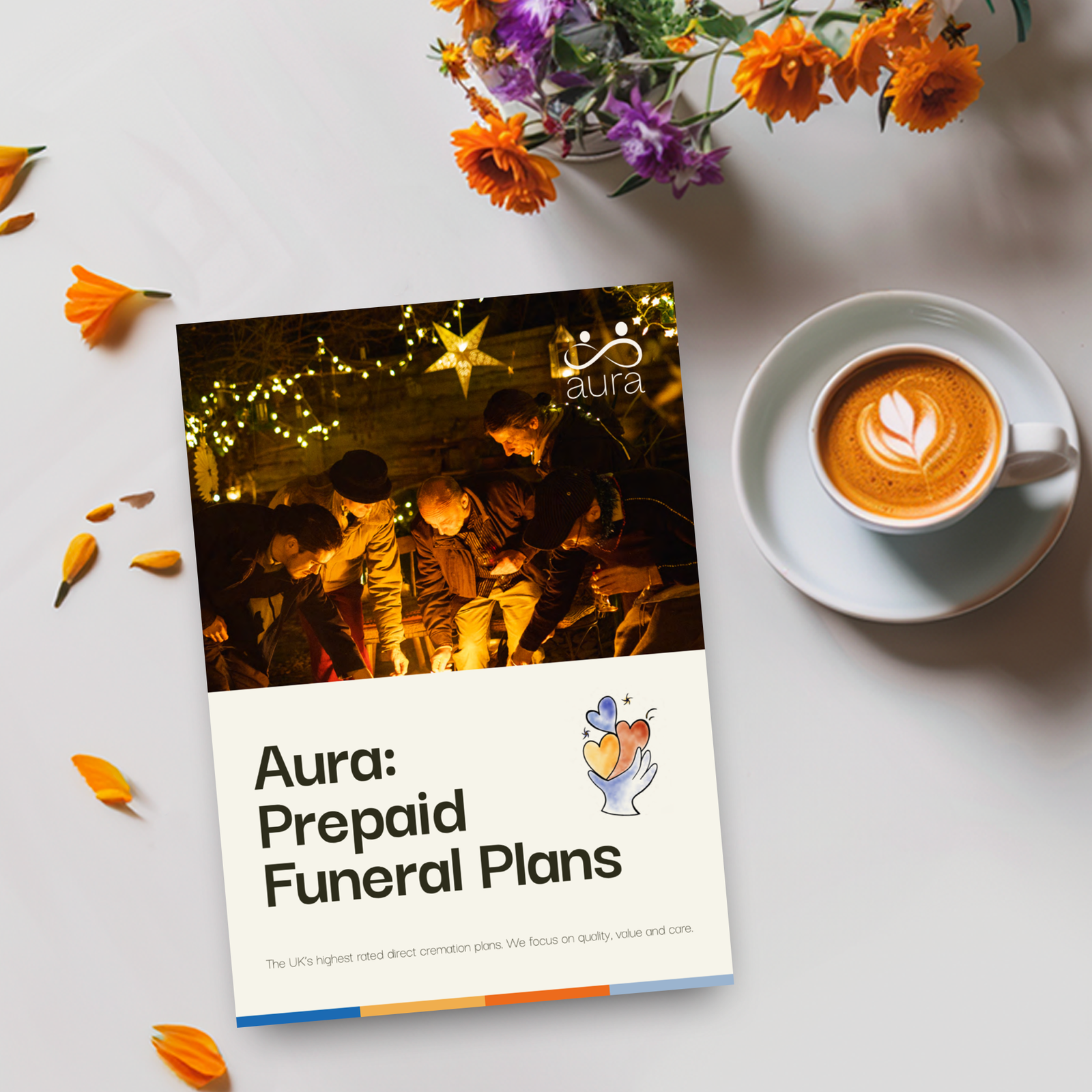
If you’d like to know more about how to plan a cremation with Aura, our brochure is a helpful place to begin.
Our funeral plans are a helpful way to put everything in place for you or someone else.
When the time comes, our experienced team will be here to guide you through each step, offering support and advice whenever you need it.
To find out more about how our plans work, what’s included, and our story, you can request a brochure by clicking the link below. We will then send you a copy by email or First Class post—whichever you prefer.
Yes, and having one can save you a great deal of stress. A funeral checklist helps you manage everything from paperwork and legal steps to choosing between cremation or burial. It should include tasks like checking for any prepaid plan or funeral wishes, notifying relevant people and authorities, deciding on the type of funeral, and organising payment. We’ve included a simple version earlier in this article to help you get started.
Start by checking if the person had any wishes written down—this could be in their will, funeral plan, or other documents. Then:
Register the death
Notify close family and friends
Find out how the funeral will be paid for
Choose between burial, cremation, or direct cremation
Appoint a funeral director if needed
Make key decisions—such as whether there will be a service, music, readings, or an obituary
Notify any organisations, banks or insurers
Each step depends on the type of service you’re arranging. If you’re unsure, a funeral director or specialist like Aura can guide you through the process.
The most common options in the UK are either a cremation or a burial. Within these, families may choose:
A traditional funeral with a ceremony
A direct cremation, which usually has no service or mourners present
A graveside burial service, usually led by a celebrant or faith leader
People also often arrange things like flowers, music, an order of service, or a gathering afterwards—but none of this is required.
You’ll need to sort out practical, legal and personal details. This usually includes:
Registering the death
Arranging collection of the person who has died
Deciding on cremation or burial
Choosing whether there will be a service
Organising the paperwork and payment
Planning any personal touches—like readings, tributes, or ashes placement
If it feels overwhelming, start with the essentials and ask for help. Aura’s team can support you with direct cremation or talk you through what’s needed, even if you’re just at the early stages.
Usually between one and three weeks after the death. How long it takes to arrange a funeral depends on paperwork, crematorium or burial slot availability, and family preferences. Direct cremations are often quicker.
The person named as the executor of the will is usually the one who takes charge of the funeral. If there’s no will, it typically falls to the nearest next of kin—such as a spouse, child, or sibling. Legally, no one is obliged to organise a funeral unless they choose to take on the responsibility, but in most families someone steps in out of love and duty. If a funeral director is involved, they’ll usually only take instructions from the person who has legal authority.
Most funerals in the UK take place within one to three weeks after the death. This can depend on several things—like waiting for paperwork, availability at the crematorium or burial site, and whether family need time to travel. Direct cremations often happen more quickly, especially if the family prefers no service. In any case, the first legal step is to register the death, which should be done within five days in England and Wales.
The most affordable funeral option is a direct cremation. This is where the person is cremated without a service or attendees. It avoids the cost of a venue, transport, flowers, and other extras. Aura’s direct cremation service, for example, is less than half the price of a traditional funeral. It still includes collection, cremation, and the return of ashes—while giving families the freedom to hold their own private memorial if they wish.